THE ADVENTURE COLLECTIVE® · Independent discovery and booking for outdoor travel

Spend a full day tracing Egypt’s monumental past: the Great Pyramids of Giza, the Step Pyramid at Saqqara, the Red and Bent Pyramids of Dahshour, and the ruins of ancient Memphis—plus a local koshary lunch. This private tour covers major sites with hotel pickup and practical guidance for first-time visitors.
Spend a full day tracing Egypt’s monumental past: the Great Pyramids of Giza, the Step Pyramid at Saqqara, the Red and Bent Pyramids of Dahshour, and the ruins of ancient Memphis—plus a local koshary lunch. This private tour covers major sites with hotel pickup and practical guidance for first-time visitors.
Morning sunlight slices across the Giza Plateau and the stones seem to hum with age as visitors step from the minivan onto hot, wind-scoured sand.
Verified experiences and guided adventures in the surrounding area.
Operated by Last Minute in Egypt · Giza, Cairo Governorate
Morning sunlight slices across the Giza Plateau and the stones seem to hum with age as visitors step from the minivan onto hot, wind-scoured sand.
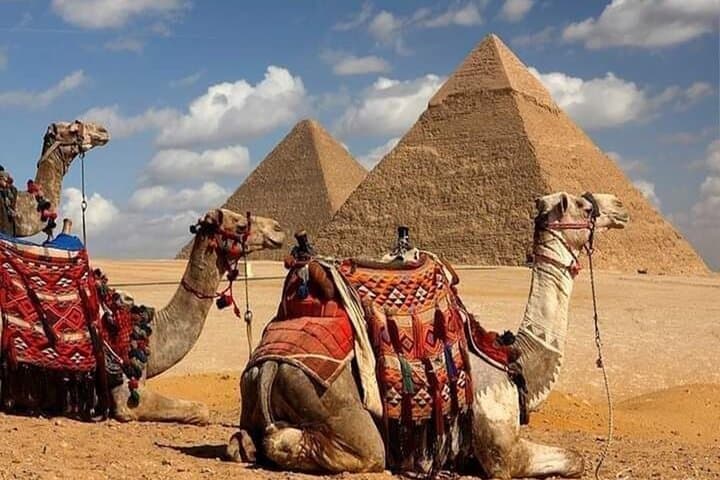
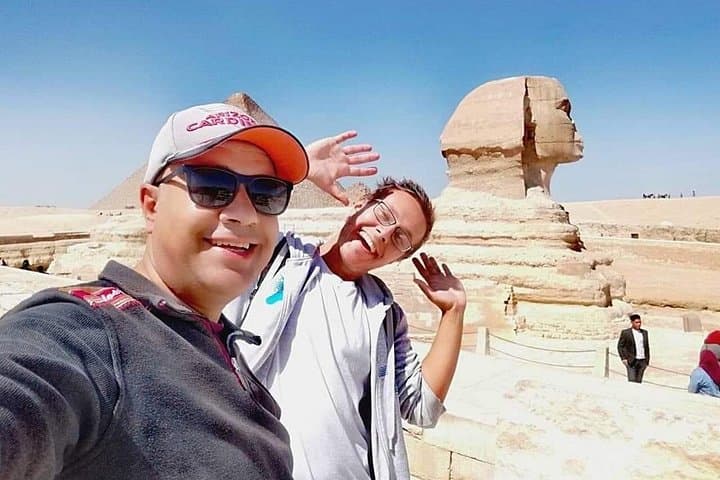
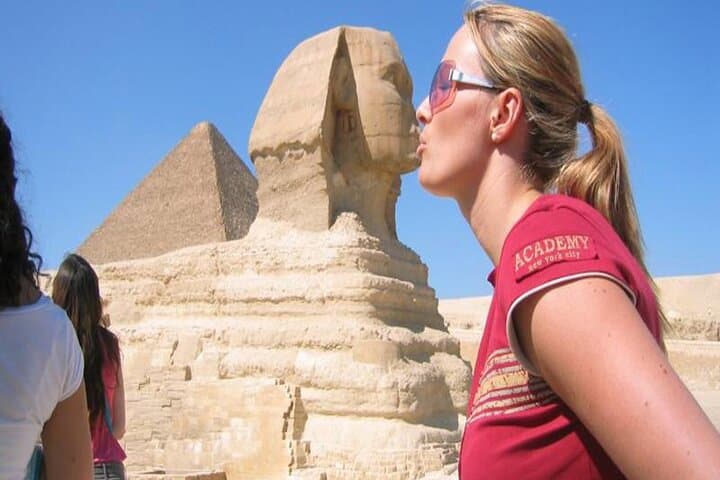
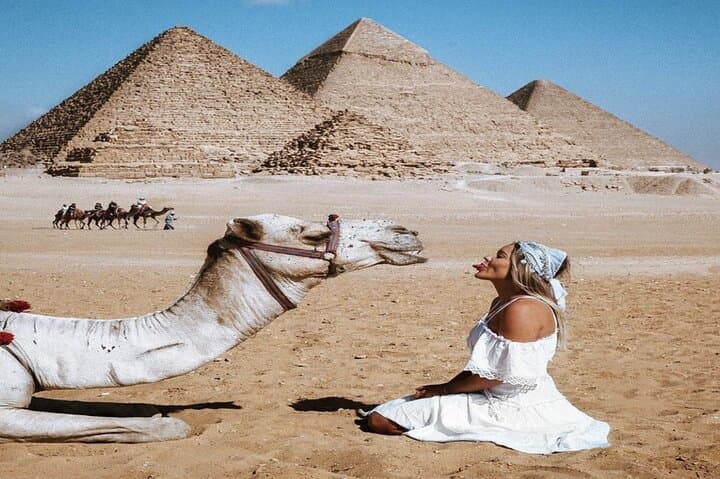
The day unfolds as a compact circuit through Egypt’s deep past: Giza’s three major pyramids—Khufu (Cheops), Khafre (Chephren) and Menkaure (Mycerinus)—and the Great Sphinx dominate the skyline, their faces weathered but unbowed. Later the group moves to Saqqara, where the Step Pyramid of Djoser—designed by the architect Imhotep in the 27th century BCE—reveals the origins of monumental stone construction.
A short drive brings you to Dahshour to view the Bent Pyramid and the Red Pyramid, experiments in engineering that show how Old Kingdom builders refined slope and chamber design. Memphis, once Egypt’s administrative heart, offers quieter ruins and a sense of the civic life that supported these royal projects.
Cultural notes come naturally: the modern rhythms of Cairo, the staple lunch of koshary, and local guides who translate hieroglyphs of daily life into human stories. Geology is visible in the limestone beds and wind-polished sand; the desert here often feels like a patient, watchful partner.
Practicalities are straightforward: this private tour runs 6–8 hours with hotel pickup and drop-off, and admission fees are typically not included—bring cash. Wear sturdy walking shoes for uneven surfaces, sun protection, and modest clothing for temple access. Early starts give cooler temperatures and thinner crowds; carry water and expect short walks between sites.
easy.
6–8 hours.
Suitable for travelers with basic fitness; involves multiple short walks on uneven, sandy terrain and some steps.
Most tour rates cover transport and guiding; entrance fees to pyramids, tombs or museums are commonly paid on-site and are not included unless stated.
Yes—this tour is described as stroller-accessible and physically easy, though some tomb interiors have narrow, steep steps and limited ventilation.
Start early—morning visits avoid the hottest hours and reduce crowding at Giza; the full loop naturally extends into midday depending on traffic.
Access to interior chambers is restricted and subject to ticket availability and age/health limits; check locally and be prepared to purchase a separate ticket if desired.
Giza, Saqqara and Memphis reflect successive phases of Egypt’s Old Kingdom power; Saqqara’s Step Pyramid predates the smooth-sided pyramids and marks a major early leap in stone architecture.
Heavy visitation affects fragile surfaces—stay on marked paths, avoid touching carved reliefs, and use local guides who practice responsible site stewardship.
Last Minute in Egypt operates guided outdoor trips and adventures with an emphasis on safety, stewardship, and memorable experiences.
Morning sunlight slices across the Giza Plateau and the stones seem to hum with age as visitors step from the minivan onto hot, wind-scoured sand.
Morning sunlight slices across the Giza Plateau and the stones seem to hum with age as visitors step from the minivan onto hot, wind-scoured sand.
The day unfolds as a compact circuit through Egypt’s deep past: Giza’s three major pyramids—Khufu (Cheops), Khafre (Chephren) and Menkaure (Mycerinus)—and the Great Sphinx dominate the skyline, their faces weathered but unbowed. Later the group moves to Saqqara, where the Step Pyramid of Djoser—designed by the architect Imhotep in the 27th century BCE—reveals the origins of monumental stone construction.
A short drive brings you to Dahshour to view the Bent Pyramid and the Red Pyramid, experiments in engineering that show how Old Kingdom builders refined slope and chamber design. Memphis, once Egypt’s administrative heart, offers quieter ruins and a sense of the civic life that supported these royal projects.
Cultural notes come naturally: the modern rhythms of Cairo, the staple lunch of koshary, and local guides who translate hieroglyphs of daily life into human stories. Geology is visible in the limestone beds and wind-polished sand; the desert here often feels like a patient, watchful partner.
Practicalities are straightforward: this private tour runs 6–8 hours with hotel pickup and drop-off, and admission fees are typically not included—bring cash. Wear sturdy walking shoes for uneven surfaces, sun protection, and modest clothing for temple access. Early starts give cooler temperatures and thinner crowds; carry water and expect short walks between sites.