THE ADVENTURE COLLECTIVE® · Independent discovery and booking for outdoor travel

A single-day private loop through Egypt’s oldest monumental sites: Saqqara’s Step Pyramid, Dahshour’s experimental forms, ancient Memphis, and the iconic Giza plateau. Practical route details, cultural context, and on-the-ground tips for a long but manageable day in the desert.
A single-day private loop through Egypt’s oldest monumental sites: Saqqara’s Step Pyramid, Dahshour’s experimental forms, ancient Memphis, and the iconic Giza plateau. Practical route details, cultural context, and on-the-ground tips for a long but manageable day in the desert.
You step out of an air-conditioned van into wind-swept stone and heat; the Great Pyramid rises ahead, its angled faces catching late-morning light while the Sphinx watches the desert road. The day unfolds as a loop through Egypt’s deep past — a walk among stepped masonry at Saqqara, the red-tinged sweep of Dahshour, the open ruins of ancient Memphis, and the colossal trio at Giza where camel handlers and photographers move like part of the scene.
Verified experiences and guided adventures in the surrounding area.
Operated by Marwa Tours · Giza, Cairo Governorate
You step out of an air-conditioned van into wind-swept stone and heat; the Great Pyramid rises ahead, its angled faces catching late-morning light while the Sphinx watches the desert road. The day unfolds as a loop through Egypt’s deep past — a walk among stepped masonry at Saqqara, the red-tinged sweep of Dahshour, the open ruins of ancient Memphis, and the colossal trio at Giza where camel handlers and photographers move like part of the scene.
Geology and history are visible in the stones: local limestone beds hewn from nearby quarries, layered by the Nile’s ancient sediments and set in courses by skilled hands millennia ago. Saqqara’s Step Pyramid — Imhotep’s radical design — marks the transition from mastaba tombs to monumental stone, while Dahshour’s Bent and Red Pyramids reveal builders’ experiments with angle and structure. Memphis, once Egypt’s political heart, gives context: a city reduced to plinths and statues but still central to the story.
Culturally, expect guide-led readings of hieroglyphs and practical commentary on funerary practice, labor organization, and agricultural rhythms tied to the Nile. Local life threads past the sites: farmers, small shops, and camel handlers offering posed photos.
Practical guidance: the tour runs 7–10 hours; wear sturdy walking shoes for uneven limestone and packed sand, bring sun protection and 2+ liters of water, and pace yourself—shade is sparse. Photography is permitted in most outdoor areas; some tomb interiors restrict flashes. Mobility access varies by site: wheelchair-friendly areas exist, but core ruins include steps and soft sand. Aim to start early to avoid the hottest light and the busiest crowds.
easy.
7–10 hours.
Suitable for most fitness levels but expect a long day with walking on uneven ground; basic stamina for 3–5 miles of mixed terrain.
Yes — the tour itinerary lists admissions for Saqqara, Giza, Memphis, and Dahshour as included in this private tour.
No — bottled water and taxes are included, but plan to bring or purchase lunch locally; your guide can recommend options or stop at a café.
Camel photos are commonly offered near the plateau but are usually an optional, pay-as-you-go extra; negotiate the price beforehand and be cautious with children.
The tour operator indicates wheelchair-accessible transport and some accessible surfaces, but key archaeological areas have uneven terrain and steps—contact the operator to confirm accommodations for specific sites.
Saqqara’s Step Pyramid (c. 27th century BCE) by Imhotep represents the first large-scale stone monument in Egypt; Memphis served as the early political and religious capital for millennia.
High visitor numbers and urban encroachment put pressure on fragile masonry and tomb paintings; stay on marked paths, avoid touching carved surfaces, and follow guide instructions to reduce impact.
Marwa Tours operates guided outdoor trips and adventures with an emphasis on safety, stewardship, and memorable experiences.
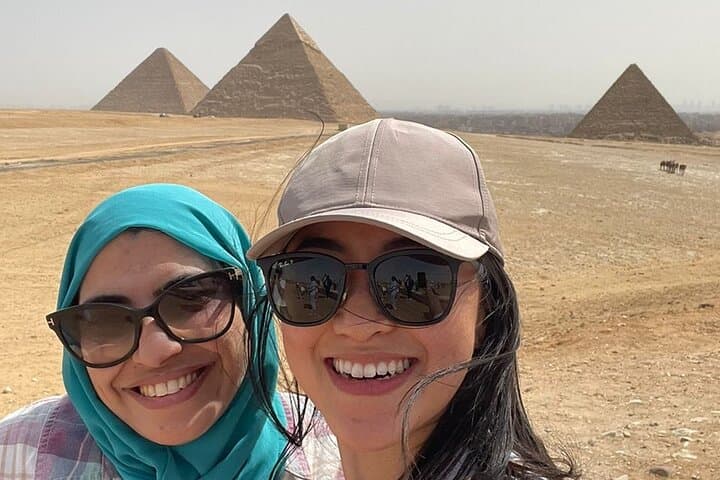
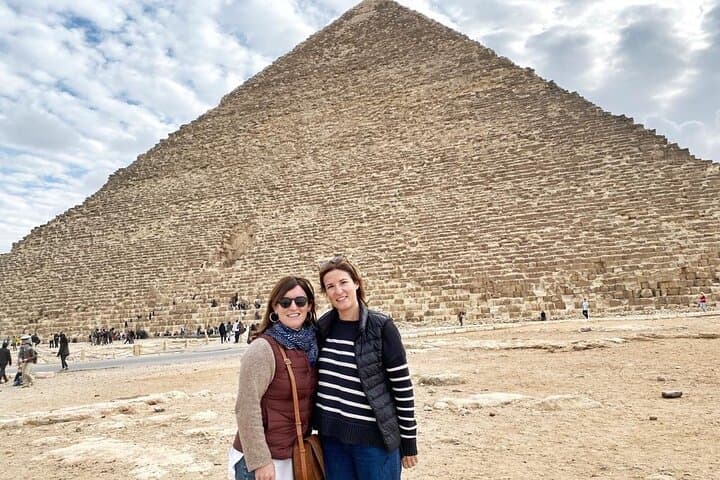
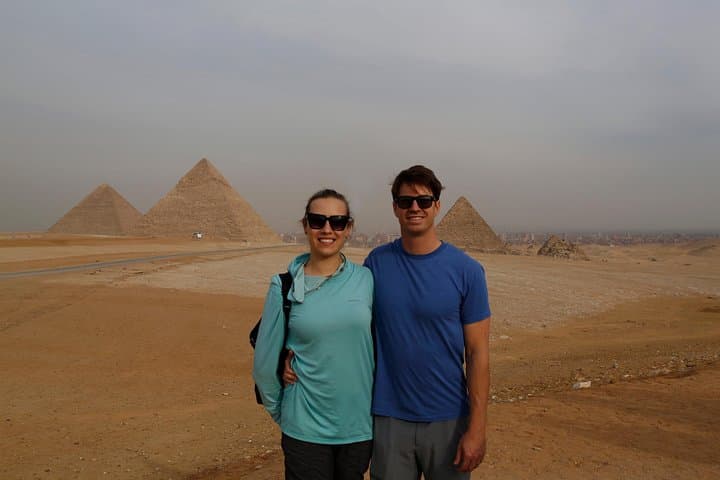
You step out of an air-conditioned van into wind-swept stone and heat; the Great Pyramid rises ahead, its angled faces catching late-morning light while the Sphinx watches the desert road. The day unfolds as a loop through Egypt’s deep past — a walk among stepped masonry at Saqqara, the red-tinged sweep of Dahshour, the open ruins of ancient Memphis, and the colossal trio at Giza where camel handlers and photographers move like part of the scene.
You step out of an air-conditioned van into wind-swept stone and heat; the Great Pyramid rises ahead, its angled faces catching late-morning light while the Sphinx watches the desert road. The day unfolds as a loop through Egypt’s deep past — a walk among stepped masonry at Saqqara, the red-tinged sweep of Dahshour, the open ruins of ancient Memphis, and the colossal trio at Giza where camel handlers and photographers move like part of the scene.
Geology and history are visible in the stones: local limestone beds hewn from nearby quarries, layered by the Nile’s ancient sediments and set in courses by skilled hands millennia ago. Saqqara’s Step Pyramid — Imhotep’s radical design — marks the transition from mastaba tombs to monumental stone, while Dahshour’s Bent and Red Pyramids reveal builders’ experiments with angle and structure. Memphis, once Egypt’s political heart, gives context: a city reduced to plinths and statues but still central to the story.
Culturally, expect guide-led readings of hieroglyphs and practical commentary on funerary practice, labor organization, and agricultural rhythms tied to the Nile. Local life threads past the sites: farmers, small shops, and camel handlers offering posed photos.
Practical guidance: the tour runs 7–10 hours; wear sturdy walking shoes for uneven limestone and packed sand, bring sun protection and 2+ liters of water, and pace yourself—shade is sparse. Photography is permitted in most outdoor areas; some tomb interiors restrict flashes. Mobility access varies by site: wheelchair-friendly areas exist, but core ruins include steps and soft sand. Aim to start early to avoid the hottest light and the busiest crowds.