THE ADVENTURE COLLECTIVE® · Independent discovery and booking for outdoor travel

Spend a day moving between Egypt’s oldest monuments and Cairo’s historic heart: the Pyramids of Giza, the Step Pyramid at Sakkara, Dahshur’s Bent Pyramid, Memphis and the mosques of El‑Moez, finishing with dinner at the Cairo Tower. Practical planning and local context make this packed day manageable for most travelers.
Spend a day moving between Egypt’s oldest monuments and Cairo’s historic heart: the Pyramids of Giza, the Step Pyramid at Sakkara, Dahshur’s Bent Pyramid, Memphis and the mosques of El‑Moez, finishing with dinner at the Cairo Tower. Practical planning and local context make this packed day manageable for most travelers.
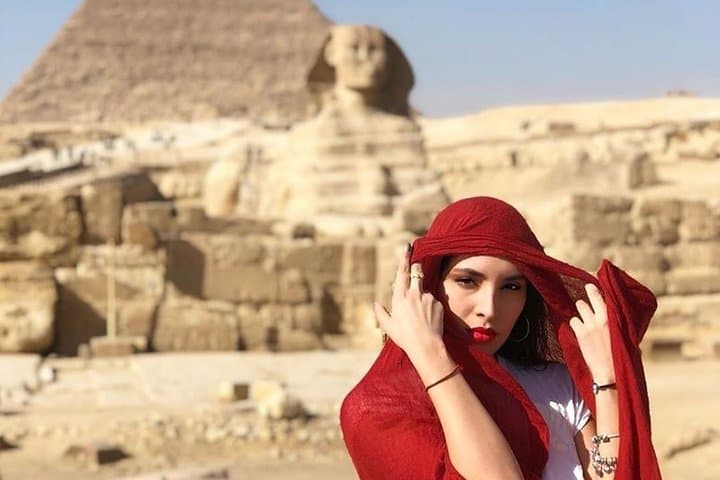
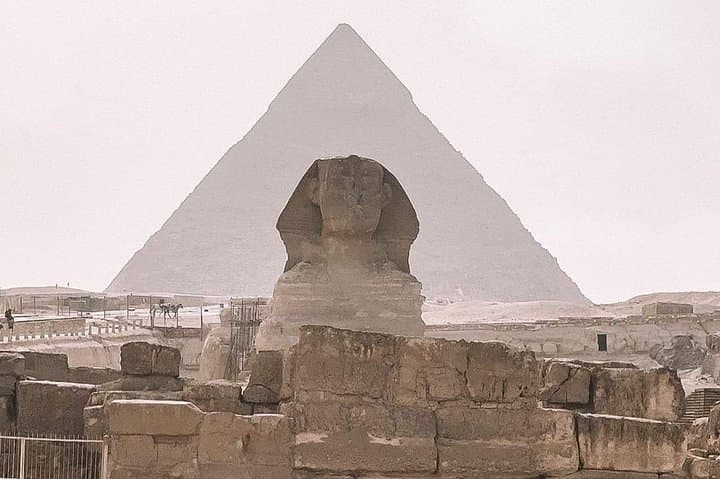
You step out of the air‑conditioned vehicle onto a sun-baked plateau; the Great Pyramid rises from the horizon like a deliberate interruption in the flat desert. Wind moves the dust in slow sheets, and the Sphinx sits forward, watching the city’s modern skyline recede toward the Nile.
Verified experiences and guided adventures in the surrounding area.
Operated by Sun Pyramids Tours · Cairo, Cairo Governorate
You step out of the air‑conditioned vehicle onto a sun-baked plateau; the Great Pyramid rises from the horizon like a deliberate interruption in the flat desert. Wind moves the dust in slow sheets, and the Sphinx sits forward, watching the city’s modern skyline recede toward the Nile.
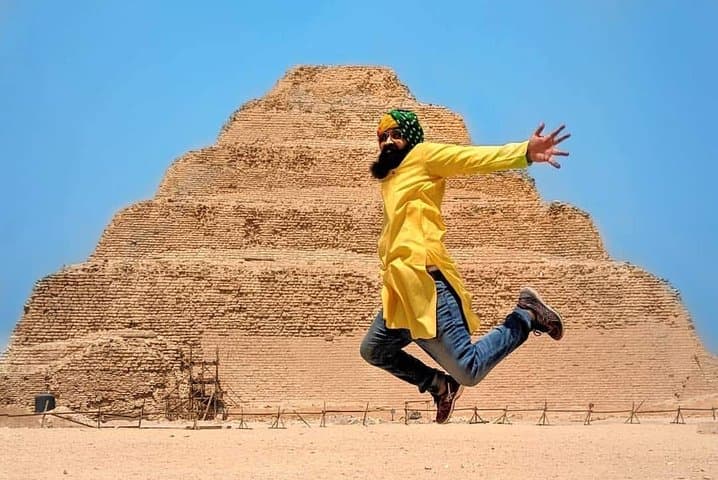
This private, full-day circuit threads Egypt’s deep past with its living city. Start at Giza—Cheops, Chephren and Mykerinus—then move south to Sakkara to stand beside the Step Pyramid of Djoser, the world’s oldest major stone structure, and on to Memphis to see the colossal Statue of Ramses II and the alabaster sphinx. Dahshur’s Bent Pyramid, built during the Old Kingdom (c. 2613–2589 BC), shows architectural experiments that shaped later kings’ tombs. Back in Cairo, El‑Moez Street offers dense medieval Islamic monuments—mosques, madrasas and gates—before a dinner and rotating panorama from Cairo Tower (≈187 m).
Expect mostly flat walking with short uneven stretches of desert sand, limestone blocks and stone staircases inside some monuments. Distances between sites require highway transfer—this itinerary covers roughly 40–60 km of travel south of central Cairo to Dahshur and Sakkara, with multiple short on‑foot segments at each stop.
Plan for heat, crowds and camera battery drain: travel early, carry at least 1.5 L water, wear sun protection and modest, breathable clothing for mosque visits. The tour is wheelchair accessible in parts, but uneven ground at open sites can be challenging. Bookings typically include pickup, bottled water, lunch and a private guide—use the guide for historical context and local navigation to make the most of a dense, single‑day sweep of ancient and medieval Cairo.
easy.
10 hours.
Suitable for travelers who can handle several short walks, some uneven ground and stairs; no sustained scrambling or long hikes.
The itinerary indicates admission to the main sites is included for the listed stops, but confirm specific ticket inclusions with your operator before travel.
The supplier notes wheelchair‑accessible transport and surfaces for parts of the tour, but open archaeological areas can be uneven—contact the operator to discuss access needs.
Walking at each site is short but on uneven ground and steps; expect repeated 10–20 minute walks rather than long hikes.
Access to pyramid interiors is limited and sometimes subject to separate tickets or closures—ask your guide on the day for current availability.
Memphis was Egypt’s first capital and a cultural center during the Old Kingdom; Sakkara’s Step Pyramid marks the start of large‑scale stone construction in Egypt.
Sites face erosion and tourist wear; stick to marked paths, avoid climbing ancient stonework and support local conservation efforts by following guide directions.
Sun Pyramids Tours operates guided outdoor trips and adventures with an emphasis on safety, stewardship, and memorable experiences.

You step out of the air‑conditioned vehicle onto a sun-baked plateau; the Great Pyramid rises from the horizon like a deliberate interruption in the flat desert. Wind moves the dust in slow sheets, and the Sphinx sits forward, watching the city’s modern skyline recede toward the Nile.
You step out of the air‑conditioned vehicle onto a sun-baked plateau; the Great Pyramid rises from the horizon like a deliberate interruption in the flat desert. Wind moves the dust in slow sheets, and the Sphinx sits forward, watching the city’s modern skyline recede toward the Nile.
This private, full-day circuit threads Egypt’s deep past with its living city. Start at Giza—Cheops, Chephren and Mykerinus—then move south to Sakkara to stand beside the Step Pyramid of Djoser, the world’s oldest major stone structure, and on to Memphis to see the colossal Statue of Ramses II and the alabaster sphinx. Dahshur’s Bent Pyramid, built during the Old Kingdom (c. 2613–2589 BC), shows architectural experiments that shaped later kings’ tombs. Back in Cairo, El‑Moez Street offers dense medieval Islamic monuments—mosques, madrasas and gates—before a dinner and rotating panorama from Cairo Tower (≈187 m).
Expect mostly flat walking with short uneven stretches of desert sand, limestone blocks and stone staircases inside some monuments. Distances between sites require highway transfer—this itinerary covers roughly 40–60 km of travel south of central Cairo to Dahshur and Sakkara, with multiple short on‑foot segments at each stop.
Plan for heat, crowds and camera battery drain: travel early, carry at least 1.5 L water, wear sun protection and modest, breathable clothing for mosque visits. The tour is wheelchair accessible in parts, but uneven ground at open sites can be challenging. Bookings typically include pickup, bottled water, lunch and a private guide—use the guide for historical context and local navigation to make the most of a dense, single‑day sweep of ancient and medieval Cairo.