THE ADVENTURE COLLECTIVE® · Independent discovery and booking for outdoor travel

Walk among the oldest monumental works on Earth on this private full-day tour of Giza, the Sphinx, Saqqara and ancient Memphis. Expect close-up views, desert light, and practical guidance on timing, tickets and what to carry.
Walk among the oldest monumental works on Earth on this private full-day tour of Giza, the Sphinx, Saqqara and ancient Memphis. Expect close-up views, desert light, and practical guidance on timing, tickets and what to carry.
Morning on the Giza Plateau feels immediate—the sun slants across ancient limestone blocks and the air carries the dry, sandy tang of the Western Desert. Standing at the base of Khufu’s pyramid, the scale is physical and undeniable; each dressed stone seems to lean toward the horizon, daring you to map centuries with your eyes.
Verified experiences and guided adventures in the surrounding area.
Operated by Pyramids · Giza, Giza Governorate
Morning on the Giza Plateau feels immediate—the sun slants across ancient limestone blocks and the air carries the dry, sandy tang of the Western Desert. Standing at the base of Khufu’s pyramid, the scale is physical and undeniable; each dressed stone seems to lean toward the horizon, daring you to map centuries with your eyes.
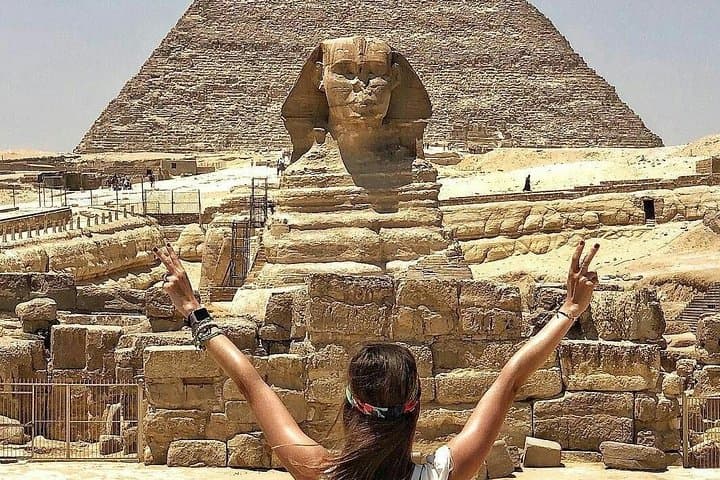
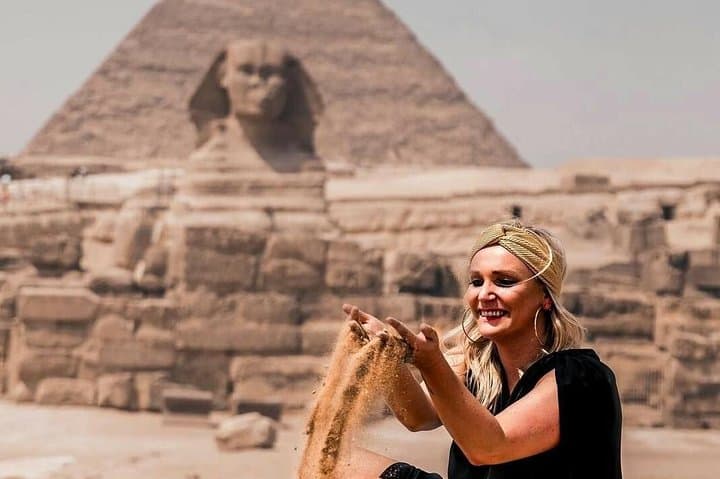
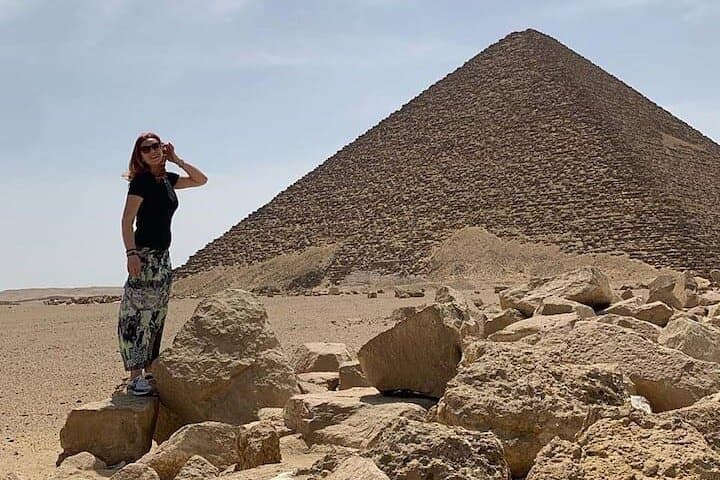
The day moves from that monumental silence to voices of history: the Great Sphinx carved from bedrock to guard a funeral landscape, the evolutionary leap of Djoser’s Step Pyramid at Saqqara—an early experiment in stone by the architect Imhotep—and the open-air remnants of Memphis, Egypt’s first capital dating to around 3100 BCE. Geology and craft meet here: local limestone and quarried granite tell a story of materials dragged from river and desert to become architecture.
Culture arrives in smaller details—street-side vendors offering mint tea, the cadence of Arabic passing through market stalls, and the smell of grilled shawarma at midday. Practicalities shape the rhythm: expect uneven ground and close-up photo opportunities interspersed with guided explanations. Confirm whether site entry fees are included on booking, and plan for checkpoints and security lines.
Useful rhythms for the traveler: start early to catch cooler light and thinner crowds, wear supportive shoes for walking on packed sand and stone, carry sun protection and refillable water, and allow the guide to lead through restricted zones to preserve fragile surfaces. By the time lunch arrives—koshari or shawarma—the day reads like a concentrated course in ancient urbanism and desert engineering, delivered across nine hours of steady, revealing exploration.
easy.
9 hours.
Suitable for travelers who can stand and walk short to moderate distances over uneven ground; not strenuous.
Tour inclusions vary—this itinerary lists transfers and bottled water; confirm with the operator whether site admission tickets and optional internal pyramid access are included.
No—walking is moderate and suitable for most fitness levels, but uneven ground and some steps mean comfortable shoes are recommended; it’s not advised for travelers with serious spinal issues.
Access to interiors or close enclosures depends on current site regulations and ticketing; some interior visits require separate paid tickets and advance booking.
Private guides commonly speak English; many operators offer guides in other languages by request—confirm at booking if you need a specific language.
Memphis served as Egypt’s administrative capital from the Early Dynastic Period; Saqqara’s Step Pyramid (Djoser) represents a pivotal shift from mudbrick mastabas to monumental stone construction.
Heavy visitation stresses fragile stone surfaces and archaeological contexts; stay on designated paths, avoid touching carved faces, and follow local guide instructions to reduce impact.
Pyramids operates guided outdoor trips and adventures with an emphasis on safety, stewardship, and memorable experiences.

Morning on the Giza Plateau feels immediate—the sun slants across ancient limestone blocks and the air carries the dry, sandy tang of the Western Desert. Standing at the base of Khufu’s pyramid, the scale is physical and undeniable; each dressed stone seems to lean toward the horizon, daring you to map centuries with your eyes.
Morning on the Giza Plateau feels immediate—the sun slants across ancient limestone blocks and the air carries the dry, sandy tang of the Western Desert. Standing at the base of Khufu’s pyramid, the scale is physical and undeniable; each dressed stone seems to lean toward the horizon, daring you to map centuries with your eyes.
The day moves from that monumental silence to voices of history: the Great Sphinx carved from bedrock to guard a funeral landscape, the evolutionary leap of Djoser’s Step Pyramid at Saqqara—an early experiment in stone by the architect Imhotep—and the open-air remnants of Memphis, Egypt’s first capital dating to around 3100 BCE. Geology and craft meet here: local limestone and quarried granite tell a story of materials dragged from river and desert to become architecture.
Culture arrives in smaller details—street-side vendors offering mint tea, the cadence of Arabic passing through market stalls, and the smell of grilled shawarma at midday. Practicalities shape the rhythm: expect uneven ground and close-up photo opportunities interspersed with guided explanations. Confirm whether site entry fees are included on booking, and plan for checkpoints and security lines.
Useful rhythms for the traveler: start early to catch cooler light and thinner crowds, wear supportive shoes for walking on packed sand and stone, carry sun protection and refillable water, and allow the guide to lead through restricted zones to preserve fragile surfaces. By the time lunch arrives—koshari or shawarma—the day reads like a concentrated course in ancient urbanism and desert engineering, delivered across nine hours of steady, revealing exploration.