THE ADVENTURE COLLECTIVE® · Independent discovery and booking for outdoor travel

Spend a full day across the Giza Plateau, Saqqara and ancient Memphis to see Khufu’s Great Pyramid, the Sphinx, Djoser’s Step Pyramid and open-air statuary. This practical guide covers what to expect, historical context and preparation tips.
Spend a full day across the Giza Plateau, Saqqara and ancient Memphis to see Khufu’s Great Pyramid, the Sphinx, Djoser’s Step Pyramid and open-air statuary. This practical guide covers what to expect, historical context and preparation tips.
The tour opens on the wide, wind-swept Giza Plateau where sunlight skims limestone blocks and the desert air dares you to step closer.
Verified experiences and guided adventures in the surrounding area.
Operated by Mario Egypt Tours · Giza, Giza Governorate
The tour opens on the wide, wind-swept Giza Plateau where sunlight skims limestone blocks and the desert air dares you to step closer.
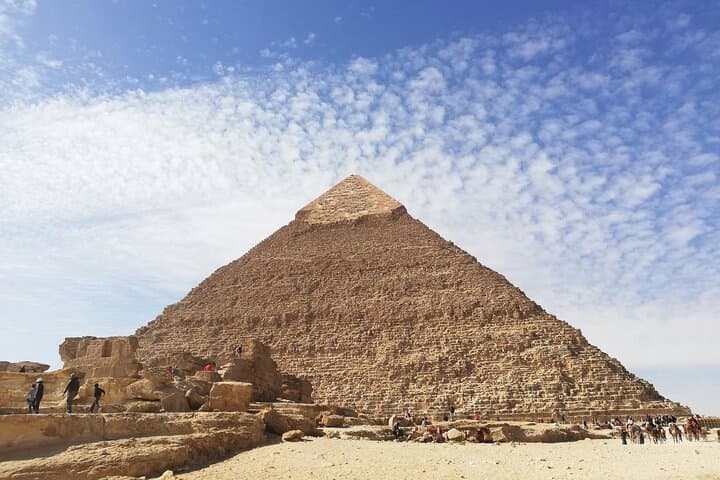
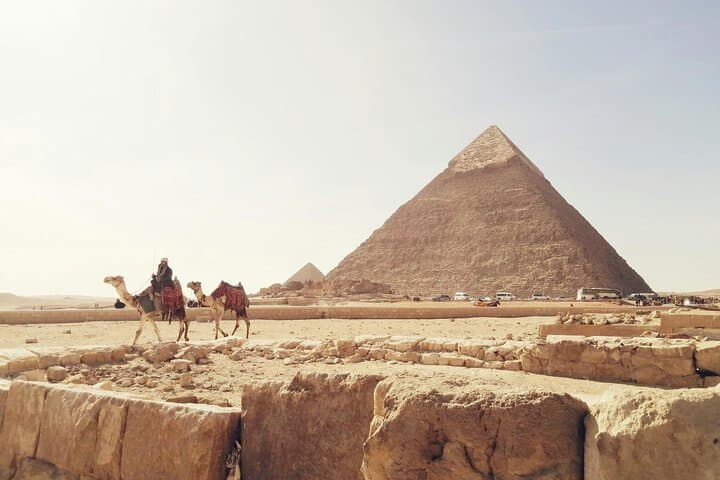
Visitors move between three pyramids — Khufu, Khafre and Menkaure — each a different scale of ancient engineering: the massive cubic angles of Khufu, Khafre’s preserved casing stone near the peak, and Menkaure’s compact, austere silhouette. The Sphinx sits nearby, its human gaze fixed eastward as the plateau unfolds.
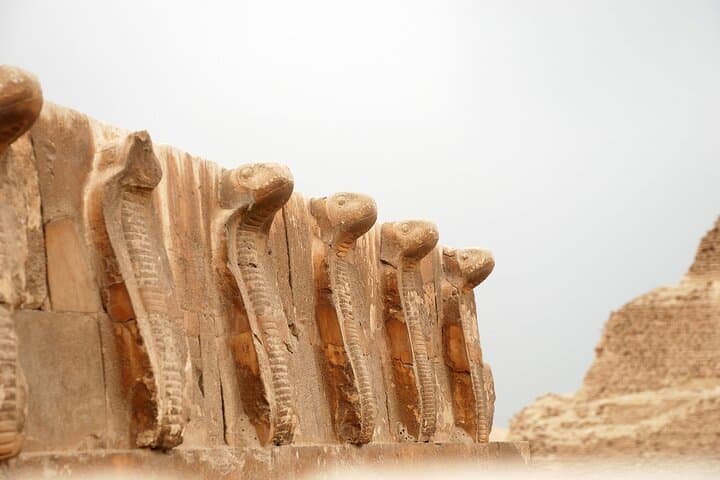
From Giza the route pushes south to Saqqara, where the Step Pyramid of Djoser marks a pivotal moment in Egyptian architecture: stacked mastabas that became true stone construction during the Third Dynasty. The day finishes at Memphis, Egypt’s first capital, where open-air colossi and statuary—like the seated Ramses II fragment—offer a portrait of life and mortuary belief along the Nile.
Geology here is visible in the building blocks: Tura and Mokattam limestones quarried and shaped into monuments whose joint patterns and erosion tell a 4,500-year story. Culturally, these sites trace shifts from funerary experimentation to state-level tomb design and royal propaganda.
Practical guidance: expect dusty, uneven ground and bright sun; plan for eight hours with short guided stops at each major point. Bring sun protection, comfortable walking shoes, and a refillable bottle. Cameras are welcome but climbing or touching monuments is prohibited. Timing your visit for early morning light or late afternoon reduces heat and crowds, and staying with an accredited guide helps navigate ticketing, entrances and respectful behavior around ongoing conservation work.
easy.
8 hours.
Suitable for most fitness levels; involves multiple short walks on uneven, dusty terrain and occasional step-ups
This private tour runs about eight hours (480 minutes) including transport and stops at each major site.
Standard itineraries typically exclude entry fees; confirm with the operator whether pyramid or museum tickets are covered.
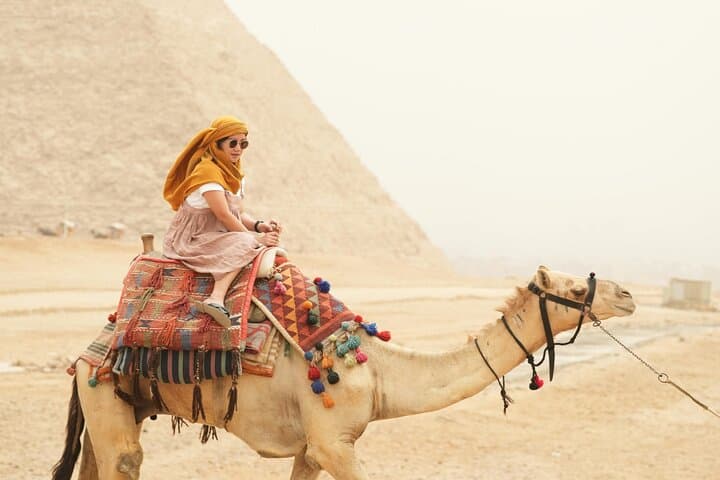
Yes—this tour includes a 30-minute camel or horse ride option on the Giza Plateau, often provided by local handlers.
The tour lists wheelchair accessibility, but terrain at some sites includes sand and uneven stone; check mobility needs with the operator in advance.
The Giza pyramids date to the Fourth Dynasty (c. 2600–2500 BCE); Saqqara’s Step Pyramid (27th century BCE) records the shift to monumental stone construction, and Memphis served as the Old Kingdom capital.
Heavy visitor traffic stresses ancient stone and surrounding soils; stay on marked paths, avoid touching reliefs, and follow guides’ instructions to support ongoing preservation.
Mario Egypt Tours operates guided outdoor trips and adventures with an emphasis on safety, stewardship, and memorable experiences.
The tour opens on the wide, wind-swept Giza Plateau where sunlight skims limestone blocks and the desert air dares you to step closer.
The tour opens on the wide, wind-swept Giza Plateau where sunlight skims limestone blocks and the desert air dares you to step closer.
Visitors move between three pyramids — Khufu, Khafre and Menkaure — each a different scale of ancient engineering: the massive cubic angles of Khufu, Khafre’s preserved casing stone near the peak, and Menkaure’s compact, austere silhouette. The Sphinx sits nearby, its human gaze fixed eastward as the plateau unfolds.
From Giza the route pushes south to Saqqara, where the Step Pyramid of Djoser marks a pivotal moment in Egyptian architecture: stacked mastabas that became true stone construction during the Third Dynasty. The day finishes at Memphis, Egypt’s first capital, where open-air colossi and statuary—like the seated Ramses II fragment—offer a portrait of life and mortuary belief along the Nile.
Geology here is visible in the building blocks: Tura and Mokattam limestones quarried and shaped into monuments whose joint patterns and erosion tell a 4,500-year story. Culturally, these sites trace shifts from funerary experimentation to state-level tomb design and royal propaganda.
Practical guidance: expect dusty, uneven ground and bright sun; plan for eight hours with short guided stops at each major point. Bring sun protection, comfortable walking shoes, and a refillable bottle. Cameras are welcome but climbing or touching monuments is prohibited. Timing your visit for early morning light or late afternoon reduces heat and crowds, and staying with an accredited guide helps navigate ticketing, entrances and respectful behavior around ongoing conservation work.