THE ADVENTURE COLLECTIVE® · Independent discovery and booking for outdoor travel

Spend a full day exploring Egypt’s oldest monuments: the Giza plateau, the Sphinx, the Step Pyramid at Saqqara and the ruins of Memphis. This guided tour blends close-up archaeology with practical logistics — hotel pickup, expert commentary and optional extras like interior pyramid entry and camel rides.
Spend a full day exploring Egypt’s oldest monuments: the Giza plateau, the Sphinx, the Step Pyramid at Saqqara and the ruins of Memphis. This guided tour blends close-up archaeology with practical logistics — hotel pickup, expert commentary and optional extras like interior pyramid entry and camel rides.
You step from an air-conditioned car onto a wind-swept plateau and the desert immediately asserts itself — bright light, fine sand underfoot and the hulking silhouette of the Great Pyramid rising like a measured promise. The first hour is mostly visual: the four-faced mass of Cheops, the tapering stones of Khafre and the smaller crown of Menkaure, all set against a pale Cairo skyline that keeps the modern city at arm’s length.
Verified experiences and guided adventures in the surrounding area.
Operated by Egypt Lifetime Tours · Giza, Giza Governorate
You step from an air-conditioned car onto a wind-swept plateau and the desert immediately asserts itself — bright light, fine sand underfoot and the hulking silhouette of the Great Pyramid rising like a measured promise. The first hour is mostly visual: the four-faced mass of Cheops, the tapering stones of Khafre and the smaller crown of Menkaure, all set against a pale Cairo skyline that keeps the modern city at arm’s length.
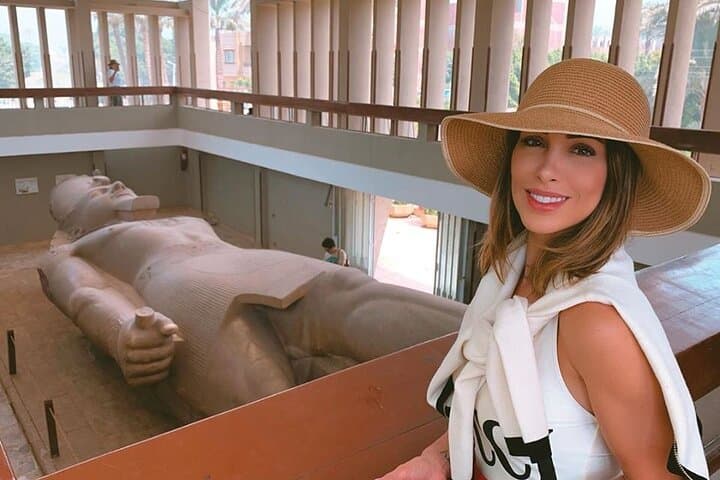
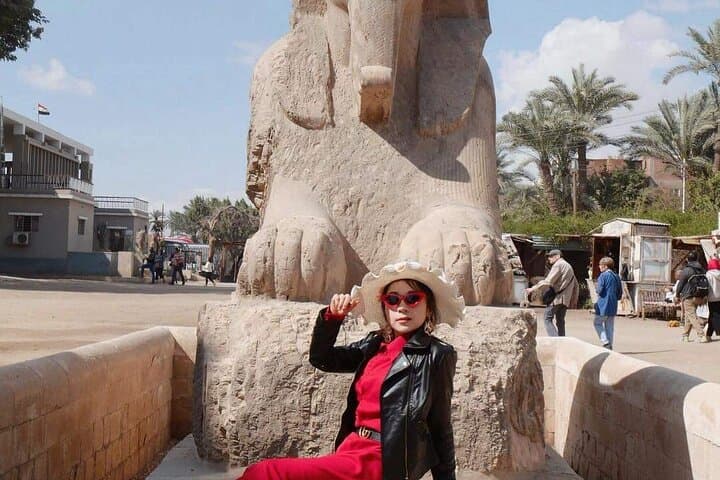
This route threads together three chapters of ancient Egyptian life. Giza’s funerary complexes reveal Old Kingdom engineering and mortuary ritual; Saqqara’s Step Pyramid at Djoser is the world’s oldest major stone structure and marks the move from mastaba tombs to monumental stone; Memphis preserves colossal sculpture and the administrative heart of pharaonic Egypt. Geologically the sites sit on Pleistocene limestone beds with wind-polished calcarenite surfaces, and walking is mostly flat but uneven — expect short stretches of packed sand and flagstone.
Practically: the full-day tour runs about 8–9 hours with guided commentary and hotel pickup by AC vehicle. Allow 2–4 km of walking total, minimal elevation gain, and bring cash or card for entrance supplements (interior pyramid entry is typically extra). Sun protection, steady shoes, and water are essential; mornings are cooler, late morning to afternoon brings intense heat. Optional camel rides and papyrus demonstrations add cultural texture but cost extra. Guides provide historical context and logistics; you provide steady shoes, patience for crowds, and a camera for long, clean lines of stone that still dare you to measure human ambition against time.
easy.
8–9 hours.
Suitable for travelers in normal health who can walk 2–4 km over flat but uneven ground.
Entrance fees to the main sites are typically not included; interior pyramid access and some museum entries are extra and paid locally by card or cash.
Interior access is sometimes available for an additional ticket — availability and access depend on current site regulations and capacity.
Yes, the tour includes door-to-door pickup and return by an air-conditioned vehicle from most Cairo and Giza hotels.
The tour is listed as suitable for all fitness levels, but there are uneven surfaces; wheelchair access is noted for some areas and you should contact the operator about specific needs.
Memphis was the political and cultural capital during the Old Kingdom and Saqqara’s Step Pyramid marks a major architectural leap in ancient Egyptian funerary design.
Visit responsibly: stay on designated paths, avoid touching reliefs or structures and support local conservation fees that help preserve fragile archaeological sites.
Egypt Lifetime Tours operates guided outdoor trips and adventures with an emphasis on safety, stewardship, and memorable experiences.


You step from an air-conditioned car onto a wind-swept plateau and the desert immediately asserts itself — bright light, fine sand underfoot and the hulking silhouette of the Great Pyramid rising like a measured promise. The first hour is mostly visual: the four-faced mass of Cheops, the tapering stones of Khafre and the smaller crown of Menkaure, all set against a pale Cairo skyline that keeps the modern city at arm’s length.
You step from an air-conditioned car onto a wind-swept plateau and the desert immediately asserts itself — bright light, fine sand underfoot and the hulking silhouette of the Great Pyramid rising like a measured promise. The first hour is mostly visual: the four-faced mass of Cheops, the tapering stones of Khafre and the smaller crown of Menkaure, all set against a pale Cairo skyline that keeps the modern city at arm’s length.
This route threads together three chapters of ancient Egyptian life. Giza’s funerary complexes reveal Old Kingdom engineering and mortuary ritual; Saqqara’s Step Pyramid at Djoser is the world’s oldest major stone structure and marks the move from mastaba tombs to monumental stone; Memphis preserves colossal sculpture and the administrative heart of pharaonic Egypt. Geologically the sites sit on Pleistocene limestone beds with wind-polished calcarenite surfaces, and walking is mostly flat but uneven — expect short stretches of packed sand and flagstone.
Practically: the full-day tour runs about 8–9 hours with guided commentary and hotel pickup by AC vehicle. Allow 2–4 km of walking total, minimal elevation gain, and bring cash or card for entrance supplements (interior pyramid entry is typically extra). Sun protection, steady shoes, and water are essential; mornings are cooler, late morning to afternoon brings intense heat. Optional camel rides and papyrus demonstrations add cultural texture but cost extra. Guides provide historical context and logistics; you provide steady shoes, patience for crowds, and a camera for long, clean lines of stone that still dare you to measure human ambition against time.