THE ADVENTURE COLLECTIVE® · Independent discovery and booking for outdoor travel

Experience the Giza plateau, the Sphinx and the ancient necropolises of Memphis and Saqqara in a long but manageable day. This practical guide outlines what you’ll see, terrain to expect, and how to prepare for heat, sand and narrow passages.
Experience the Giza plateau, the Sphinx and the ancient necropolises of Memphis and Saqqara in a long but manageable day. This practical guide outlines what you’ll see, terrain to expect, and how to prepare for heat, sand and narrow passages.
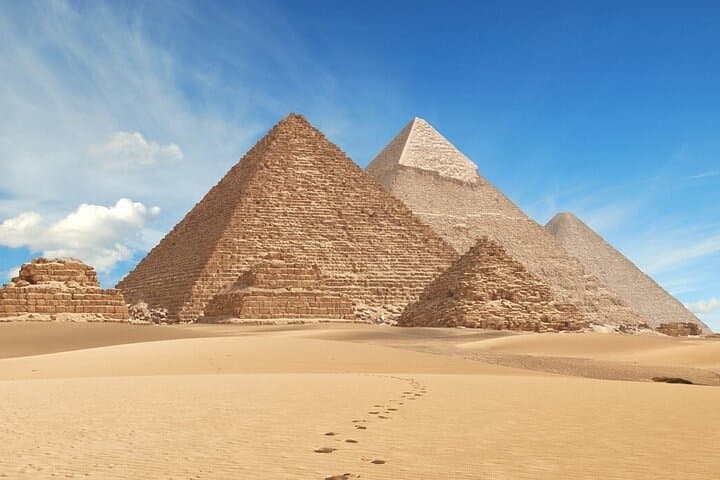
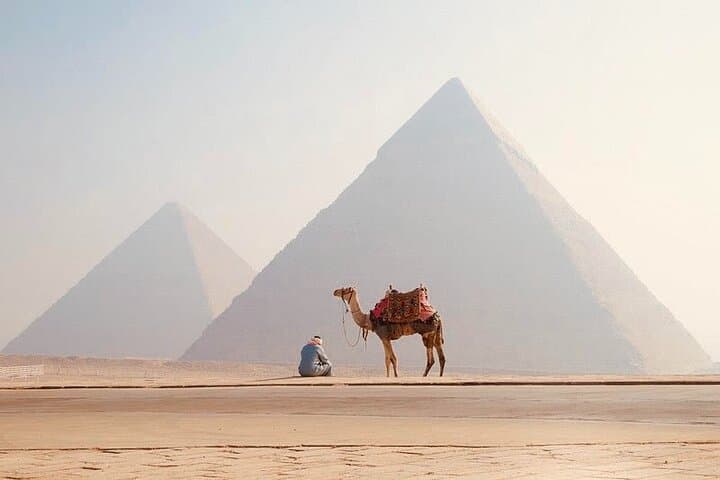
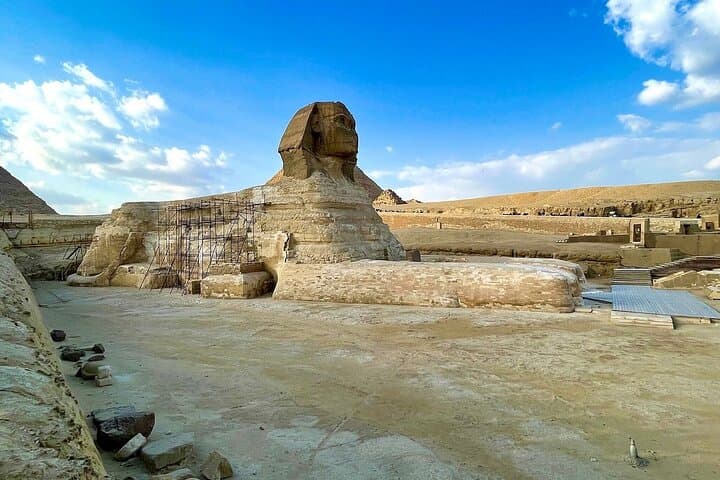
You step from an air-conditioned van into a sunlit sweep of stone and sand: the Giza plateau opens ahead with three great pyramids carving clean angles against an enormous sky. Dust moves like breath across the desert; the Sphinx sits watchful, its nose weathered but its presence immediate. Camels stand patient along the perimeter while guides unfurl maps that stitch together millennia of burial practices and royal display.
Verified experiences and guided adventures in the surrounding area.
Operated by Saqqara tours · Giza, Giza Governorate
You step from an air-conditioned van into a sunlit sweep of stone and sand: the Giza plateau opens ahead with three great pyramids carving clean angles against an enormous sky. Dust moves like breath across the desert; the Sphinx sits watchful, its nose weathered but its presence immediate. Camels stand patient along the perimeter while guides unfurl maps that stitch together millennia of burial practices and royal display.
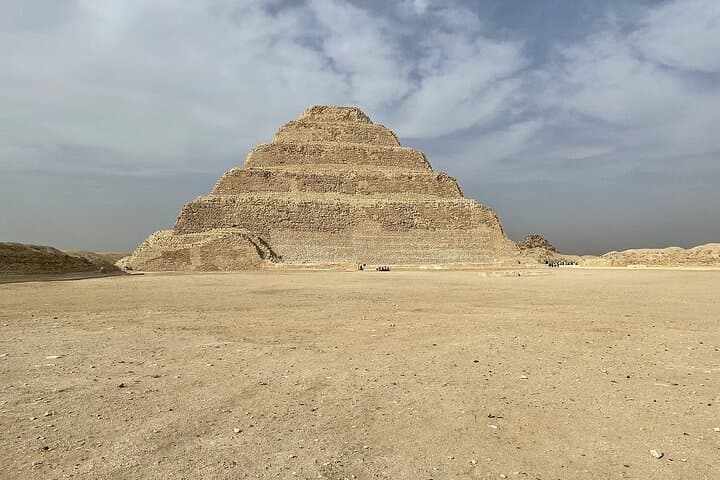
This route threads the high points of Egypt’s Old Kingdom—Khufu, Khafre and Menkaure—then moves south to Memphis, the ancient capital, and Saqqara, where Djoser’s Step Pyramid marks a turning point in funerary architecture. Geologically, you’re on limestone bedrock capped by wind-blown sand; expect compacted, uneven stone paths and short climbs of carved steps. Walking distances across the plateau and between monuments add up to roughly 3–6 km total with negligible elevation gain (under 50 m), but interior passages and mastaba stairways can be steep and narrow.
Culturally, the day reveals a civilization attentive to afterlife logistics—colossal statues, funerary complexes and the open-air remains of Memphis that once organized the Nile’s wealth.
Practical guidance: plan for a 7–8 hour day, start early to avoid peak heat, carry 2–3 liters of water, wear sturdy closed-toe shoes, sun protection and modest clothing out of respect. Expect dusty surfaces and uneven footing; some sites have entry fees and limited accessibility. Bring a camera with extra battery, and allow time for the Solar Boat Museum and the quieter tombs at Saqqara if your schedule permits.
This itinerary balances spectacle with practical planning so you leave informed—and unflustered—by the desert’s demands.
moderate.
7–8 hours.
Should be comfortable walking 3–6 km over uneven, sandy and paved surfaces during a long day in heat.
Expect roughly 7–8 hours door-to-door, including travel between sites and a lunch stop.
Policies vary by operator—some include museum or pyramid entry while others only cover transport and the guide; confirm before booking.
Transport may be accessible, but many archaeological areas have uneven terrain and steps; full accessibility is limited on-site.
Access inside is limited and subject to separate tickets and capacity controls; tunnels are narrow, low and may be closed for conservation or safety.
The Giza pyramids were built during Egypt’s Old Kingdom (circa 2600–2500 BCE) as monumental tombs for pharaohs; Saqqara’s Step Pyramid marks an earlier evolution from mastabas to stone pyramids.
Visitor pressure and wind-driven erosion stress these ancient stone surfaces—stay on marked paths, avoid touching reliefs, and heed site rules to limit impact.
Saqqara tours operates guided outdoor trips and adventures with an emphasis on safety, stewardship, and memorable experiences.
You step from an air-conditioned van into a sunlit sweep of stone and sand: the Giza plateau opens ahead with three great pyramids carving clean angles against an enormous sky. Dust moves like breath across the desert; the Sphinx sits watchful, its nose weathered but its presence immediate. Camels stand patient along the perimeter while guides unfurl maps that stitch together millennia of burial practices and royal display.
You step from an air-conditioned van into a sunlit sweep of stone and sand: the Giza plateau opens ahead with three great pyramids carving clean angles against an enormous sky. Dust moves like breath across the desert; the Sphinx sits watchful, its nose weathered but its presence immediate. Camels stand patient along the perimeter while guides unfurl maps that stitch together millennia of burial practices and royal display.
This route threads the high points of Egypt’s Old Kingdom—Khufu, Khafre and Menkaure—then moves south to Memphis, the ancient capital, and Saqqara, where Djoser’s Step Pyramid marks a turning point in funerary architecture. Geologically, you’re on limestone bedrock capped by wind-blown sand; expect compacted, uneven stone paths and short climbs of carved steps. Walking distances across the plateau and between monuments add up to roughly 3–6 km total with negligible elevation gain (under 50 m), but interior passages and mastaba stairways can be steep and narrow.
Culturally, the day reveals a civilization attentive to afterlife logistics—colossal statues, funerary complexes and the open-air remains of Memphis that once organized the Nile’s wealth.
Practical guidance: plan for a 7–8 hour day, start early to avoid peak heat, carry 2–3 liters of water, wear sturdy closed-toe shoes, sun protection and modest clothing out of respect. Expect dusty surfaces and uneven footing; some sites have entry fees and limited accessibility. Bring a camera with extra battery, and allow time for the Solar Boat Museum and the quieter tombs at Saqqara if your schedule permits.
This itinerary balances spectacle with practical planning so you leave informed—and unflustered—by the desert’s demands.