THE ADVENTURE COLLECTIVE® · Independent discovery and booking for outdoor travel

Spend a full day moving from the monumental geometry of the Giza Plateau to the medieval Citadel and the bustling alleys of Khan el-Khalili. This private tour packs history, architecture, and practical tips into one accessible Cairo experience.
Spend a full day moving from the monumental geometry of the Giza Plateau to the medieval Citadel and the bustling alleys of Khan el-Khalili. This private tour packs history, architecture, and practical tips into one accessible Cairo experience.
The morning light throws hard edges across the Giza Plateau as a private van eases into view—the Great Pyramid rising like a mechanical mountain, the Sphinx watching the hotel roofs of Cairo recede. Walkways of packed sand and stone lead visitors close enough to feel the scale: blocks the size of cars stacked in geometries that have outlived empires.
Verified experiences and guided adventures in the surrounding area.
Operated by Egyptian Daily Tours · Giza, Giza
The morning light throws hard edges across the Giza Plateau as a private van eases into view—the Great Pyramid rising like a mechanical mountain, the Sphinx watching the hotel roofs of Cairo recede. Walkways of packed sand and stone lead visitors close enough to feel the scale: blocks the size of cars stacked in geometries that have outlived empires.
This full-day route strings together three layers of Cairo’s story. The Giza Necropolis dates to Egypt’s Fourth Dynasty; its limestone casing and granite chambers speak to ancient quarrying, river transport and funerary engineering. Later, the Citadel of Salah al-Din crowns the Muqattam ridge—an imposing Mamluk and Ottoman-era fortress that reframed Cairo’s skyline for centuries. Old Cairo’s churches and synagogues sit on older Roman and Byzantine foundations; Khan el-Khalili later grew from Mamluk caravanserais into the lively market it is today.
Practical guidance is straightforward: expect a long day—about 10 hours—with hotel pickup and drop-off included. Start early to beat heat and crowds, wear sturdy closed-toe shoes for uneven stone and desert pathways, and carry sun protection and a refillable bottle. Entry fees and a private English-speaking guide are typically included; the driver provides short transfers between sites. Inside access to the Great Pyramid can be restricted—ask in advance if that’s a priority. In bazaars, haggle politely and secure belongings; in religious sites, modest dress is required. This itinerary balances iconic spectacle with close-up history: towering monuments, fortress ramparts, and the market’s winding alleys offering practical souvenirs and instant street-level culture.
easy.
10 hours.
Suitable for most fitness levels; requires walking on uneven ground and standing for extended periods.
This tour description includes entry fees, but verify at booking—special access such as entering the Great Pyramid interior can require an additional ticket.
Sites are driven between; on-foot exploration involves short to moderate walks—expect several kilometers of walking spread across the day.
The tour is rated easy and generally suitable, but it’s not recommended for pregnant travelers or those with major spinal/heart issues due to uneven ground and day length.
Camels and horses are available from independent handlers; rides are optional and usually arranged separately from the guided admissions—agree price and time beforehand.
The Giza complex was built during Egypt’s Fourth Dynasty (circa 2600–2500 BCE); the Citadel was founded by Salah al-Din in the 12th century CE and reshaped under later Ottoman rulers.
High visitor numbers stress the plateau’s fragile surface—stay on marked paths and avoid touching ancient stone. Support sites that limit plastic waste and respect local preservation rules.
Egyptian Daily Tours operates guided outdoor trips and adventures with an emphasis on safety, stewardship, and memorable experiences.
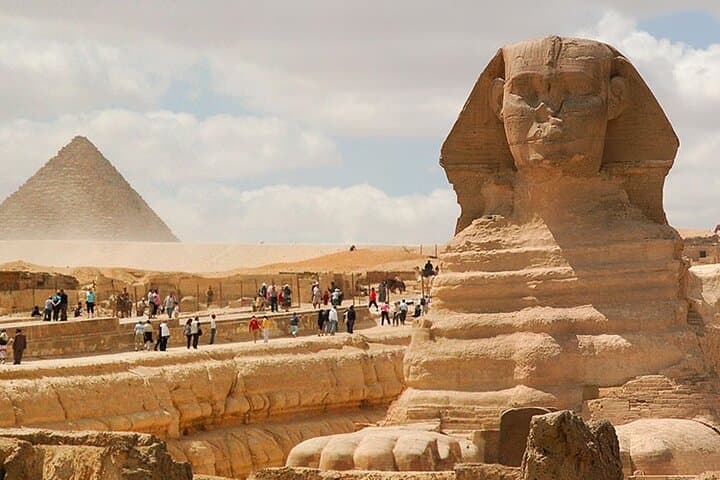
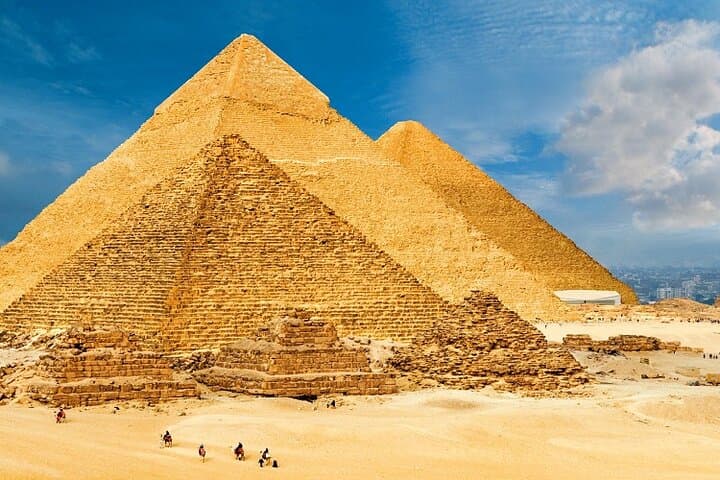
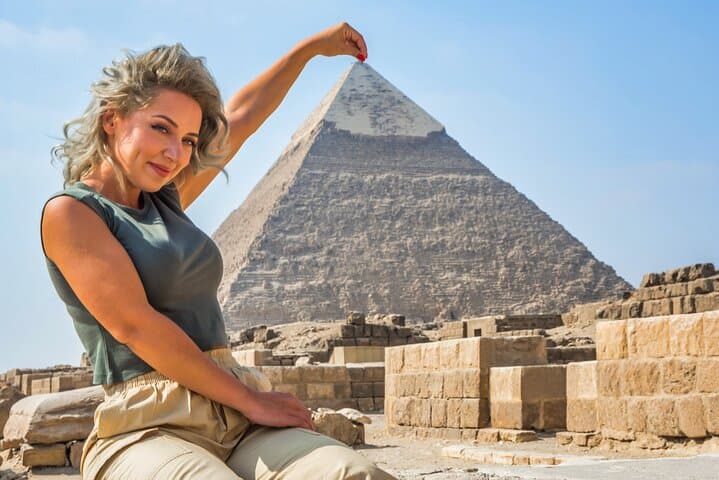
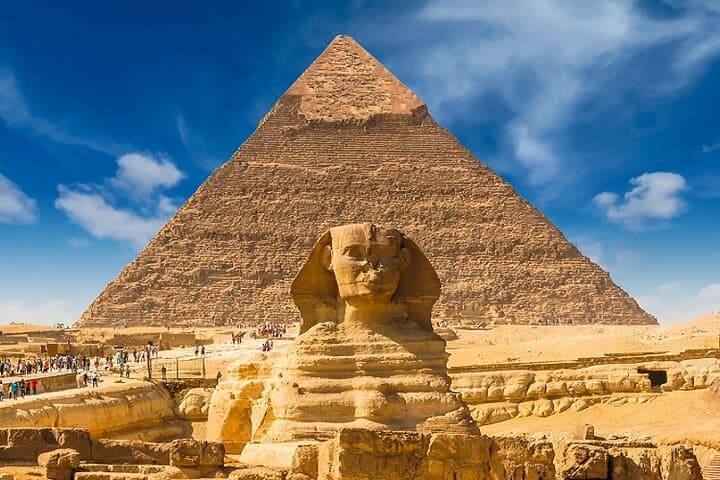
The morning light throws hard edges across the Giza Plateau as a private van eases into view—the Great Pyramid rising like a mechanical mountain, the Sphinx watching the hotel roofs of Cairo recede. Walkways of packed sand and stone lead visitors close enough to feel the scale: blocks the size of cars stacked in geometries that have outlived empires.
The morning light throws hard edges across the Giza Plateau as a private van eases into view—the Great Pyramid rising like a mechanical mountain, the Sphinx watching the hotel roofs of Cairo recede. Walkways of packed sand and stone lead visitors close enough to feel the scale: blocks the size of cars stacked in geometries that have outlived empires.
This full-day route strings together three layers of Cairo’s story. The Giza Necropolis dates to Egypt’s Fourth Dynasty; its limestone casing and granite chambers speak to ancient quarrying, river transport and funerary engineering. Later, the Citadel of Salah al-Din crowns the Muqattam ridge—an imposing Mamluk and Ottoman-era fortress that reframed Cairo’s skyline for centuries. Old Cairo’s churches and synagogues sit on older Roman and Byzantine foundations; Khan el-Khalili later grew from Mamluk caravanserais into the lively market it is today.
Practical guidance is straightforward: expect a long day—about 10 hours—with hotel pickup and drop-off included. Start early to beat heat and crowds, wear sturdy closed-toe shoes for uneven stone and desert pathways, and carry sun protection and a refillable bottle. Entry fees and a private English-speaking guide are typically included; the driver provides short transfers between sites. Inside access to the Great Pyramid can be restricted—ask in advance if that’s a priority. In bazaars, haggle politely and secure belongings; in religious sites, modest dress is required. This itinerary balances iconic spectacle with close-up history: towering monuments, fortress ramparts, and the market’s winding alleys offering practical souvenirs and instant street-level culture.