THE ADVENTURE COLLECTIVE® · Independent discovery and booking for outdoor travel

Experience Egypt’s most iconic sights in a single day: the Giza Pyramids’ monumental presence, the Egyptian Museum’s pharaonic treasures, and the vibrant lanes of Khan El-Khalili. This full-day tour blends big-picture history with practical on-the-ground guidance.
Experience Egypt’s most iconic sights in a single day: the Giza Pyramids’ monumental presence, the Egyptian Museum’s pharaonic treasures, and the vibrant lanes of Khan El-Khalili. This full-day tour blends big-picture history with practical on-the-ground guidance.
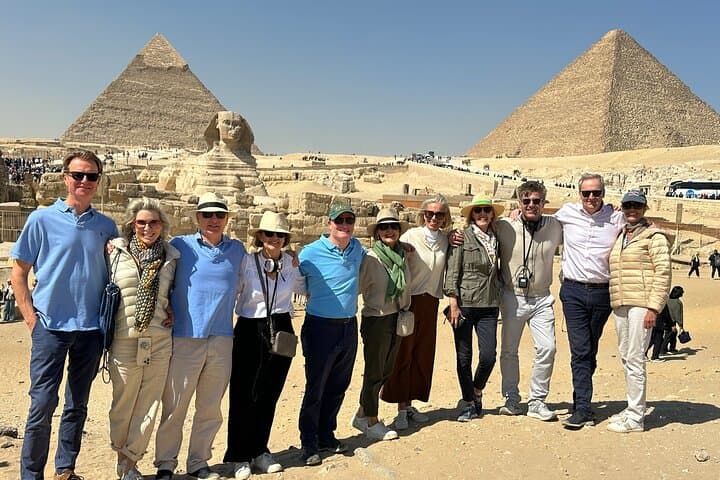
The morning light hits the plateau and the desert wind dares you forward: there, the Great Pyramid rises, stark against blue sky and the slow moving dust of centuries. You stand small beside geometry built for eternity, then move into Cairo’s dense urban pulse — museums, markets and alleys where history smells of spices and old paper.
Verified experiences and guided adventures in the surrounding area.
Operated by Nile Navigators · Cairo, Cairo Governorate
The morning light hits the plateau and the desert wind dares you forward: there, the Great Pyramid rises, stark against blue sky and the slow moving dust of centuries. You stand small beside geometry built for eternity, then move into Cairo’s dense urban pulse — museums, markets and alleys where history smells of spices and old paper.
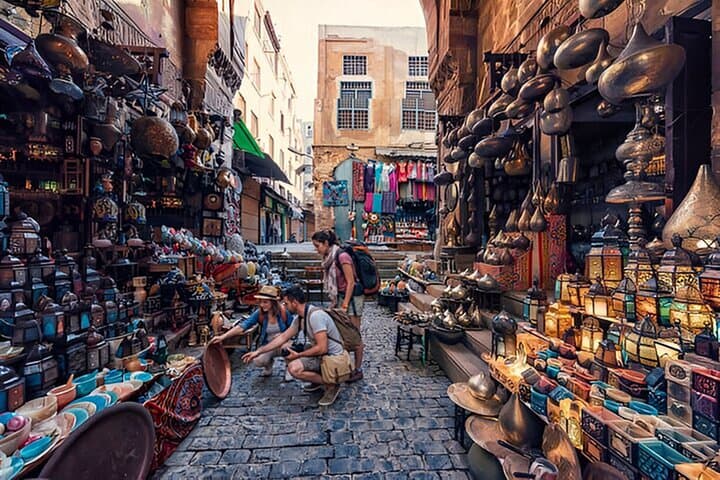
The day stitches together eras. The Giza Plateau (c. 2600–2500 BCE) is a lesson in funerary engineering and royal ideology: pyramids aligned to cardinal points, quarried limestone, and a Sphinx watching the Nile-side horizon. The Egyptian Museum in Tahrir houses artifacts spanning dynasties—Tutankhamun’s funerary collection among them—while Khan El-Khalili, in the heart of Islamic Cairo, has hosted traders and craftsmen since the 14th century.
Geology here is simple and raw: Eocene limestone underpins the plateau; wind and sand have sculpted the profiles you photograph. Culture is immediate — bargaining in the bazaar, the cadence of Arabic, tea poured strong in tiny glasses.
Practical guidance: this is a full-day, mostly walking tour across paved sites and sandy surfaces. Wear sturdy closed shoes, sun protection, and loose, respectful clothing for religious and museum spaces. Bring cash for small purchases and a photocopy of your passport for museum entry if required. Hydrate frequently—bottled water is provided—but carry a refillable bottle if you plan extra exploring.
Timing tip: start early to avoid the hottest hours and heavy crowds at the pyramids; reserve at least 1–2 hours in the museum to see key exhibits. Your guide will handle logistics and admissions, leaving you to focus on the scale and stories beneath your feet.
easy.
8 hours.
Basic walking fitness; able to manage several hours on foot and short uneven surfaces
The tour description indicates admission is included for the main sites; your guide handles tickets and entrance logistics during the day.
Expect several hours on foot across paved and sandy terrain—comfortable footwear and basic stamina are recommended though the tour is suitable for most fitness levels.
Yes, this private full-day tour typically includes hotel pickup and drop-off within Cairo and Giza; confirm your pickup point when booking.
Yes, the tour description states LGBTQ travelers are welcome and guides are open-minded; standard cultural sensitivity and respectful dress are still advised.
The Giza complex dates to Egypt’s Fourth Dynasty (c. 2600–2500 BCE), while Khan El-Khalili has been a commercial center since the Mamluk period in the 14th century.
The sites face wear from tourism and urban expansion; visitors can reduce impact by staying on marked paths, avoiding touching fragile stone, and using refillable bottles.
Nile Navigators operates guided outdoor trips and adventures with an emphasis on safety, stewardship, and memorable experiences.
The morning light hits the plateau and the desert wind dares you forward: there, the Great Pyramid rises, stark against blue sky and the slow moving dust of centuries. You stand small beside geometry built for eternity, then move into Cairo’s dense urban pulse — museums, markets and alleys where history smells of spices and old paper.
The morning light hits the plateau and the desert wind dares you forward: there, the Great Pyramid rises, stark against blue sky and the slow moving dust of centuries. You stand small beside geometry built for eternity, then move into Cairo’s dense urban pulse — museums, markets and alleys where history smells of spices and old paper.
The day stitches together eras. The Giza Plateau (c. 2600–2500 BCE) is a lesson in funerary engineering and royal ideology: pyramids aligned to cardinal points, quarried limestone, and a Sphinx watching the Nile-side horizon. The Egyptian Museum in Tahrir houses artifacts spanning dynasties—Tutankhamun’s funerary collection among them—while Khan El-Khalili, in the heart of Islamic Cairo, has hosted traders and craftsmen since the 14th century.
Geology here is simple and raw: Eocene limestone underpins the plateau; wind and sand have sculpted the profiles you photograph. Culture is immediate — bargaining in the bazaar, the cadence of Arabic, tea poured strong in tiny glasses.
Practical guidance: this is a full-day, mostly walking tour across paved sites and sandy surfaces. Wear sturdy closed shoes, sun protection, and loose, respectful clothing for religious and museum spaces. Bring cash for small purchases and a photocopy of your passport for museum entry if required. Hydrate frequently—bottled water is provided—but carry a refillable bottle if you plan extra exploring.
Timing tip: start early to avoid the hottest hours and heavy crowds at the pyramids; reserve at least 1–2 hours in the museum to see key exhibits. Your guide will handle logistics and admissions, leaving you to focus on the scale and stories beneath your feet.