THE ADVENTURE COLLECTIVE® · Independent discovery and booking for outdoor travel

Spend a long, carefully planned day at the Giza Plateau and the Egyptian Museum with round-trip transfers from Sharm El-Sheikh. This practical guide outlines what to expect on the ground—history, terrain, logistics and essential prep.
Spend a long, carefully planned day at the Giza Plateau and the Egyptian Museum with round-trip transfers from Sharm El-Sheikh. This practical guide outlines what to expect on the ground—history, terrain, logistics and essential prep.
You arrive at the Giza Plateau before the sun climbs fully, the desert wind pulling dust across the ramped contours of ancient stone. The Great Pyramid rises like a deliberate interruption in the horizon; the Sphinx faces the empty plain with an unblinking, stony calm. The day moves from wide desert light to the shaded halls of the Egyptian Museum in downtown Cairo, where gilded mask work and funerary statuary crowd glass cases.
Verified experiences and guided adventures in the surrounding area.
Operated by Available travel Egypt · Giza, Cairo Governorate
You arrive at the Giza Plateau before the sun climbs fully, the desert wind pulling dust across the ramped contours of ancient stone. The Great Pyramid rises like a deliberate interruption in the horizon; the Sphinx faces the empty plain with an unblinking, stony calm. The day moves from wide desert light to the shaded halls of the Egyptian Museum in downtown Cairo, where gilded mask work and funerary statuary crowd glass cases.
These monuments date to the Old Kingdom—Khufu, Khafre and Menkaure—and sit on a limestone plateau formed as the Nile shifted its course millennia ago. The museum building itself is an early-20th-century neoclassical landmark, housing more than 120,000 objects including the treasures of Tutankhamun and artifacts spanning prehistoric to Greco-Roman Egypt.
Expect a mix of paved paths, packed sand, and short climbs up viewing platforms; the tour includes admission fees, an English-certified Egyptologist guide, air-conditioned transfers and lunch at a local restaurant. Cultural context matters: bargaining is normal at vehicle and camel stands, photography rules vary inside museum galleries, and modest dress is respectful in public spaces.
Practical tips: buy the Egyptian visa at Sharm El-Sheikh airport before departure, bring sun protection and plenty of water, and prepare for a long travel day—20–24 hours including transfers. Wheelchair-accessible options exist but confirm pickup points in advance. The route rewards patience: close-up views of engineering that shaped a civilization, followed by museum rooms that stitch personal stories back to those monoliths—an intense, deeply visual day that balances open-air drama with concentrated cultural history.
easy.
20–24 hours.
Suitable for most fitness levels but expect a long day with walking on uneven stone and packed sand
Yes—travelers departing Sharm El-Sheikh should obtain the Egyptian entry visa at the airport before boarding; the tour provider notes this is required.
Yes—the tour listing includes admission to the Giza Plateau and the Egyptian Museum plus lunch at a local restaurant and all transfers by air-conditioned vehicle.
The listing indicates wheelchair-accessible transport and surfaces, but you should confirm pickup logistics and any mobility needs when booking.
Expect moderate walking over packed sand, paved walkways and short steps or ramps around viewing areas; the day is long but physically manageable for most people.
The Giza pyramids date to the 4th Dynasty (about 4,500 years ago); the Egyptian Museum, built in 1901 by Marcel Dourgnon, holds extensive finds from pharaonic tombs including Tutankhamun.
Visitor management and preservation efforts limit climbing and touching; follow signage and guides to reduce wear on archaeological surfaces and support ongoing conservation.
Available travel Egypt operates guided outdoor trips and adventures with an emphasis on safety, stewardship, and memorable experiences.

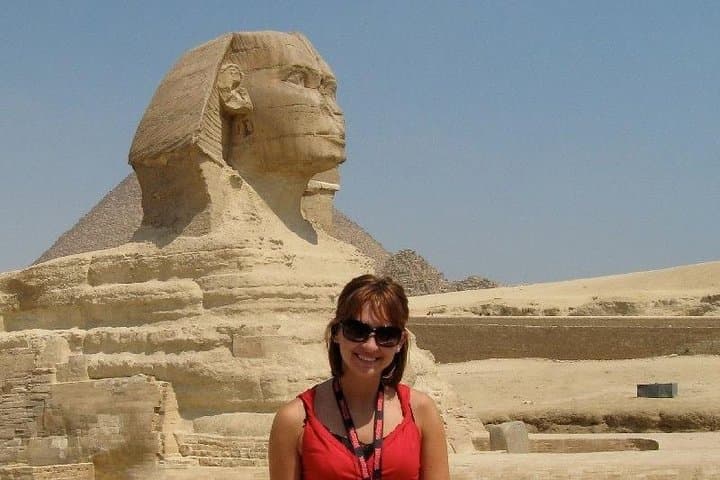


You arrive at the Giza Plateau before the sun climbs fully, the desert wind pulling dust across the ramped contours of ancient stone. The Great Pyramid rises like a deliberate interruption in the horizon; the Sphinx faces the empty plain with an unblinking, stony calm. The day moves from wide desert light to the shaded halls of the Egyptian Museum in downtown Cairo, where gilded mask work and funerary statuary crowd glass cases.
You arrive at the Giza Plateau before the sun climbs fully, the desert wind pulling dust across the ramped contours of ancient stone. The Great Pyramid rises like a deliberate interruption in the horizon; the Sphinx faces the empty plain with an unblinking, stony calm. The day moves from wide desert light to the shaded halls of the Egyptian Museum in downtown Cairo, where gilded mask work and funerary statuary crowd glass cases.
These monuments date to the Old Kingdom—Khufu, Khafre and Menkaure—and sit on a limestone plateau formed as the Nile shifted its course millennia ago. The museum building itself is an early-20th-century neoclassical landmark, housing more than 120,000 objects including the treasures of Tutankhamun and artifacts spanning prehistoric to Greco-Roman Egypt.
Expect a mix of paved paths, packed sand, and short climbs up viewing platforms; the tour includes admission fees, an English-certified Egyptologist guide, air-conditioned transfers and lunch at a local restaurant. Cultural context matters: bargaining is normal at vehicle and camel stands, photography rules vary inside museum galleries, and modest dress is respectful in public spaces.
Practical tips: buy the Egyptian visa at Sharm El-Sheikh airport before departure, bring sun protection and plenty of water, and prepare for a long travel day—20–24 hours including transfers. Wheelchair-accessible options exist but confirm pickup points in advance. The route rewards patience: close-up views of engineering that shaped a civilization, followed by museum rooms that stitch personal stories back to those monoliths—an intense, deeply visual day that balances open-air drama with concentrated cultural history.