THE ADVENTURE COLLECTIVE® · Independent discovery and booking for outdoor travel

Visit Giza’s Great Pyramid, the Sphinx and Saqqara’s step pyramid in a single day. This private, full-day tour pairs expert guiding with included entrance fees and transport—ideal for first-time visitors wanting efficient access to Egypt’s Old Kingdom highlights.
Visit Giza’s Great Pyramid, the Sphinx and Saqqara’s step pyramid in a single day. This private, full-day tour pairs expert guiding with included entrance fees and transport—ideal for first-time visitors wanting efficient access to Egypt’s Old Kingdom highlights.
You arrive before the heat climbs and the Giza plateau opens like a stone amphitheater: limestone blocks stacked in precise geometry, wind teasing sand across the path as the Sphinx watches the morning’s small traffic of guides and cameras. The day moves from the monumental—Khufu’s Great Pyramid, its angled silhouette cutting the sky—to the quieter sweep of Saqqara, where Djoser’s step pyramid rises in layered, architectural clarity.
Verified experiences and guided adventures in the surrounding area.
Operated by Egypt Travel Experts · Giza, Giza Governorate
You arrive before the heat climbs and the Giza plateau opens like a stone amphitheater: limestone blocks stacked in precise geometry, wind teasing sand across the path as the Sphinx watches the morning’s small traffic of guides and cameras. The day moves from the monumental—Khufu’s Great Pyramid, its angled silhouette cutting the sky—to the quieter sweep of Saqqara, where Djoser’s step pyramid rises in layered, architectural clarity.
This route stitches together Egypt’s Old Kingdom: the Giza complex (c. 2600–2500 BCE), the carved face of the Sphinx and the Valley Temple, then south to Saqqara where Imhotep’s step pyramid marks the beginning of large-scale stone construction. Geologically the plateau is a band of limestone and marl; the stones you walk on are ancient quarries and funeral architecture at once. Culturally, expect a blend of modern Cairo’s bustle and ritualized tour rhythms—guides narrate, vendors offer shade-bringing tea, and local restaurants serve a steady, simple lunch.
Plan practically: start early to avoid midday heat, bring a hat, sunscreen, and sturdy shoes for uneven paths. Photography is excellent but interior access to some chambers can be limited and may require extra tickets. The tour’s private vehicle and included entrances streamline movement between sites, but much of the experience is on foot and in the sun. Hydrate frequently, keep valuables secure, and allow time to absorb each site rather than rush through its rooms and angles. This is a day of architectural gravity and dry, wind-swept panoramas—history felt under your soles.
easy.
3–7 hours.
Light walking and standing throughout the day; suitable for most fitness levels with basic mobility.
Standard entrance fees to the Giza and Saqqara complexes are included; note that access to interior chambers (e.g., inside the Great Pyramid) may require additional tickets purchased on site.
Yes — this private tour typically includes pickup and drop-off from Cairo or Giza hotels; confirm your pickup point when booking.
Transport and some viewing areas are wheelchair accessible, but terrain at the archaeological sites is uneven and some interior areas are not suitable for wheelchairs.
Dress modestly for cultural sites (shoulders and knees covered are recommended); photography is allowed in most outdoor areas but flash and tripods may be restricted and some interiors prohibit photos.
Giza’s monuments date to Egypt’s Old Kingdom (c. 2686–2134 BCE); Saqqara hosts Djoser’s step pyramid, often credited as the first large-scale cut-stone building in history.
Site management balances tourism with preservation—stay on marked paths and avoid touching masonry to limit erosion; local initiatives focus on stabilizing fragile tomb paintings.
Egypt Travel Experts operates guided outdoor trips and adventures with an emphasis on safety, stewardship, and memorable experiences.
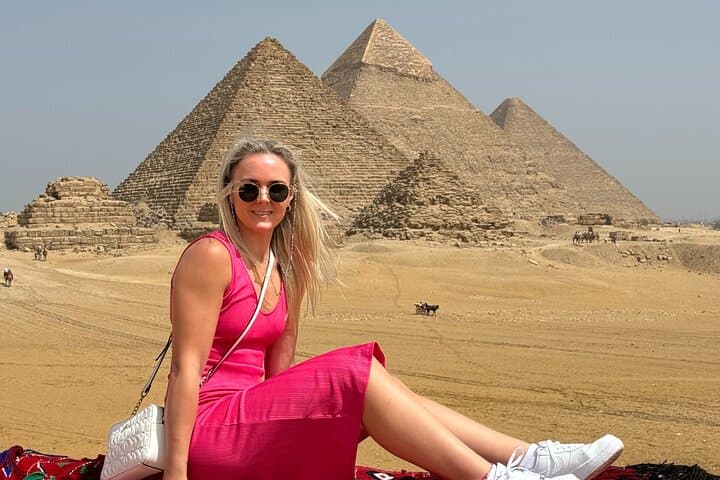
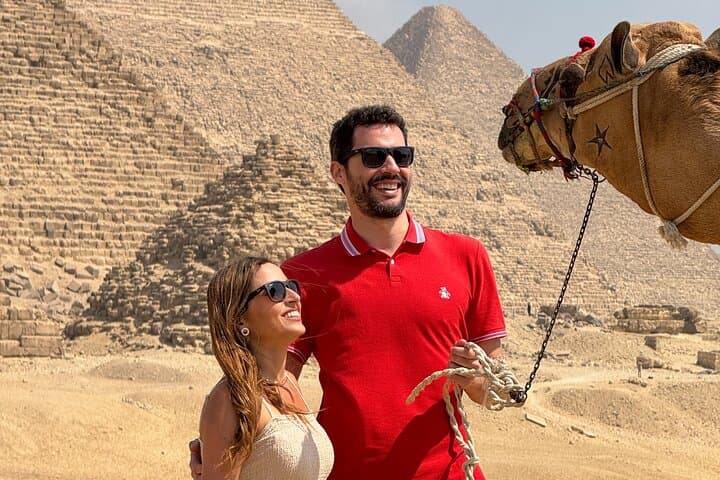
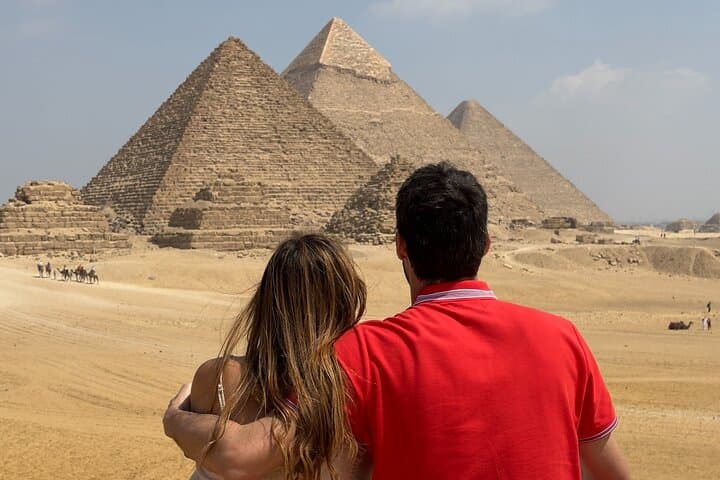
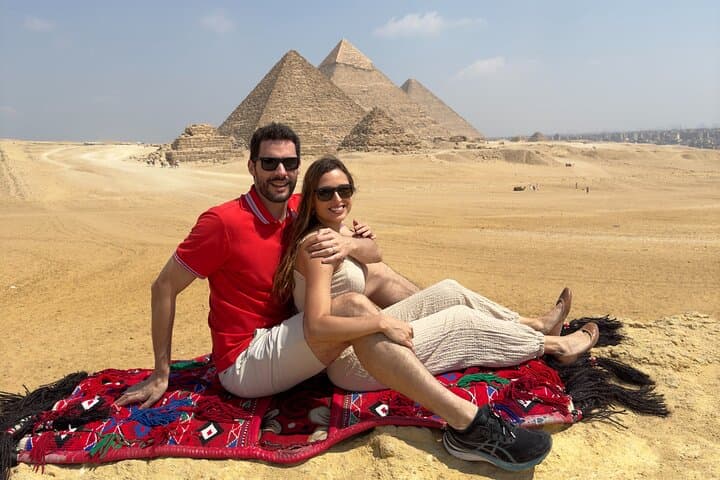
You arrive before the heat climbs and the Giza plateau opens like a stone amphitheater: limestone blocks stacked in precise geometry, wind teasing sand across the path as the Sphinx watches the morning’s small traffic of guides and cameras. The day moves from the monumental—Khufu’s Great Pyramid, its angled silhouette cutting the sky—to the quieter sweep of Saqqara, where Djoser’s step pyramid rises in layered, architectural clarity.
You arrive before the heat climbs and the Giza plateau opens like a stone amphitheater: limestone blocks stacked in precise geometry, wind teasing sand across the path as the Sphinx watches the morning’s small traffic of guides and cameras. The day moves from the monumental—Khufu’s Great Pyramid, its angled silhouette cutting the sky—to the quieter sweep of Saqqara, where Djoser’s step pyramid rises in layered, architectural clarity.
This route stitches together Egypt’s Old Kingdom: the Giza complex (c. 2600–2500 BCE), the carved face of the Sphinx and the Valley Temple, then south to Saqqara where Imhotep’s step pyramid marks the beginning of large-scale stone construction. Geologically the plateau is a band of limestone and marl; the stones you walk on are ancient quarries and funeral architecture at once. Culturally, expect a blend of modern Cairo’s bustle and ritualized tour rhythms—guides narrate, vendors offer shade-bringing tea, and local restaurants serve a steady, simple lunch.
Plan practically: start early to avoid midday heat, bring a hat, sunscreen, and sturdy shoes for uneven paths. Photography is excellent but interior access to some chambers can be limited and may require extra tickets. The tour’s private vehicle and included entrances streamline movement between sites, but much of the experience is on foot and in the sun. Hydrate frequently, keep valuables secure, and allow time to absorb each site rather than rush through its rooms and angles. This is a day of architectural gravity and dry, wind-swept panoramas—history felt under your soles.