THE ADVENTURE COLLECTIVE® · Independent discovery and booking for outdoor travel

A full-day drive from Tbilisi takes you from cliffside cave monasteries at David Gareja to the hilltop town of Sighnaghi and the sacred Bodbe Monastery. Expect dusty trails, historic frescoes, panoramic valley views, and a taste of Kakheti wine culture.
A full-day drive from Tbilisi takes you from cliffside cave monasteries at David Gareja to the hilltop town of Sighnaghi and the sacred Bodbe Monastery. Expect dusty trails, historic frescoes, panoramic valley views, and a taste of Kakheti wine culture.
The bus slides out of Tbilisi at first light and the city’s hum loosens into open sky. By mid-morning the road climbs into the Kakheti hills, where vineyards arrange themselves like disciplined rows and the wind seems to push visitors toward the valley’s rim. You step from the vehicle and the air changes — drier, sharper; the semi-desert at David Gareja dares you forward while Sighnaghi’s walls invite a slower, curious pace.
Verified experiences and guided adventures in the surrounding area.
Operated by Day Travel To Georgia · Tbilisi, Tbilisi
The bus slides out of Tbilisi at first light and the city’s hum loosens into open sky. By mid-morning the road climbs into the Kakheti hills, where vineyards arrange themselves like disciplined rows and the wind seems to push visitors toward the valley’s rim. You step from the vehicle and the air changes — drier, sharper; the semi-desert at David Gareja dares you forward while Sighnaghi’s walls invite a slower, curious pace.
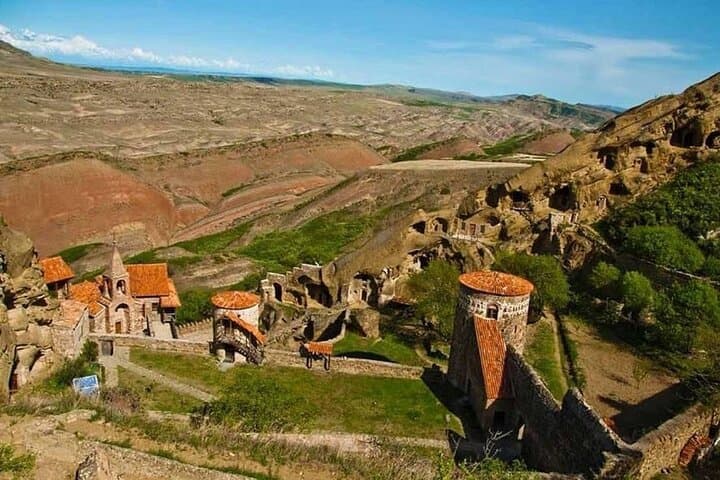
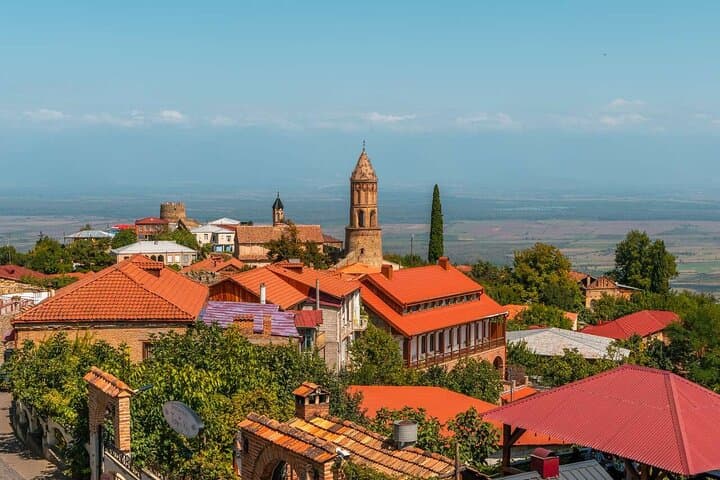
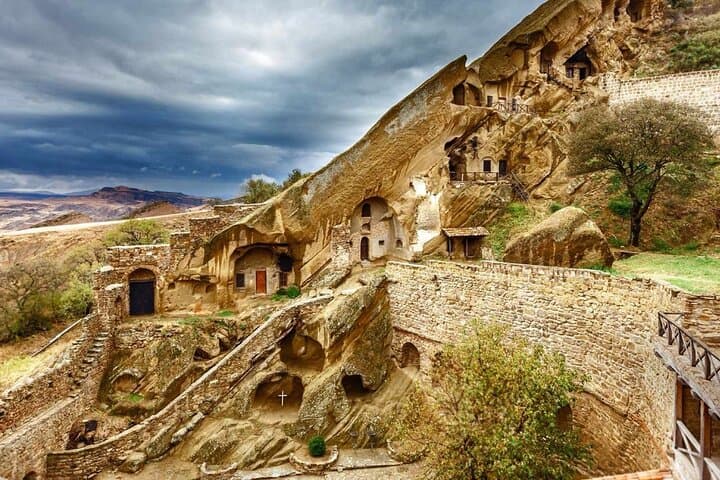
This route threads centuries of Georgian history: David Gareja’s 6th-century cave monasteries carved into claystone cliffs, Bodbe’s monastery linked to St. Nino and pilgrimage, and Sighnaghi’s 18th-century defensive wall overlooking the Alazani Valley and the Greater Caucasus beyond. Geology matters here — erosion-carved cliffs hold frescoes and hermit cells, while the valley’s alluvial plain fuels Kakheti’s winemaking culture.
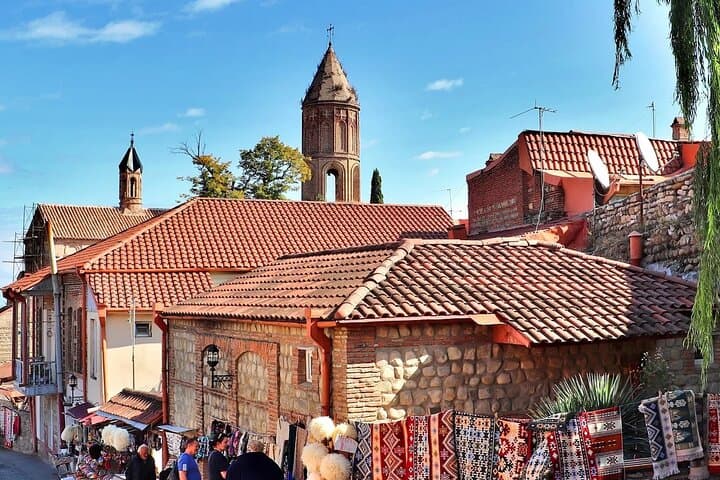
Locals blend Orthodox ritual with a strong wine tradition; stop at a small family winery to taste qvevri-aged wines and learn how land and grape shape identity. Expect dusty trails at Gareja, cobbled streets and wooden balconies in Sighnaghi, and a contemplative courtyard at Bodbe.
Practical guidance: the day is long (about 10 hours) and involves uneven walking and short climbs; wear sturdy shoes, bring water and sun protection, and carry minimal valuables. Respect religious sites (modest dress and quiet) and stay on marked routes to protect fragile frescoes. Timing-wise, early arrival at David Gareja avoids heat and crowds; afternoons are best for photography along Sighnaghi’s wall when the light falls on the Alazani plain.
moderate.
10 hours.
Suitable for travelers with reasonable mobility who can handle multiple short walks and some uneven terrain over a full day
Most tours depart from central Tbilisi and return there the same day; check pickup points with the operator.
Expect several short walks (10–40 minutes) at attractions; surfaces range from cobbles to loose soil and shallow climbs to viewpoints.
Entrance fees and guide explanations for major sites may or may not be included—confirm with the tour operator before booking.
The tour is family-friendly but uneven terrain at David Gareja and steps at monasteries can be difficult for those with limited mobility; operators note infants must sit on laps.
David Gareja dates to the 6th century as an early monastic center; Bodbe is tied to St. Nino and Sighnaghi’s defensive walls were expanded in the 18th century during regional conflicts.
The fragile frescoes and erosion-prone cliffs require visitors to stay on marked paths and avoid touching painted surfaces; support local conservation by following guides’ instructions and minimizing waste.
Day Travel To Georgia operates guided outdoor trips and adventures with an emphasis on safety, stewardship, and memorable experiences.
The bus slides out of Tbilisi at first light and the city’s hum loosens into open sky. By mid-morning the road climbs into the Kakheti hills, where vineyards arrange themselves like disciplined rows and the wind seems to push visitors toward the valley’s rim. You step from the vehicle and the air changes — drier, sharper; the semi-desert at David Gareja dares you forward while Sighnaghi’s walls invite a slower, curious pace.
The bus slides out of Tbilisi at first light and the city’s hum loosens into open sky. By mid-morning the road climbs into the Kakheti hills, where vineyards arrange themselves like disciplined rows and the wind seems to push visitors toward the valley’s rim. You step from the vehicle and the air changes — drier, sharper; the semi-desert at David Gareja dares you forward while Sighnaghi’s walls invite a slower, curious pace.
This route threads centuries of Georgian history: David Gareja’s 6th-century cave monasteries carved into claystone cliffs, Bodbe’s monastery linked to St. Nino and pilgrimage, and Sighnaghi’s 18th-century defensive wall overlooking the Alazani Valley and the Greater Caucasus beyond. Geology matters here — erosion-carved cliffs hold frescoes and hermit cells, while the valley’s alluvial plain fuels Kakheti’s winemaking culture.
Locals blend Orthodox ritual with a strong wine tradition; stop at a small family winery to taste qvevri-aged wines and learn how land and grape shape identity. Expect dusty trails at Gareja, cobbled streets and wooden balconies in Sighnaghi, and a contemplative courtyard at Bodbe.
Practical guidance: the day is long (about 10 hours) and involves uneven walking and short climbs; wear sturdy shoes, bring water and sun protection, and carry minimal valuables. Respect religious sites (modest dress and quiet) and stay on marked routes to protect fragile frescoes. Timing-wise, early arrival at David Gareja avoids heat and crowds; afternoons are best for photography along Sighnaghi’s wall when the light falls on the Alazani plain.