THE ADVENTURE COLLECTIVE® · Independent discovery and booking for outdoor travel

Walk through Bab Bou Jeloud into Fez el-Bali with a certified local guide, visiting Al Quaraouiyyin, medieval madrasas, Chouara Tannery and ramparts over a 5–6 hour private tour. Expect cobbled lanes, artisan workshops and short vehicle transfers to scenic viewpoints.
Walk through Bab Bou Jeloud into Fez el-Bali with a certified local guide, visiting Al Quaraouiyyin, medieval madrasas, Chouara Tannery and ramparts over a 5–6 hour private tour. Expect cobbled lanes, artisan workshops and short vehicle transfers to scenic viewpoints.
The morning air is dry and bright as the driver eases the car to a stop outside Bab Bou Jeloud. Stepping through the blue-and-green arch feels like crossing a threshold in time: narrow streets fan out, merchants arrange trays of spices, and the medina’s stone walls rise and fall like a living map. Your guide leads the way, voice low against the clatter of deliveries and the distant river that threads the old city.
Verified experiences and guided adventures in the surrounding area.
Operated by Morocco desert trips · Fez, Fès-Meknès
The morning air is dry and bright as the driver eases the car to a stop outside Bab Bou Jeloud. Stepping through the blue-and-green arch feels like crossing a threshold in time: narrow streets fan out, merchants arrange trays of spices, and the medina’s stone walls rise and fall like a living map. Your guide leads the way, voice low against the clatter of deliveries and the distant river that threads the old city.
Fez el-Bali is a UNESCO World Heritage site (1981) and one of the oldest continuous urban quarters in the Islamic world. The University of al-Qarawiyyin—founded by Fatima al-Fihri in the late 9th century—anchors the medina’s intellectual history. Much of the visible architecture dates to Marinid patronage in the 13th–14th centuries, including ornate madrasas and carved woodwork. Geologically, Fez sits on the Saïss plain near the foothills of the Middle Atlas; the Oued Fes historically supplied tannery pits and powered public fountains.
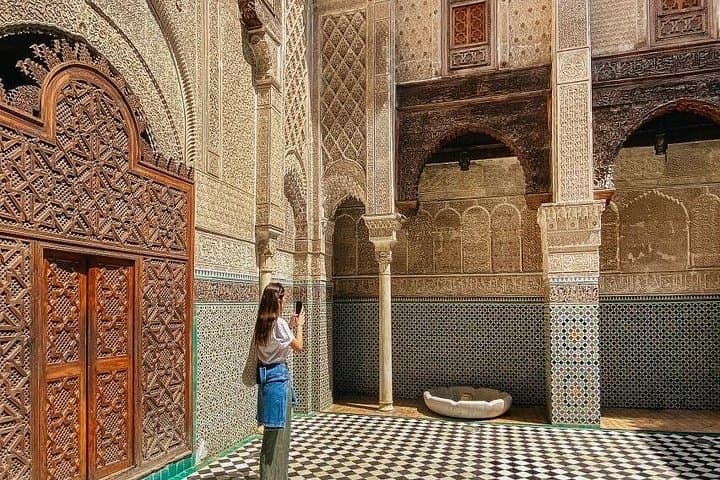
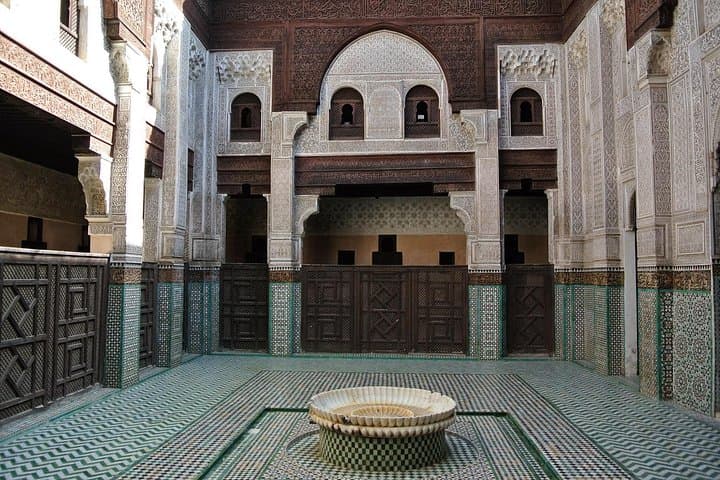
Expect a mix of slow, observational walking and short vehicle transfers to vantage points along the ramparts. Highlights include the dye vats of Chouara Tannery (prepare for strong odors), the mosaic courtyards of Al-Attarine Madrasa, and the panoramic sweep from the city walls toward the hills.
Practical guidance: plan 5–6 hours, bring a reusable water bottle (bottled water is often provided), carry small-denomination dirhams for modest entrance fees (many sites charge ~2 EUR), wear sturdy shoes for cobbles, and leave large bags at your hotel—streets are tight and busy. Morning or late afternoon timings reduce heat and crowds and make photography easier.
easy.
5–6 hours.
Suitable for travelers in average condition; requires several hours of standing and walking on uneven ground.
The tour runs about 5–6 hours with a mix of walking in the medina and short car transfers to ramparts and viewpoints; pace is moderate and guided for most guests.
Some sites charge small entrance fees (often around €2) that may not be included—bring cash in small denominations; the itinerary notes which attractions require separate fees.
Fez el-Bali has narrow, steep, and uneven alleys that make full wheelchair or stroller access difficult; if mobility is limited, discuss alternative routing with the operator before booking.
This tour lists a certified multilingual guide and professional driver; confirm specific language needs during booking to ensure availability.
Fez grew into a major intellectual and religious center from the 9th century onward; Al-Qarawiyyin, founded by Fatima al-Fihri in 857–859, became a pivotal learning institution in the Islamic world.
The medina faces pressures from tourism and aging infrastructure; support local preservation by following pathways, avoiding trampling historic features, and minimizing single-use plastics.
Morocco desert trips operates guided outdoor trips and adventures with an emphasis on safety, stewardship, and memorable experiences.
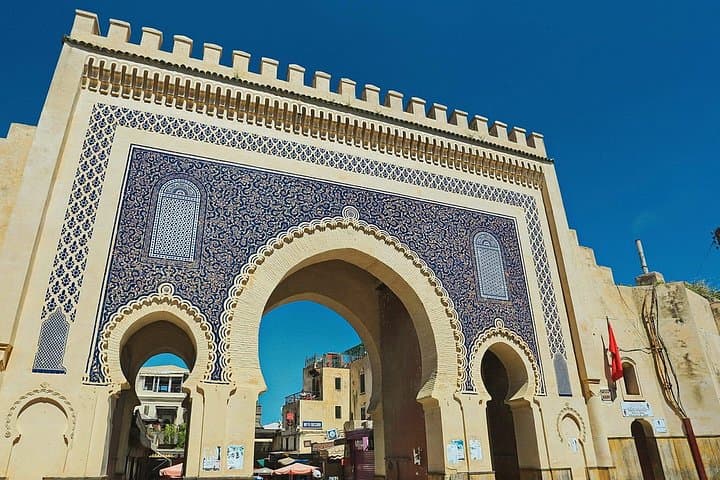
The morning air is dry and bright as the driver eases the car to a stop outside Bab Bou Jeloud. Stepping through the blue-and-green arch feels like crossing a threshold in time: narrow streets fan out, merchants arrange trays of spices, and the medina’s stone walls rise and fall like a living map. Your guide leads the way, voice low against the clatter of deliveries and the distant river that threads the old city.
The morning air is dry and bright as the driver eases the car to a stop outside Bab Bou Jeloud. Stepping through the blue-and-green arch feels like crossing a threshold in time: narrow streets fan out, merchants arrange trays of spices, and the medina’s stone walls rise and fall like a living map. Your guide leads the way, voice low against the clatter of deliveries and the distant river that threads the old city.
Fez el-Bali is a UNESCO World Heritage site (1981) and one of the oldest continuous urban quarters in the Islamic world. The University of al-Qarawiyyin—founded by Fatima al-Fihri in the late 9th century—anchors the medina’s intellectual history. Much of the visible architecture dates to Marinid patronage in the 13th–14th centuries, including ornate madrasas and carved woodwork. Geologically, Fez sits on the Saïss plain near the foothills of the Middle Atlas; the Oued Fes historically supplied tannery pits and powered public fountains.
Expect a mix of slow, observational walking and short vehicle transfers to vantage points along the ramparts. Highlights include the dye vats of Chouara Tannery (prepare for strong odors), the mosaic courtyards of Al-Attarine Madrasa, and the panoramic sweep from the city walls toward the hills.
Practical guidance: plan 5–6 hours, bring a reusable water bottle (bottled water is often provided), carry small-denomination dirhams for modest entrance fees (many sites charge ~2 EUR), wear sturdy shoes for cobbles, and leave large bags at your hotel—streets are tight and busy. Morning or late afternoon timings reduce heat and crowds and make photography easier.