THE ADVENTURE COLLECTIVE® · Independent discovery and booking for outdoor travel

A long, rewarding daytrip from El Calafate brings you into the shadow of Cerro Fitz Roy and Cerro Torre. Expect scenic drives, short steep viewpoints, a 20 m waterfall, and wildlife sightings on a 13–14 hour excursion.
A long, rewarding daytrip from El Calafate brings you into the shadow of Cerro Fitz Roy and Cerro Torre. Expect scenic drives, short steep viewpoints, a 20 m waterfall, and wildlife sightings on a 13–14 hour excursion.
The minibus hums north along the shore of Lago Argentino and the mountains begin to gain weight on the horizon—dark granite teeth rising from ice-sculpted valleys. By the time the bus pulls into El Chaltén, the jagged silhouette of Cerro Fitz Roy and Cerro Torre dominates the skyline, daring you to look up.
Verified experiences and guided adventures in the surrounding area.
Operated by All Patagonia Viajes y Turismo · El Chaltén, Santa Cruz
The minibus hums north along the shore of Lago Argentino and the mountains begin to gain weight on the horizon—dark granite teeth rising from ice-sculpted valleys. By the time the bus pulls into El Chaltén, the jagged silhouette of Cerro Fitz Roy and Cerro Torre dominates the skyline, daring you to look up.
This route threads together recent human history and ancient geology. El Chaltén is Argentina’s youngest town (est. 1985) and has been branded the national capital of trekking; its trails follow valleys carved by Pleistocene glaciers and rivers that still rework the landscape. Fitz Roy (3,405 m) and Torre (3,102 m) are granite spires left where ice-polished rock resisted erosion, and the steppe around La Leona carries marks of early Patagonian ranching and 19th-century route-making.
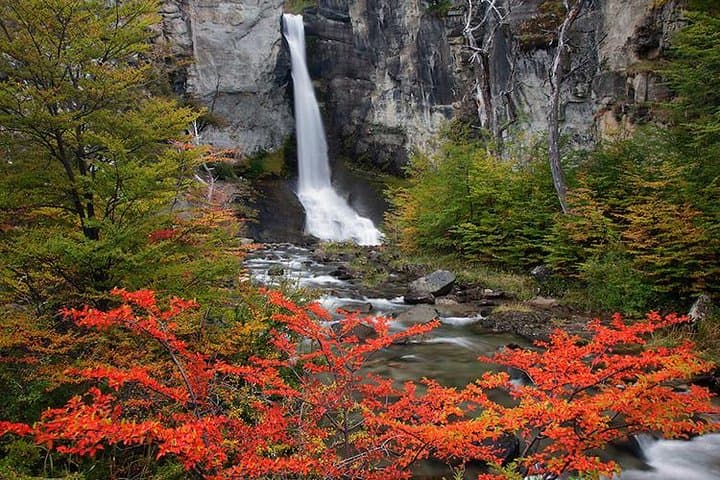
Expect short, well-marked walks: Mirador de los Cóndores (a steep 20–40 minute climb) and the flat, forested trail to Chorrillo del Salto, a 20-meter waterfall about 4 km from town. Wildlife—guanacos grazing on the steppe and condors riding thermal columns—adds motion to the scenery.
Practical guide: this is a long day—roughly 13–14 hours roundtrip from El Calafate with about 3 hours driving each way. Wear waterproof layers and sturdy shoes for muddy or rocky trails, carry 1–2 liters of water, sun protection, and basic snacks. Photography windows are tight around midday light and windy afternoons, so plan short hikes (30–120 minutes) and move deliberately between viewpoints. The tour includes lunch in town and a bilingual guide; bring cash for drinks and small purchases. Respect marked trails and pack out waste—the Patagonian steppe recovers slowly.
moderate.
13–14 hours.
Moderate fitness: able to do short steep climbs (30–60 minutes) and tolerate long vehicle transfers.
The road is roughly 220 km and the transfer typically takes about 3–4 hours each way, with stops at viewpoints and La Leona.
No technical climbing is required; viewpoints are short to moderate hikes on uneven terrain—good footwear and a basic fitness level are sufficient.
Yes, the tour includes lunch at a restaurant in El Chaltén, but drinks are usually not covered—bring cash or a card for beverages.
The tour is not recommended for children under 5 and is not suitable for travelers with significant mobility problems due to walking and long vehicle transfers.
El Chaltén was founded in 1985 and quickly became Argentina's trekking center; the region's human history includes ranching and early exploratory routes along the Patagonian steppe.
The Patagonian steppe and glacial valleys are ecologically fragile—stick to trails, avoid disturbing wildlife, and carry out all trash to limit long-term impacts.
All Patagonia Viajes y Turismo operates guided outdoor trips and adventures with an emphasis on safety, stewardship, and memorable experiences.



The minibus hums north along the shore of Lago Argentino and the mountains begin to gain weight on the horizon—dark granite teeth rising from ice-sculpted valleys. By the time the bus pulls into El Chaltén, the jagged silhouette of Cerro Fitz Roy and Cerro Torre dominates the skyline, daring you to look up.
The minibus hums north along the shore of Lago Argentino and the mountains begin to gain weight on the horizon—dark granite teeth rising from ice-sculpted valleys. By the time the bus pulls into El Chaltén, the jagged silhouette of Cerro Fitz Roy and Cerro Torre dominates the skyline, daring you to look up.
This route threads together recent human history and ancient geology. El Chaltén is Argentina’s youngest town (est. 1985) and has been branded the national capital of trekking; its trails follow valleys carved by Pleistocene glaciers and rivers that still rework the landscape. Fitz Roy (3,405 m) and Torre (3,102 m) are granite spires left where ice-polished rock resisted erosion, and the steppe around La Leona carries marks of early Patagonian ranching and 19th-century route-making.
Expect short, well-marked walks: Mirador de los Cóndores (a steep 20–40 minute climb) and the flat, forested trail to Chorrillo del Salto, a 20-meter waterfall about 4 km from town. Wildlife—guanacos grazing on the steppe and condors riding thermal columns—adds motion to the scenery.
Practical guide: this is a long day—roughly 13–14 hours roundtrip from El Calafate with about 3 hours driving each way. Wear waterproof layers and sturdy shoes for muddy or rocky trails, carry 1–2 liters of water, sun protection, and basic snacks. Photography windows are tight around midday light and windy afternoons, so plan short hikes (30–120 minutes) and move deliberately between viewpoints. The tour includes lunch in town and a bilingual guide; bring cash for drinks and small purchases. Respect marked trails and pack out waste—the Patagonian steppe recovers slowly.