THE ADVENTURE COLLECTIVE® · Independent discovery and booking for outdoor travel

Drive the C34 to Cape Cross for a full-day encounter with a vast seal colony, wind-swept lichen plains and coastal salt works. This practical guide outlines what to expect, how to prepare and where to find the best views.
Drive the C34 to Cape Cross for a full-day encounter with a vast seal colony, wind-swept lichen plains and coastal salt works. This practical guide outlines what to expect, how to prepare and where to find the best views.
Salt air and wind—your car hums along the C34 as the coastline peels away to a raw ribbon of beach and stone. Within hours the human soundscape thins and the landscape grows angular: low dunes, crusted salt pans and a band of grey seals sprawled on the shore, noisy and indifferent to visitors.
Verified experiences and guided adventures in the surrounding area.
Operated by Jublia Travel and Tours Agency · Swakopmund, Erongo Region
Salt air and wind—your car hums along the C34 as the coastline peels away to a raw ribbon of beach and stone. Within hours the human soundscape thins and the landscape grows angular: low dunes, crusted salt pans and a band of grey seals sprawled on the shore, noisy and indifferent to visitors.
Cape Cross sits on Namibia’s Skeleton Coast, a place shaped by the cold Benguela Current and centuries of shipwrecks. The headland marks an important sealing ground; Portuguese navigator Diogo Cão planted a cross here in the 15th century, and the reserve's more recent history is tied to commercial sealing and coastal conservation. Geology is visible at a glance—wind-sculpted lichen fields, fossil-rich sandstone outcrops, and the flat, reflective pans that betray a long history of marine regression.
This full-day drive covers roughly 240 km round-trip from Swakopmund, mostly on sealed and gravel roads; stops include salt works, lichen fields, and the Cape Cross seal colony. Cultural context is sparse on the roadside but local guides will point out historical sites and discuss the coastal communities that rely on fishing. Wildlife dominates: expect seals, coastal birds, and quicksilver dune lizards.
Practical notes: plan for sun, wind and limited shade—bring water, a wind shell and sturdy shoes for short walks on uneven ground. Photography opportunities are abundant but keep distance from seals and follow guide instructions to protect both animals and yourself. Timing matters—early light narrows shadows across the lichen and keeps midday heat manageable. The day is accessible for most fitness levels and rewards curious travelers with stark coastal panoramas and close encounters with one of Africa’s largest seal colonies.
easy.
7 hours.
Minimal sustained fitness required; able-bodied travelers who can walk short uneven distances are fine.
Cape Cross is about 120 km north of Swakopmund, roughly a 1.5–2 hour drive each way depending on stops and road conditions.
No—maintain distance. Seals can be aggressive if provoked and mothers will defend pups; always follow your guide’s distancing rules.
Yes—the C34 is passable in standard cars, but some side roads are gravel; check with your operator about vehicle type before booking.
Facilities are limited; plan to use facilities in Swakopmund before departure and bring water and snacks for the day.
The headland gained early European attention when 15th-century Portuguese navigators left crosses; later, commercial sealing and colonial-era salt works shaped the coast’s economy.
The seal colony is managed to limit disturbance; visitors should follow regulations to reduce stress on wildlife and avoid contaminating fragile lichen and salt pan habitats.
Jublia Travel and Tours Agency operates guided outdoor trips and adventures with an emphasis on safety, stewardship, and memorable experiences.
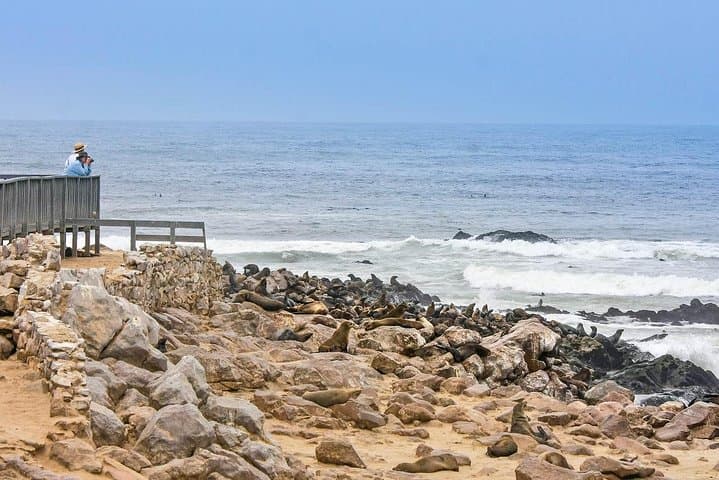


Salt air and wind—your car hums along the C34 as the coastline peels away to a raw ribbon of beach and stone. Within hours the human soundscape thins and the landscape grows angular: low dunes, crusted salt pans and a band of grey seals sprawled on the shore, noisy and indifferent to visitors.
Salt air and wind—your car hums along the C34 as the coastline peels away to a raw ribbon of beach and stone. Within hours the human soundscape thins and the landscape grows angular: low dunes, crusted salt pans and a band of grey seals sprawled on the shore, noisy and indifferent to visitors.
Cape Cross sits on Namibia’s Skeleton Coast, a place shaped by the cold Benguela Current and centuries of shipwrecks. The headland marks an important sealing ground; Portuguese navigator Diogo Cão planted a cross here in the 15th century, and the reserve's more recent history is tied to commercial sealing and coastal conservation. Geology is visible at a glance—wind-sculpted lichen fields, fossil-rich sandstone outcrops, and the flat, reflective pans that betray a long history of marine regression.
This full-day drive covers roughly 240 km round-trip from Swakopmund, mostly on sealed and gravel roads; stops include salt works, lichen fields, and the Cape Cross seal colony. Cultural context is sparse on the roadside but local guides will point out historical sites and discuss the coastal communities that rely on fishing. Wildlife dominates: expect seals, coastal birds, and quicksilver dune lizards.
Practical notes: plan for sun, wind and limited shade—bring water, a wind shell and sturdy shoes for short walks on uneven ground. Photography opportunities are abundant but keep distance from seals and follow guide instructions to protect both animals and yourself. Timing matters—early light narrows shadows across the lichen and keeps midday heat manageable. The day is accessible for most fitness levels and rewards curious travelers with stark coastal panoramas and close encounters with one of Africa’s largest seal colonies.