THE ADVENTURE COLLECTIVE® · Independent discovery and booking for outdoor travel

Drive north from Luxor for a full-day guided visit to Abydos and Dendera, two of Upper Egypt’s most important temple complexes. Experience Seti I’s Abydos King List and the Greco-Roman decorations of Dendera with an expert Egyptologist.
Drive north from Luxor for a full-day guided visit to Abydos and Dendera, two of Upper Egypt’s most important temple complexes. Experience Seti I’s Abydos King List and the Greco-Roman decorations of Dendera with an expert Egyptologist.
Morning light slices across the desert as your air-conditioned vehicle pulls away from Luxor, palm fringes and mud-brick villages sliding past the window. The road north feels deliberate—an easy, cinematic approach to sites where stone keeps a very old score. Abydos rises from the flatlands as a complex of carved reliefs and shadowed colonnades; later you’ll stand beneath the painted ceiling of Dendera’s Hathor temple, where Greco-Roman forms meet Egyptian ritual.
Verified experiences and guided adventures in the surrounding area.
Operated by Egypt Super Tours · Luxor, Luxor Governorate
Morning light slices across the desert as your air-conditioned vehicle pulls away from Luxor, palm fringes and mud-brick villages sliding past the window. The road north feels deliberate—an easy, cinematic approach to sites where stone keeps a very old score. Abydos rises from the flatlands as a complex of carved reliefs and shadowed colonnades; later you’ll stand beneath the painted ceiling of Dendera’s Hathor temple, where Greco-Roman forms meet Egyptian ritual.
Abydos was a major cult center for Osiris and holds the famous Abydos King List—Seti I’s chronological roll call of pharaohs engraved in stone. Dendera, rebuilt and decorated across Ptolemaic and Roman times, showcases fine reliefs, a preserved zodiac motif and a surprising Greco-Roman architectural vocabulary. Geologically, both sit on Nile-adjacent alluvial plains—stable, low-relief terrain that channels wind and heat differently through open courtyards and sheltered inner chambers.
Expect short, paced walks across packed sand and stepped stone with informative stops led by an Egyptologist guide. Facilities are basic at both sites; shade is limited and surfaces can be uneven. Practical takeaways: bring sun protection, carry small cash for local vendors and temple entry if not included, and allow the guide to navigate restricted areas to keep the stones intact.
The day is cultural more than athletic—an immersive study in temple art and funerary memory that rewards patience and observant walking. Time your visit for morning or late afternoon light to avoid peak heat and get the best photographs of reliefs and columns.
easy.
10 hours.
Minimal fitness required—mostly short walks on flat or gently stepped terrain; suitable for most travelers
The standard itinerary notes that admission is not included—confirm with your booking and bring cash for tickets if necessary.
Expect roughly 3–4 hours of driving total during the day’s transfers, with stops and short walks at each site.
The tour lists wheelchair accessibility, but some temple areas have steps and uneven surfaces; check with the operator for site-by-site accessibility details.
Yes—booking requires a passport copy for government permission; carry your passport or a copy during the tour as well.
Abydos served as a principal cult site for Osiris and preserves the Abydos King List; Dendera’s temple reflects Ptolemaic and Roman contributions to Egyptian religious architecture.
Both sites are managed with conservation priorities; visitors should avoid touching reliefs, stay on marked paths, and support local guides to minimize impact.
Egypt Super Tours operates guided outdoor trips and adventures with an emphasis on safety, stewardship, and memorable experiences.


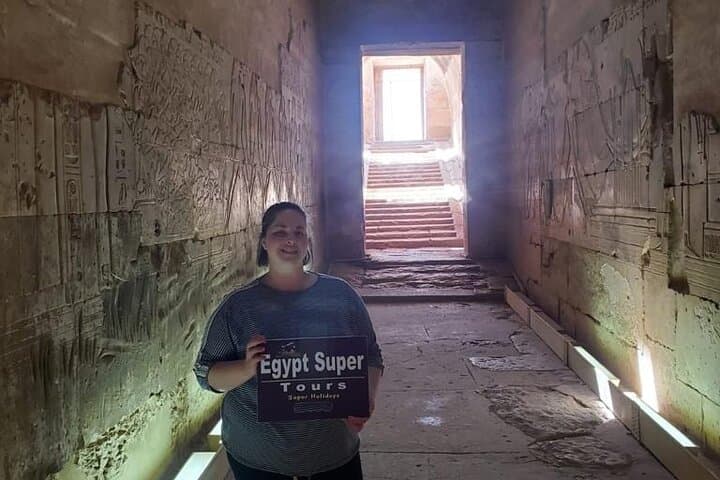
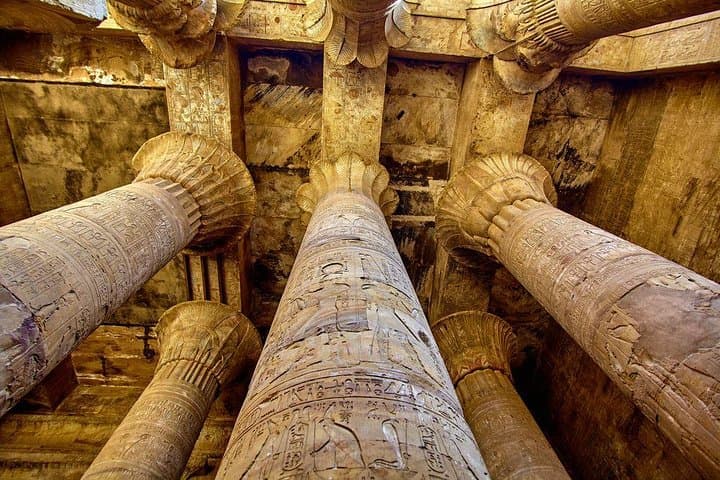
Morning light slices across the desert as your air-conditioned vehicle pulls away from Luxor, palm fringes and mud-brick villages sliding past the window. The road north feels deliberate—an easy, cinematic approach to sites where stone keeps a very old score. Abydos rises from the flatlands as a complex of carved reliefs and shadowed colonnades; later you’ll stand beneath the painted ceiling of Dendera’s Hathor temple, where Greco-Roman forms meet Egyptian ritual.
Morning light slices across the desert as your air-conditioned vehicle pulls away from Luxor, palm fringes and mud-brick villages sliding past the window. The road north feels deliberate—an easy, cinematic approach to sites where stone keeps a very old score. Abydos rises from the flatlands as a complex of carved reliefs and shadowed colonnades; later you’ll stand beneath the painted ceiling of Dendera’s Hathor temple, where Greco-Roman forms meet Egyptian ritual.
Abydos was a major cult center for Osiris and holds the famous Abydos King List—Seti I’s chronological roll call of pharaohs engraved in stone. Dendera, rebuilt and decorated across Ptolemaic and Roman times, showcases fine reliefs, a preserved zodiac motif and a surprising Greco-Roman architectural vocabulary. Geologically, both sit on Nile-adjacent alluvial plains—stable, low-relief terrain that channels wind and heat differently through open courtyards and sheltered inner chambers.
Expect short, paced walks across packed sand and stepped stone with informative stops led by an Egyptologist guide. Facilities are basic at both sites; shade is limited and surfaces can be uneven. Practical takeaways: bring sun protection, carry small cash for local vendors and temple entry if not included, and allow the guide to navigate restricted areas to keep the stones intact.
The day is cultural more than athletic—an immersive study in temple art and funerary memory that rewards patience and observant walking. Time your visit for morning or late afternoon light to avoid peak heat and get the best photographs of reliefs and columns.