THE ADVENTURE COLLECTIVE® · Independent discovery and booking for outdoor travel

Spend a day beyond Luxor’s main sites to visit Dendera’s vivid Greco-Roman temple and Abydos’ royal reliefs. This private Egyptologist-led tour combines close-up archaeology with long desert drives—best for travelers ready for a full, history-rich day.
Spend a day beyond Luxor’s main sites to visit Dendera’s vivid Greco-Roman temple and Abydos’ royal reliefs. This private Egyptologist-led tour combines close-up archaeology with long desert drives—best for travelers ready for a full, history-rich day.
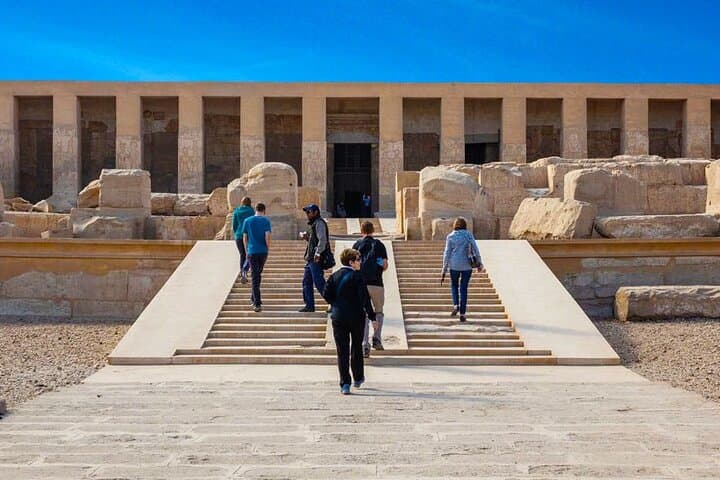
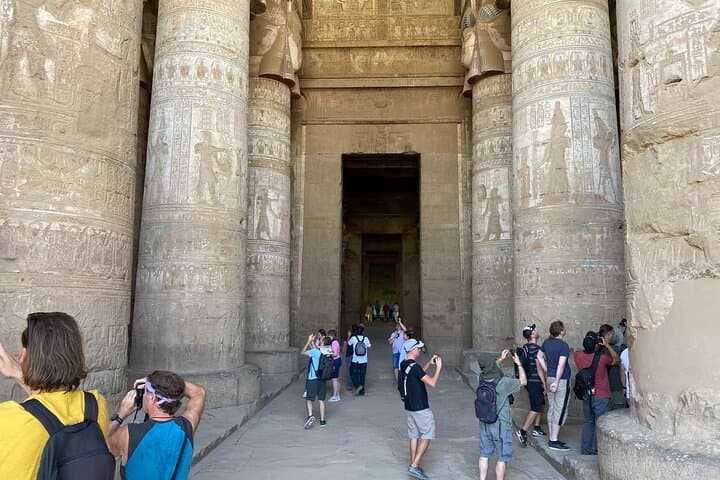
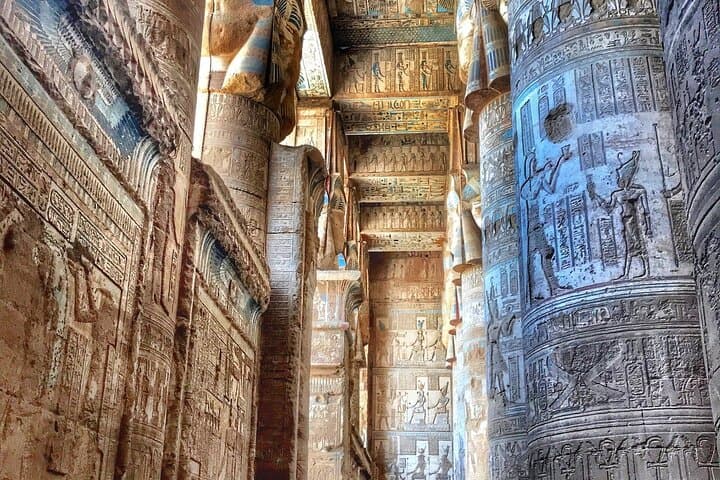
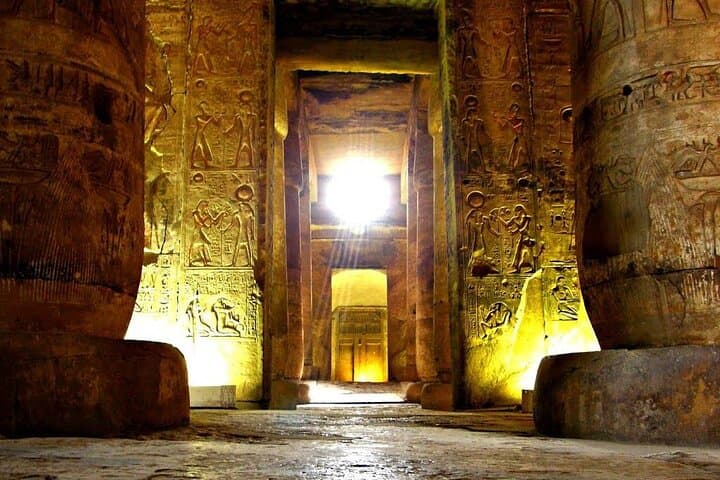
Dawn breaks over the Nile and the tour vehicle slips out of Luxor’s palm-lined streets toward the pale desert. By midmorning the light has sharpened the carved lines inside Dendera’s hypostyle halls; the ceiling’s constellations seem to press gently toward visitors as if the stars themselves demanded notice. Later, at Abydos, weathered reliefs of Seti I and Ramses II still hold pigments in their grooves, and the king list invites a quiet, unhurried reading.
Verified experiences and guided adventures in the surrounding area.
Operated by Here Egypt Tours · Luxor, Luxor Governorate
Dawn breaks over the Nile and the tour vehicle slips out of Luxor’s palm-lined streets toward the pale desert. By midmorning the light has sharpened the carved lines inside Dendera’s hypostyle halls; the ceiling’s constellations seem to press gently toward visitors as if the stars themselves demanded notice. Later, at Abydos, weathered reliefs of Seti I and Ramses II still hold pigments in their grooves, and the king list invites a quiet, unhurried reading.
These temples sit on Egypt’s eastern desert fringe where river silt meets bedrock—stone quarried nearby, dressed and painted in eras spanning Pharaonic to Greco-Roman rule. Dendera honors Hathor, a goddess of music and love whose bovine motifs and preserved zodiac ceiling offer rare color in an often-bleached landscape. Abydos is a cult center of Osiris, a pilgrimage focus where royal names and afterlife doctrines were literally carved into the narrative of the land.
Travelers should expect a full day: roughly 10 hours door-to-door with two guided site visits and long transfers across flat desert highways.
Practical guidance: start early to avoid peak sun, carry cash for site entry and optional camera permits, and wear sturdy shoes—the temple floors are ancient stone and uneven. Respect preservation rules; avoid touching painted reliefs and follow the Egyptologist guide’s timing to see the best-lit interiors. Bring a brimmed hat, refillable water, and patience—the sites reward steady attention with details that reveal themselves slowly, one hieroglyph at a time.
easy.
10 hours.
Basic mobility required—comfortable walking and standing for several hours; able to navigate uneven stone floors and steps.
No — the tour’s inclusions list transfers and guide services; entrance tickets are typically purchased on-site with cash or card where available.
Yes — the tour includes a professional Egyptologist guide who provides commentary in English; confirm language needs at booking.
Yes — the tour offers door-to-door transfers from hotels and cruise ships in Luxor as part of the booking.
Sites have uneven surfaces; the operator notes stroller accessibility for short children but expect lifts and rough ground—plan for a carrier if mobility is a concern.
Abydos was a major cult center for Osiris and contains the royal Abydos King List; Dendera’s current temple dates largely to the Greco-Roman era and preserves painted ceilings dedicated to Hathor.
Both sites are vulnerable to erosion and human impact; visitors should stay on marked paths, avoid touching reliefs, and support conservation by following guide instructions.
Here Egypt Tours operates guided outdoor trips and adventures with an emphasis on safety, stewardship, and memorable experiences.
Dawn breaks over the Nile and the tour vehicle slips out of Luxor’s palm-lined streets toward the pale desert. By midmorning the light has sharpened the carved lines inside Dendera’s hypostyle halls; the ceiling’s constellations seem to press gently toward visitors as if the stars themselves demanded notice. Later, at Abydos, weathered reliefs of Seti I and Ramses II still hold pigments in their grooves, and the king list invites a quiet, unhurried reading.
Dawn breaks over the Nile and the tour vehicle slips out of Luxor’s palm-lined streets toward the pale desert. By midmorning the light has sharpened the carved lines inside Dendera’s hypostyle halls; the ceiling’s constellations seem to press gently toward visitors as if the stars themselves demanded notice. Later, at Abydos, weathered reliefs of Seti I and Ramses II still hold pigments in their grooves, and the king list invites a quiet, unhurried reading.
These temples sit on Egypt’s eastern desert fringe where river silt meets bedrock—stone quarried nearby, dressed and painted in eras spanning Pharaonic to Greco-Roman rule. Dendera honors Hathor, a goddess of music and love whose bovine motifs and preserved zodiac ceiling offer rare color in an often-bleached landscape. Abydos is a cult center of Osiris, a pilgrimage focus where royal names and afterlife doctrines were literally carved into the narrative of the land.
Travelers should expect a full day: roughly 10 hours door-to-door with two guided site visits and long transfers across flat desert highways.
Practical guidance: start early to avoid peak sun, carry cash for site entry and optional camera permits, and wear sturdy shoes—the temple floors are ancient stone and uneven. Respect preservation rules; avoid touching painted reliefs and follow the Egyptologist guide’s timing to see the best-lit interiors. Bring a brimmed hat, refillable water, and patience—the sites reward steady attention with details that reveal themselves slowly, one hieroglyph at a time.