THE ADVENTURE COLLECTIVE® · Independent discovery and booking for outdoor travel

Drive from Athens into the rising slopes of Mt. Parnassos to stand where the Oracle once spoke. This full-day private tour visits the Temple of Apollo, the Delphi Museum, Arachova and the UNESCO-listed Hosios Loukas — practical, historically rich, and accessible for most travelers.
Drive from Athens into the rising slopes of Mt. Parnassos to stand where the Oracle once spoke. This full-day private tour visits the Temple of Apollo, the Delphi Museum, Arachova and the UNESCO-listed Hosios Loukas — practical, historically rich, and accessible for most travelers.
You arrive as the road from Athens begins to climb, pines sliding past the windows and the air sharpening. By midmorning the Phaedriades cliffs appear, two great faces of limestone that seem to hold the valley in a steady hand; the sanctuary of Delphi sits between them, stones worn by generations of feet and prophecy.
Verified experiences and guided adventures in the surrounding area.
Operated by Greece Athens Taxi GAT · Delphi, Phocis
You arrive as the road from Athens begins to climb, pines sliding past the windows and the air sharpening. By midmorning the Phaedriades cliffs appear, two great faces of limestone that seem to hold the valley in a steady hand; the sanctuary of Delphi sits between them, stones worn by generations of feet and prophecy.
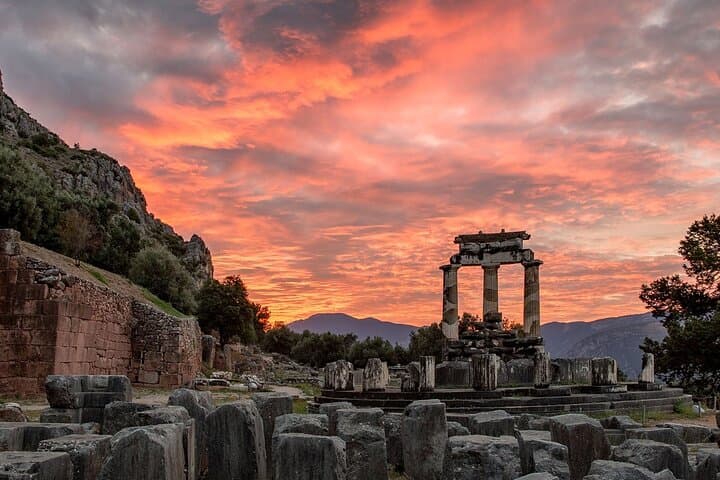
Delphi was the religious and cultural axis of classical Greece — home to the Temple of Apollo, the theatre that looks down over the olive-sprinkled valley, and the stadium high above. Geologically, the site occupies a faulted slope of Mt. Parnassos; the marble steps, Doric columns and the circular tholos at Athena Pronaea are built from local stone that dates to the Hellenistic era and earlier. Culturally, the oracle shaped decisions across the Mediterranean; UNESCO recognized Delphi for its universal value in 1987.
This full-day, private tour runs about 8–9 hours roundtrip from Athens (roughly 2.5–3 hours each way by road) with stops in Arachova, Levadia and the Byzantine monastery of Hosios Loukas. Expect 90 minutes in the archaeological museum and time to walk between ruins — paths are uneven and climb steadily to the theatre and stadium at about 600 m elevation.
Practical edge: wear sturdy shoes, bring sun protection and some cash for site tickets and a mountain-town lunch. The tour includes bottled water and private transport, but not archaeological admission — guides can assist with skip-the-line purchases. Arrive early to avoid heat and crowds; the site rewards slow, watchful exploration as cliffs and wind seem to press the ancient voices forward.
easy.
8–9 hours.
Suitable for most fitness levels; includes walking on uneven stone paths and some stairs up to the theatre and stadium.
No — archaeological site and museum admission are not included; the guide can assist with purchasing tickets but costs are paid by participants.
The tour departs from Athens with hotel, Airbnb or Piraeus port pickup available at no extra charge — confirm your pickup point when booking.
Many areas are wheelchair accessible and transport is accessible, but some ruins involve stairs and uneven terrain; contact the operator to confirm accommodations.
Yes — the itinerary includes a stop in the modern town of Delphi or Arachova where you can buy lunch; meals are not included unless specified.
Delphi was considered the omphalos — the 'navel' of the world — where the Oracle of Apollo influenced civic and military decisions across ancient Greece; the modern archaeological town was rearranged to allow excavation.
High visitor numbers and erosion threaten fragile masonry; stay on marked paths, avoid touching carved surfaces and follow local guidance to protect the site.
Greece Athens Taxi GAT operates guided outdoor trips and adventures with an emphasis on safety, stewardship, and memorable experiences.


You arrive as the road from Athens begins to climb, pines sliding past the windows and the air sharpening. By midmorning the Phaedriades cliffs appear, two great faces of limestone that seem to hold the valley in a steady hand; the sanctuary of Delphi sits between them, stones worn by generations of feet and prophecy.
You arrive as the road from Athens begins to climb, pines sliding past the windows and the air sharpening. By midmorning the Phaedriades cliffs appear, two great faces of limestone that seem to hold the valley in a steady hand; the sanctuary of Delphi sits between them, stones worn by generations of feet and prophecy.
Delphi was the religious and cultural axis of classical Greece — home to the Temple of Apollo, the theatre that looks down over the olive-sprinkled valley, and the stadium high above. Geologically, the site occupies a faulted slope of Mt. Parnassos; the marble steps, Doric columns and the circular tholos at Athena Pronaea are built from local stone that dates to the Hellenistic era and earlier. Culturally, the oracle shaped decisions across the Mediterranean; UNESCO recognized Delphi for its universal value in 1987.
This full-day, private tour runs about 8–9 hours roundtrip from Athens (roughly 2.5–3 hours each way by road) with stops in Arachova, Levadia and the Byzantine monastery of Hosios Loukas. Expect 90 minutes in the archaeological museum and time to walk between ruins — paths are uneven and climb steadily to the theatre and stadium at about 600 m elevation.
Practical edge: wear sturdy shoes, bring sun protection and some cash for site tickets and a mountain-town lunch. The tour includes bottled water and private transport, but not archaeological admission — guides can assist with skip-the-line purchases. Arrive early to avoid heat and crowds; the site rewards slow, watchful exploration as cliffs and wind seem to press the ancient voices forward.