THE ADVENTURE COLLECTIVE® · Independent discovery and booking for outdoor travel

Make a clean break from Lanzarote for a full day of sea crossings, dunes and a small volcanic island. This cruise pairs Corralejo’s busy harbor and beaches with Isla de Lobos’ windswept trails, lighthouse views and sheltered coves.
Make a clean break from Lanzarote for a full day of sea crossings, dunes and a small volcanic island. This cruise pairs Corralejo’s busy harbor and beaches with Isla de Lobos’ windswept trails, lighthouse views and sheltered coves.
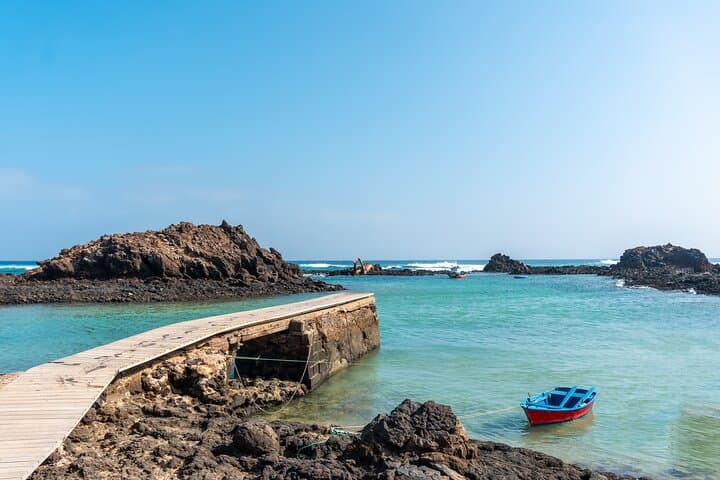
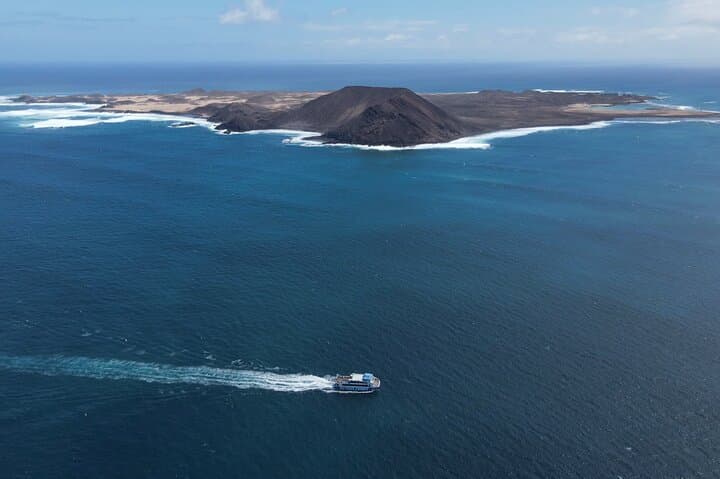
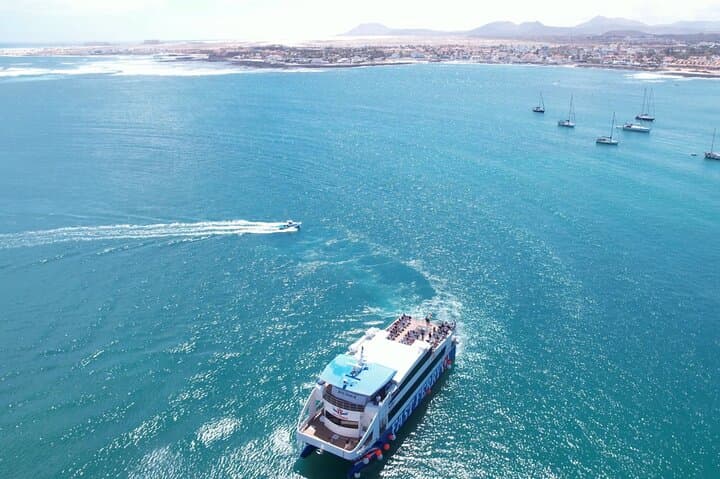
You step off the coach in Playa Blanca as the morning light hits the Atlantic flat. Salty air fills the bus windows and the guide in a red polo points toward the ferry ramp: a 30-minute crossing that sheds Lanzarote’s basalt silhouettes and slides you toward Fuerteventura’s northern shore. By mid-morning the little archipelago of Isla de Lobos hovers on the horizon—a low, volcanic island that dares you ashore with sandy coves and a compact network of trails.
Verified experiences and guided adventures in the surrounding area.
Operated by Lineas Romero · Corralejo, Las Palmas (Canary Islands)
You step off the coach in Playa Blanca as the morning light hits the Atlantic flat. Salty air fills the bus windows and the guide in a red polo points toward the ferry ramp: a 30-minute crossing that sheds Lanzarote’s basalt silhouettes and slides you toward Fuerteventura’s northern shore. By mid-morning the little archipelago of Isla de Lobos hovers on the horizon—a low, volcanic island that dares you ashore with sandy coves and a compact network of trails.
Isla de Lobos is small—roughly a few square kilometers—but its story is long. Named for the monk seals (lobos marinos) that once hauled out here, the island has been a waypoint for fishermen, a lighthouse post, and now a protected nature reserve where human footprints are deliberately light. Geologically it’s a product of Plio-Pleistocene volcanism: basalt flows, tuff cones and a modest caldera rise from the sea. Corralejo’s neighbouring dunes are younger—wind-driven sands blown across volcanic rock over centuries, creating a stark contrast between black lava and pale dunes.
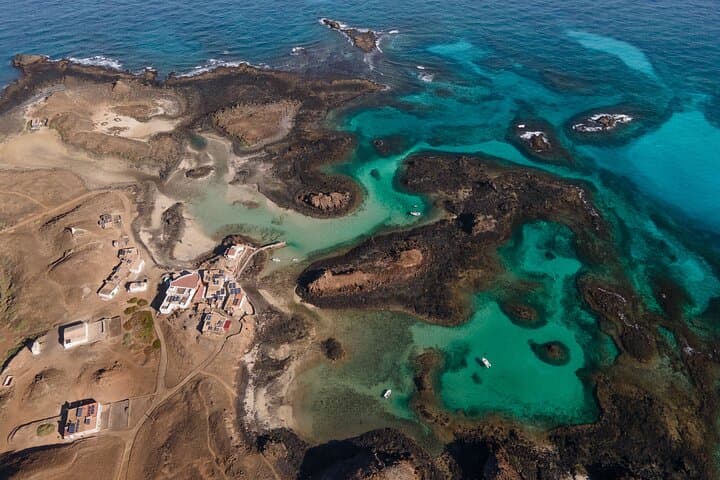
Culturally the day trip bridges two Canarian rhythms. Corralejo is lively—promenade cafés, fish grills, and the slow commerce of a fishing town turned surf hub—while Lobos is the quiet counterpoint: a lighthouse at Punta Martiño, salt pans, a handful of scrubby trails and a handful of beaches where the Atlantic washes with visible force.
Practicalities matter on a day like this. The tour is a full day—about 9–10 hours total (540–600 minutes). Expect roughly 30 minutes on the Lanzarote→Fuerteventura ferry and a short hop to Lobos; the island visit runs about four hours, enough time for a 3–4 km loop that climbs to Montaña de la Caldera (≈120 m elevation gain round-trip) and a relaxing swim at Playa de la Concha. Trails are rocky and sandy; boardwalks and beaten tracks alternate. Bring a printed or digital LobosPass (free at lobospass.com) — entry to the islet is controlled.
Pack sun protection and 1–2 liters of water, comfortable shoes for mixed volcanic/sandy terrain, and a wind shell—Atlantic breezes are constant. There’s time to explore Corralejo’s promenade and dunes before the late-afternoon return ferry; cafés near the harbor serve simple fish plates and Canarian papas arrugadas if you want a proper meal.
This trip works for most travelers: it’s easy in technical demand but rewards a bit of curiosity—look for seabirds on cliffs, volcanic rock textures up close, and the lighthouse silhouette as the day winds toward the last ferry back to Lanzarote. With planning and the right gear, it’s an efficient way to taste two islands in a single, scenic day.
easy.
9–10 hours.
Good for travelers who can manage several hours of walking on mixed terrain and short climbs; minimal sustained fitness required.
Yes—the island requires a free LobosPass available at lobospass.com; bring it printed or on your phone.
The coach and ferry accommodate children, but island trails are uneven—strollers are only practical around the small harbor area.
The coach offers onboard restrooms and Wi‑Fi; facilities on Lobos are limited to a small visitor area near the pier.
Yes—Playa de la Concha offers sheltered swimming but check sea and wind conditions; currents can be strong on exposed beaches.
No meals are included; bring snacks or plan to eat at Corralejo where cafés and fish restaurants are available during the scheduled stop.
Full refund if you cancel at least 24 hours before departure; cancellations within 24 hours are not refundable and trips may be canceled for bad weather.
Isla de Lobos takes its name from monk seals that once frequented the shores; its lighthouse and modest fisheries trace a 19th–20th century maritime history.
The island is a protected natural area with visitor limits and signage—stay on trails, pack out waste, and respect restricted zones to minimize impact.
Lineas Romero operates guided outdoor trips and adventures with an emphasis on safety, stewardship, and memorable experiences.
You step off the coach in Playa Blanca as the morning light hits the Atlantic flat. Salty air fills the bus windows and the guide in a red polo points toward the ferry ramp: a 30-minute crossing that sheds Lanzarote’s basalt silhouettes and slides you toward Fuerteventura’s northern shore. By mid-morning the little archipelago of Isla de Lobos hovers on the horizon—a low, volcanic island that dares you ashore with sandy coves and a compact network of trails.
You step off the coach in Playa Blanca as the morning light hits the Atlantic flat. Salty air fills the bus windows and the guide in a red polo points toward the ferry ramp: a 30-minute crossing that sheds Lanzarote’s basalt silhouettes and slides you toward Fuerteventura’s northern shore. By mid-morning the little archipelago of Isla de Lobos hovers on the horizon—a low, volcanic island that dares you ashore with sandy coves and a compact network of trails.
Isla de Lobos is small—roughly a few square kilometers—but its story is long. Named for the monk seals (lobos marinos) that once hauled out here, the island has been a waypoint for fishermen, a lighthouse post, and now a protected nature reserve where human footprints are deliberately light. Geologically it’s a product of Plio-Pleistocene volcanism: basalt flows, tuff cones and a modest caldera rise from the sea. Corralejo’s neighbouring dunes are younger—wind-driven sands blown across volcanic rock over centuries, creating a stark contrast between black lava and pale dunes.
Culturally the day trip bridges two Canarian rhythms. Corralejo is lively—promenade cafés, fish grills, and the slow commerce of a fishing town turned surf hub—while Lobos is the quiet counterpoint: a lighthouse at Punta Martiño, salt pans, a handful of scrubby trails and a handful of beaches where the Atlantic washes with visible force.
Practicalities matter on a day like this. The tour is a full day—about 9–10 hours total (540–600 minutes). Expect roughly 30 minutes on the Lanzarote→Fuerteventura ferry and a short hop to Lobos; the island visit runs about four hours, enough time for a 3–4 km loop that climbs to Montaña de la Caldera (≈120 m elevation gain round-trip) and a relaxing swim at Playa de la Concha. Trails are rocky and sandy; boardwalks and beaten tracks alternate. Bring a printed or digital LobosPass (free at lobospass.com) — entry to the islet is controlled.
Pack sun protection and 1–2 liters of water, comfortable shoes for mixed volcanic/sandy terrain, and a wind shell—Atlantic breezes are constant. There’s time to explore Corralejo’s promenade and dunes before the late-afternoon return ferry; cafés near the harbor serve simple fish plates and Canarian papas arrugadas if you want a proper meal.
This trip works for most travelers: it’s easy in technical demand but rewards a bit of curiosity—look for seabirds on cliffs, volcanic rock textures up close, and the lighthouse silhouette as the day winds toward the last ferry back to Lanzarote. With planning and the right gear, it’s an efficient way to taste two islands in a single, scenic day.