THE ADVENTURE COLLECTIVE® · Independent discovery and booking for outdoor travel

Spend a full day on horseback across Cotopaxi’s high páramo, riding with local chagras beneath the volcano’s smoking cone. This practical guide covers what to expect, wildlife you might see, and how to prepare for a 7–8 hour high-altitude outing from Quito.
Spend a full day on horseback across Cotopaxi’s high páramo, riding with local chagras beneath the volcano’s smoking cone. This practical guide covers what to expect, wildlife you might see, and how to prepare for a 7–8 hour high-altitude outing from Quito.
You start before dawn, the van humming out of Quito and the Andes opening like a page as dawn strips the city light away.
Verified experiences and guided adventures in the surrounding area.
Operated by See Galapagos · Latacunga, Cotopaxi Province
You start before dawn, the van humming out of Quito and the Andes opening like a page as dawn strips the city light away.
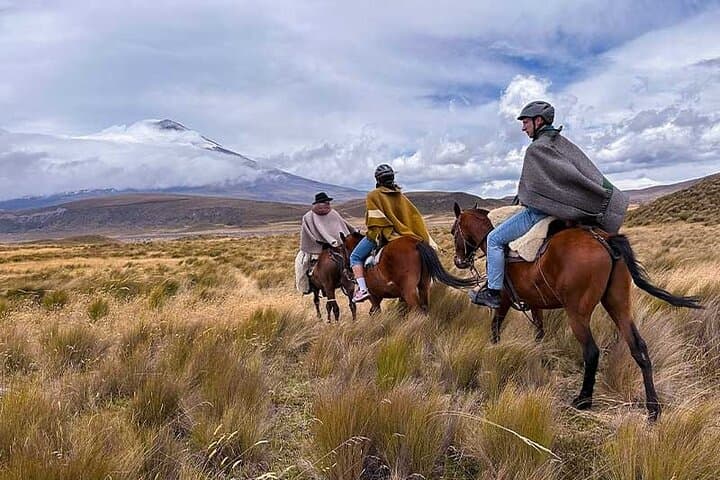
By the time you reach the páramo the air is thin and bright; your guide mounts a steady horse and hands you a warm poncho. The ride unfolds across broad volcanic plains with the Cotopaxi Volcano watching—white cone and plume—while condors wheel and the wind tests your balance.
Cotopaxi National Park sits on volcanic terrain carved by eruptions and glaciers; soils are young, and plant life is adapted to cold, wind and dramatic daily temperature swings. The chagras (Andean horsemen) keep traditions alive here—using zamarros and local horsemanship that date to colonial-era ranching on these high plains.
Expect open grassland, patches of volcanic scree and occasional wet hollows around Limpiopungo lagoon where waterfowl gather. Wildlife is bold: wild horses and Andean foxes often approach trails, while pumas and spectacled bears are possible but shy.
Practical edge: this is a full 7–8 hour day at high altitude (3,000–4,800 m depending on route). Dress in layers, use sun and wind protection, and hydrate well before you mount; horseback control is moderate—suitable for beginners after a short briefing. Bring a camera with extra batteries (cold drains power) and a small daypack for snacks and a spare layer.
The experience balances culture and geology: you ride with local guides, stop at Limpiopungo and end with a volcano-view lunch. Timing your visit in the drier months (July–October) improves visibility and condor sightings.
moderate.
7–8 hours.
Moderate fitness recommended: you’ll be on horseback for several hours at high altitude and should be comfortable mounting, dismounting and maintaining balance.
No—this tour accepts beginners and provides a briefing and calm mounts; basic balance and the ability to follow guide instructions are required.
Rides occur across the páramo at elevations commonly between about 3,000 and 4,800 meters; acclimatization and hydration are important to reduce symptoms of altitude sickness.
Common sightings include wild horses, Andean foxes and a variety of birds including condors; larger mammals like pumas are possible but rare and shy.
This full-day private tour (about 7–8 hours) includes pickup from Quito, an English-Spanish guide, lunch, water bottle and transport in an air-conditioned vehicle.
The highlands around Cotopaxi have been used for pastoralism and chagra horsemanship since colonial times; local equestrian traditions remain central to park tours.
Cotopaxi National Park is protected to conserve high-altitude ecosystems; stick to trails, avoid feeding wildlife and follow guide instructions to minimize disturbance.
See Galapagos operates guided outdoor trips and adventures with an emphasis on safety, stewardship, and memorable experiences.



You start before dawn, the van humming out of Quito and the Andes opening like a page as dawn strips the city light away.
You start before dawn, the van humming out of Quito and the Andes opening like a page as dawn strips the city light away.
By the time you reach the páramo the air is thin and bright; your guide mounts a steady horse and hands you a warm poncho. The ride unfolds across broad volcanic plains with the Cotopaxi Volcano watching—white cone and plume—while condors wheel and the wind tests your balance.
Cotopaxi National Park sits on volcanic terrain carved by eruptions and glaciers; soils are young, and plant life is adapted to cold, wind and dramatic daily temperature swings. The chagras (Andean horsemen) keep traditions alive here—using zamarros and local horsemanship that date to colonial-era ranching on these high plains.
Expect open grassland, patches of volcanic scree and occasional wet hollows around Limpiopungo lagoon where waterfowl gather. Wildlife is bold: wild horses and Andean foxes often approach trails, while pumas and spectacled bears are possible but shy.
Practical edge: this is a full 7–8 hour day at high altitude (3,000–4,800 m depending on route). Dress in layers, use sun and wind protection, and hydrate well before you mount; horseback control is moderate—suitable for beginners after a short briefing. Bring a camera with extra batteries (cold drains power) and a small daypack for snacks and a spare layer.
The experience balances culture and geology: you ride with local guides, stop at Limpiopungo and end with a volcano-view lunch. Timing your visit in the drier months (July–October) improves visibility and condor sightings.