THE ADVENTURE COLLECTIVE® · Independent discovery and booking for outdoor travel

Leave La Paz before dawn for a long day of high‑altitude landscapes: ferry crossings, Copacabana markets, and a boat ride to Isla del Sol’s Inca ruins. This full‑day trip mixes cultural history, short coastal walks and sweeping Lake Titicaca views.
Leave La Paz before dawn for a long day of high‑altitude landscapes: ferry crossings, Copacabana markets, and a boat ride to Isla del Sol’s Inca ruins. This full‑day trip mixes cultural history, short coastal walks and sweeping Lake Titicaca views.
Morning light slices across Lake Titicaca as the bus leaves La Paz; the road drops and the lake grows, a broad mirror that seems to pull travelers forward. You arrive at the Tiquina viewpoint, cross the narrow strait on a ferry, and roll into Copacabana — a riverside town with bright houses and markets selling woven hats and coca leaves. By midday a local boat slips away from the shore and pushes you toward Isla del Sol, where stone terraces and stairways hold the quiet weight of centuries.
Verified experiences and guided adventures in the surrounding area.
Operated by Bolivia Hop · Copacabana, La Paz Department
Morning light slices across Lake Titicaca as the bus leaves La Paz; the road drops and the lake grows, a broad mirror that seems to pull travelers forward. You arrive at the Tiquina viewpoint, cross the narrow strait on a ferry, and roll into Copacabana — a riverside town with bright houses and markets selling woven hats and coca leaves. By midday a local boat slips away from the shore and pushes you toward Isla del Sol, where stone terraces and stairways hold the quiet weight of centuries.
This stretch of Lake Titicaca sits on the Altiplano, carved by glacial action and shaped by high‑altitude winds; the island was a sacred Inca pilgrimage site tied to creation myths and stone temples such as Pilkokaina. Local Aymara and Quechua communities maintain agricultural terraces and pastoral rhythms, and guides share stories of Inca stairways and colonial-era churches as you walk the coast at Yumani.
Practical edge: expect high altitude (≈3,800–3,900 m), uneven stone steps, and strong sun reflected off the water. The tour moves on a schedule — arrival in Copacabana gives lunch time before a roughly 60–90 minute boat ride to the island, followed by 1–2 hours of guided walking among ruins and lakeside viewpoints.
Pack layered clothing, sturdy shoes with grip for rocky paths, sunscreen, and a reusable water bottle. Start slow, hydrate the day before, and budget cash for entrance fees, snacks, and market crafts. Finish with a clear window seat on the return boat to watch the lake close the day like a slow, steady tide.
moderate.
15–16 hours.
Good general fitness for boarding boats, short to moderate walks on uneven terrain, and tolerance for high altitude.
The itinerary runs about 15–16 hours total with an early departure from La Paz (around 7:00 am) and an evening return; exact times are confirmed at booking.
Yes — expect 1–2 hours of walking on uneven stone paths and short stairways around Pilkokaina and Yumani; the pace is moderate and stops are frequent.
You’ll have lunchtime in Copacabana with restaurants and markets; basic restroom facilities are available in port towns but may be limited on the island, so plan accordingly.
Lake Titicaca sits near 3,800 m; many travelers feel mild symptoms. Acclimate beforehand, stay hydrated, avoid heavy alcohol, and consult a doctor if you have preexisting conditions.
Isla del Sol was a major Inca sacred site tied to origin myths; pre‑Inca and Inca stonework and pilgrimage stairways remain visible around Yumani and Pilkokaina.
Lake Titicaca’s high‑altitude ecosystems are fragile — limit single‑use plastics, stay on marked paths, and respect local farming and water resources.
Bolivia Hop operates guided outdoor trips and adventures with an emphasis on safety, stewardship, and memorable experiences.


Morning light slices across Lake Titicaca as the bus leaves La Paz; the road drops and the lake grows, a broad mirror that seems to pull travelers forward. You arrive at the Tiquina viewpoint, cross the narrow strait on a ferry, and roll into Copacabana — a riverside town with bright houses and markets selling woven hats and coca leaves. By midday a local boat slips away from the shore and pushes you toward Isla del Sol, where stone terraces and stairways hold the quiet weight of centuries.
Morning light slices across Lake Titicaca as the bus leaves La Paz; the road drops and the lake grows, a broad mirror that seems to pull travelers forward. You arrive at the Tiquina viewpoint, cross the narrow strait on a ferry, and roll into Copacabana — a riverside town with bright houses and markets selling woven hats and coca leaves. By midday a local boat slips away from the shore and pushes you toward Isla del Sol, where stone terraces and stairways hold the quiet weight of centuries.
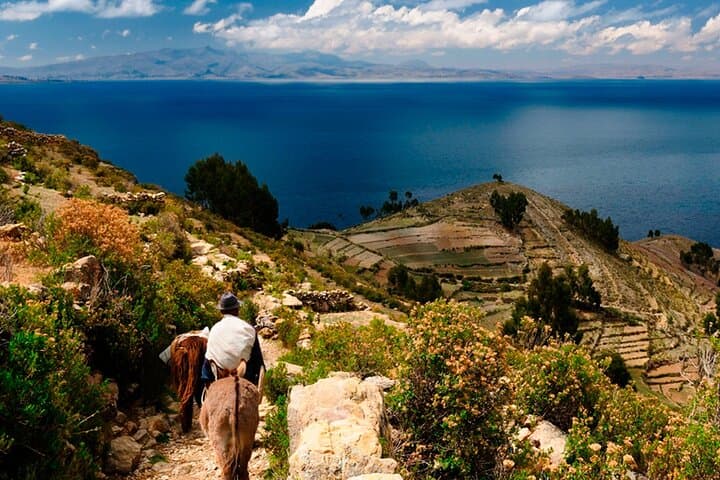
This stretch of Lake Titicaca sits on the Altiplano, carved by glacial action and shaped by high‑altitude winds; the island was a sacred Inca pilgrimage site tied to creation myths and stone temples such as Pilkokaina. Local Aymara and Quechua communities maintain agricultural terraces and pastoral rhythms, and guides share stories of Inca stairways and colonial-era churches as you walk the coast at Yumani.
Practical edge: expect high altitude (≈3,800–3,900 m), uneven stone steps, and strong sun reflected off the water. The tour moves on a schedule — arrival in Copacabana gives lunch time before a roughly 60–90 minute boat ride to the island, followed by 1–2 hours of guided walking among ruins and lakeside viewpoints.
Pack layered clothing, sturdy shoes with grip for rocky paths, sunscreen, and a reusable water bottle. Start slow, hydrate the day before, and budget cash for entrance fees, snacks, and market crafts. Finish with a clear window seat on the return boat to watch the lake close the day like a slow, steady tide.