THE ADVENTURE COLLECTIVE® · Independent discovery and booking for outdoor travel

Spend a long day exploring Chichén Itzá’s monumental architecture, cooling off in two striking cenotes (Ik Kil and Hubiku), and wandering the colonial streets of Valladolid. This guided trip blends archaeology, geology, and local culture into a full-day outing from Tulum.
Spend a long day exploring Chichén Itzá’s monumental architecture, cooling off in two striking cenotes (Ik Kil and Hubiku), and wandering the colonial streets of Valladolid. This guided trip blends archaeology, geology, and local culture into a full-day outing from Tulum.
You step off an air-conditioned bus onto hard-packed limestone where heat rises in slow waves and the Pyramid of Kukulcán looms like a remembered calendar. The plaza spreads out ahead — stairs, carved columns, and the angled shadows that mark an ancient knowledge of the sun. Nearby, cenotes wait in cooler silence: vertical wells where light finds the water and the jungle leans in to listen.
Verified experiences and guided adventures in the surrounding area.
Operated by Promo vacations Tours · Valladolid, Yucatán
You step off an air-conditioned bus onto hard-packed limestone where heat rises in slow waves and the Pyramid of Kukulcán looms like a remembered calendar. The plaza spreads out ahead — stairs, carved columns, and the angled shadows that mark an ancient knowledge of the sun. Nearby, cenotes wait in cooler silence: vertical wells where light finds the water and the jungle leans in to listen.
Chichén Itzá grew into a major regional center between the Classic and Postclassic Maya eras; its stonework records astronomy, ritual, and commerce. Geologically the Yucatán is a karst plain—limestone eroded by rain and time into sinkholes that became cenotes. Valladolid adds a colonial layer: a Pueblo Mágico with pastel facades, a Franciscan convent, and a market where Mayan and Spanish influences meet in food and craft.
Expect a guided archaeological walk around Kukulcán, the Temple of Warriors, the ball court, then transport to Ik Kil’s open cenote and Hubiku’s semi-enclosed cavity for swims. The water cools quickly; vines and stalactites observe from the walls. Timing matters: mornings are cooler and less crowded at Chichén Itzá; late afternoon offers softer light but longer returns to Tulum.
Practicalities: bring biodegradable sunscreen, a refillable water bottle, swimwear and quick-dry towel, and a small daypack. Shoes should handle dusty, uneven paths and occasional steps. The day is long—11–12 hours with on-road time—so plan for motion comfort and a light local lunch included on most tours.
easy.
11–12 hours.
Suitable for most fitness levels; involves walking on uneven archaeological terraces and short swims in cenotes—basic mobility and comfort with stairs required.
Expect an 11–12 hour day with about 1.5–2 hours for the Chichén Itzá guided visit, roughly an hour at each cenote, and a short free period in Valladolid.
Most tours include admission to Chichén Itzá and the two cenotes plus a traditional buffet lunch; confirm on booking to avoid surprises.
Cenotes are generally safe but not all are shallow—children and non-swimmers should use life jackets if offered and be supervised; follow staff guidance.
Yes—the itinerary may be adjusted for logistics, traffic, or group arrangements; guides typically communicate any changes ahead of time.
Chichén Itzá was a major Maya center whose architecture encodes astronomical events; the Kukulcán pyramid aligns with equinox light-and-shadow phenomena.
Cenotes are freshwater ecosystems vulnerable to contamination—use biodegradable products, avoid littering, and follow local rules to limit impact.
Promo vacations Tours operates guided outdoor trips and adventures with an emphasis on safety, stewardship, and memorable experiences.
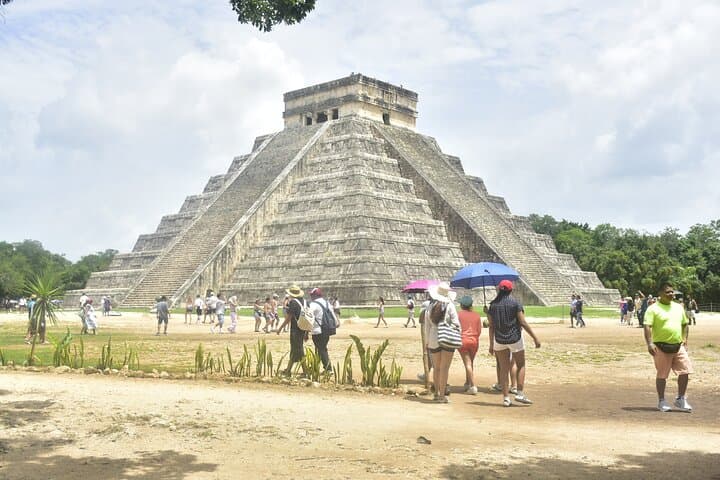
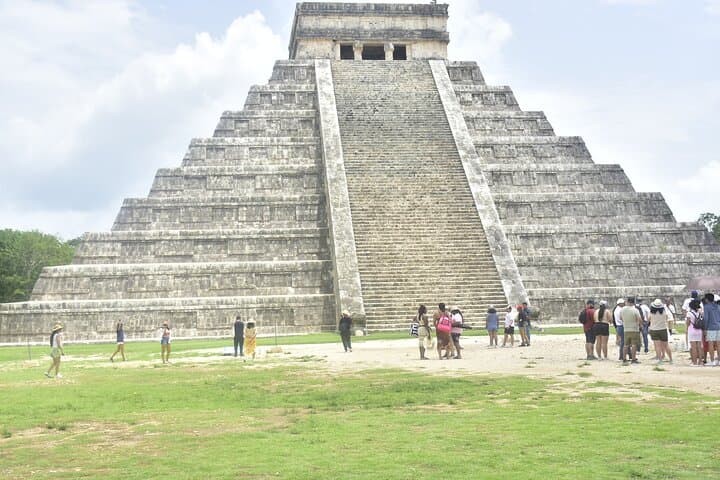
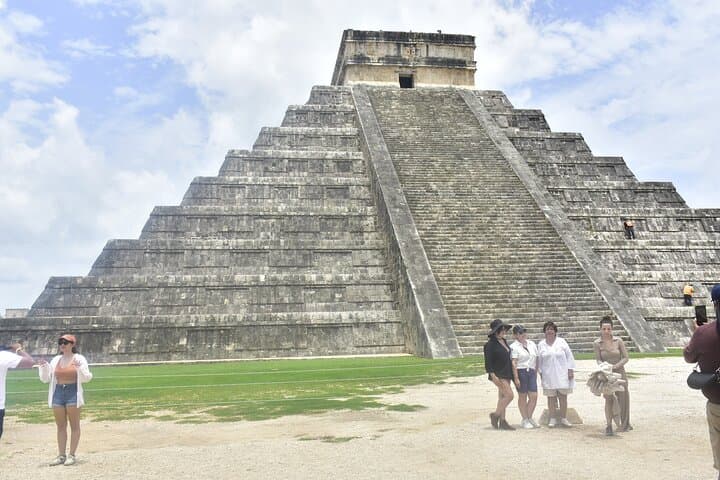
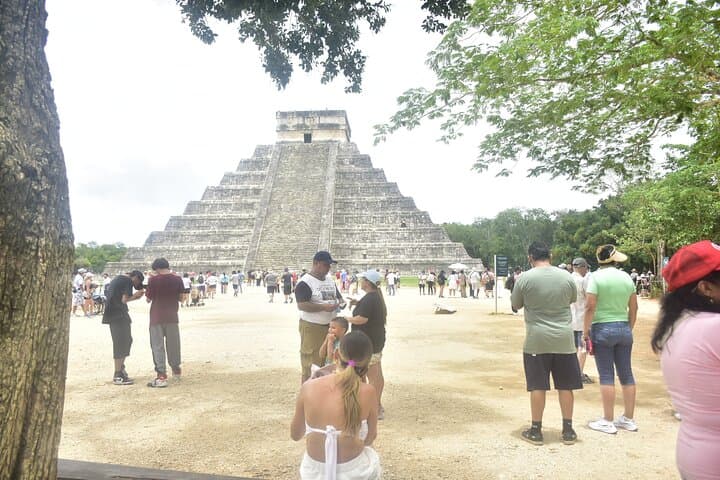
You step off an air-conditioned bus onto hard-packed limestone where heat rises in slow waves and the Pyramid of Kukulcán looms like a remembered calendar. The plaza spreads out ahead — stairs, carved columns, and the angled shadows that mark an ancient knowledge of the sun. Nearby, cenotes wait in cooler silence: vertical wells where light finds the water and the jungle leans in to listen.
You step off an air-conditioned bus onto hard-packed limestone where heat rises in slow waves and the Pyramid of Kukulcán looms like a remembered calendar. The plaza spreads out ahead — stairs, carved columns, and the angled shadows that mark an ancient knowledge of the sun. Nearby, cenotes wait in cooler silence: vertical wells where light finds the water and the jungle leans in to listen.
Chichén Itzá grew into a major regional center between the Classic and Postclassic Maya eras; its stonework records astronomy, ritual, and commerce. Geologically the Yucatán is a karst plain—limestone eroded by rain and time into sinkholes that became cenotes. Valladolid adds a colonial layer: a Pueblo Mágico with pastel facades, a Franciscan convent, and a market where Mayan and Spanish influences meet in food and craft.
Expect a guided archaeological walk around Kukulcán, the Temple of Warriors, the ball court, then transport to Ik Kil’s open cenote and Hubiku’s semi-enclosed cavity for swims. The water cools quickly; vines and stalactites observe from the walls. Timing matters: mornings are cooler and less crowded at Chichén Itzá; late afternoon offers softer light but longer returns to Tulum.
Practicalities: bring biodegradable sunscreen, a refillable water bottle, swimwear and quick-dry towel, and a small daypack. Shoes should handle dusty, uneven paths and occasional steps. The day is long—11–12 hours with on-road time—so plan for motion comfort and a light local lunch included on most tours.