THE ADVENTURE COLLECTIVE® · Independent discovery and booking for outdoor travel

Spend a long day exploring Chichén Itzá’s iconic pyramid, swim in a sacred cenote, and stroll Valladolid’s colonial center. This practical guide covers what to expect, what to bring, and how to make the most of the 11–12 hour excursion.
Spend a long day exploring Chichén Itzá’s iconic pyramid, swim in a sacred cenote, and stroll Valladolid’s colonial center. This practical guide covers what to expect, what to bring, and how to make the most of the 11–12 hour excursion.
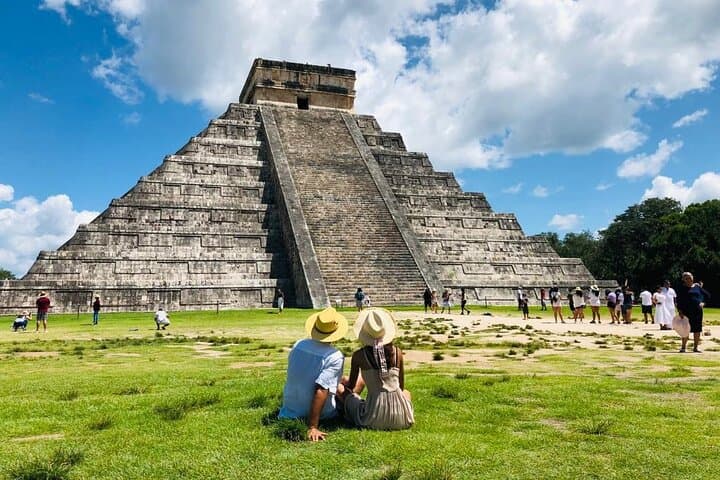
The bus eases out of Cancún before sunrise and the heat arrives with the highway light: by midmorning you stand at the base of El Castillo while wind and stone exchange a slow conversation. The pyramid’s stepped faces cut sharp profiles against a wide Yucatán sky; below, the sinkhole of the cenote holds a darker, cooler hush that seems to dare you to dive in.
Verified experiences and guided adventures in the surrounding area.
Operated by Joluga Catamaran´s · Piste, Yucatán
The bus eases out of Cancún before sunrise and the heat arrives with the highway light: by midmorning you stand at the base of El Castillo while wind and stone exchange a slow conversation. The pyramid’s stepped faces cut sharp profiles against a wide Yucatán sky; below, the sinkhole of the cenote holds a darker, cooler hush that seems to dare you to dive in.
Chichén Itzá grew into a major Terminal Classic Maya center famed for its astronomy, public plazas and the Hidden Temple of Kukulcán, where equinox shadows animate the pyramid’s balustrade. Geologically the region sits on porous limestone; cenotes are collapsed cave roofs fed by an underground freshwater network key to Maya settlement and ritual. The nearby colonial city of Valladolid adds a Spanish-era layer—its 16th-century church and grid of streets reflect conquest-era planning.
Practically: this is an 11–12 hour day with a guided 50-minute walkthrough at the ruins, free time for photos, a guarded swim at Cenote Saamal (lifejackets required), and a buffet lunch in the Valladolid area. Expect uneven limestone, short stretches of shade, and hot, humid conditions most of the year. Wear sturdy shoes, sun protection, and bring a refillable water bottle. Cameras are welcome but climbing the monuments is prohibited; follow the guide’s timing to beat midday crowds and keep to marked paths to protect fragile archaeological surfaces.
The day is part cultural primer, part natural swim break—manageable for most travelers who can handle a long day of walking and a short swim. It’s an efficient way to connect Maya history, karst geology and local colonial culture in a single, well-paced outing.
easy.
11–12 hours.
Suitable for most travelers in average fitness—requires walking on uneven ground and a short swim; not recommended for those with serious back problems.
The tour runs about 11–12 hours, with departures early morning and returns to Cancún around 9:00–10:00 p.m.
Yes—entrance to the cenote and site guide fees are included, and a regional buffet lunch with one non-alcoholic drink is provided.
No—climbing is not permitted. The guided visit includes a 50-minute tour and additional free time for photos from ground level.
Yes—lifejackets are provided and mandatory at Cenote Saamal, making it accessible for many non-swimmers under supervision.
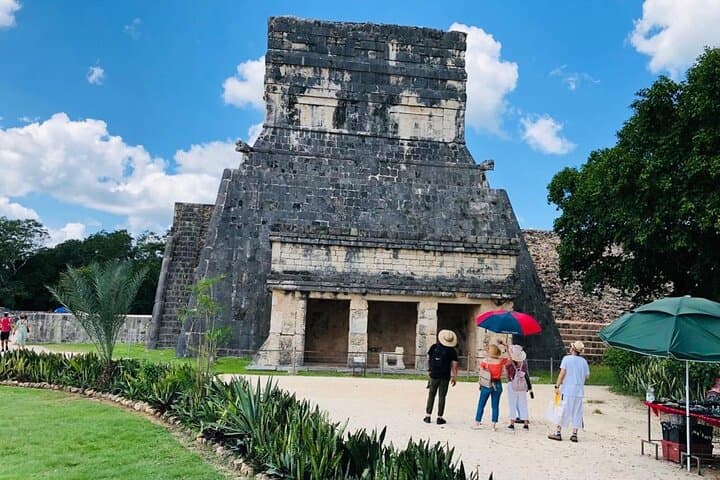
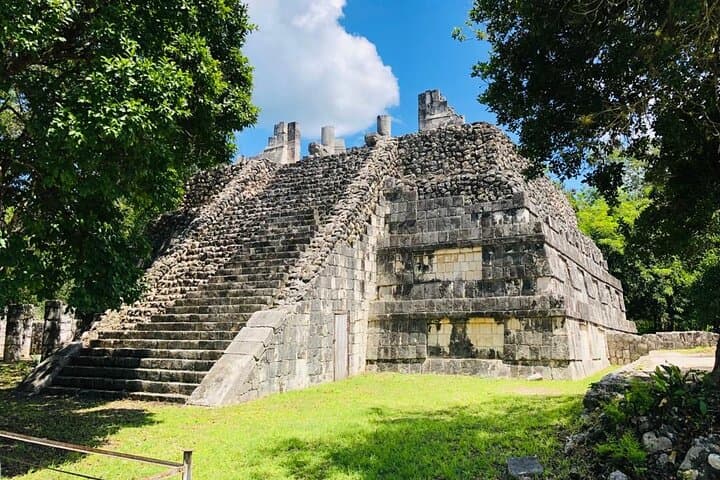
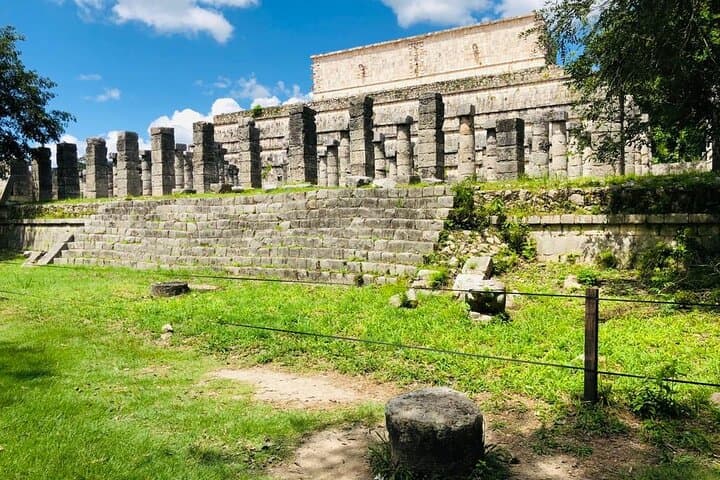
Chichén Itzá was a major Terminal Classic Maya center; its pyramids and ballcourt reflect astronomy, ceremonial life and political power from roughly AD 600–900.
The site restricts climbing and directs visitors to marked paths to protect fragile architecture; at cenotes stick to changing areas and use biodegradable sunscreen to reduce water impact.
Joluga Catamaran´s operates guided outdoor trips and adventures with an emphasis on safety, stewardship, and memorable experiences.
The bus eases out of Cancún before sunrise and the heat arrives with the highway light: by midmorning you stand at the base of El Castillo while wind and stone exchange a slow conversation. The pyramid’s stepped faces cut sharp profiles against a wide Yucatán sky; below, the sinkhole of the cenote holds a darker, cooler hush that seems to dare you to dive in.
The bus eases out of Cancún before sunrise and the heat arrives with the highway light: by midmorning you stand at the base of El Castillo while wind and stone exchange a slow conversation. The pyramid’s stepped faces cut sharp profiles against a wide Yucatán sky; below, the sinkhole of the cenote holds a darker, cooler hush that seems to dare you to dive in.
Chichén Itzá grew into a major Terminal Classic Maya center famed for its astronomy, public plazas and the Hidden Temple of Kukulcán, where equinox shadows animate the pyramid’s balustrade. Geologically the region sits on porous limestone; cenotes are collapsed cave roofs fed by an underground freshwater network key to Maya settlement and ritual. The nearby colonial city of Valladolid adds a Spanish-era layer—its 16th-century church and grid of streets reflect conquest-era planning.
Practically: this is an 11–12 hour day with a guided 50-minute walkthrough at the ruins, free time for photos, a guarded swim at Cenote Saamal (lifejackets required), and a buffet lunch in the Valladolid area. Expect uneven limestone, short stretches of shade, and hot, humid conditions most of the year. Wear sturdy shoes, sun protection, and bring a refillable water bottle. Cameras are welcome but climbing the monuments is prohibited; follow the guide’s timing to beat midday crowds and keep to marked paths to protect fragile archaeological surfaces.
The day is part cultural primer, part natural swim break—manageable for most travelers who can handle a long day of walking and a short swim. It’s an efficient way to connect Maya history, karst geology and local colonial culture in a single, well-paced outing.