THE ADVENTURE COLLECTIVE® · Independent discovery and booking for outdoor travel

Spend a full day exploring Chichen Itza’s monumental plaza, cool off in a nearby cenote, and visit colonial Valladolid. This guided trip combines archaeology, a freshwater swim, and regional bites—ideal for travelers based in Playa del Carmen.
Spend a full day exploring Chichen Itza’s monumental plaza, cool off in a nearby cenote, and visit colonial Valladolid. This guided trip combines archaeology, a freshwater swim, and regional bites—ideal for travelers based in Playa del Carmen.
You step off the air-conditioned shuttle into a wide scrubland where the stone faces of Chichen Itza rise against a hard tropical sky. The pyramid of El Castillo fills the view—its stepped planes throwing sharp shadows as guide narration threads astronomy, ritual and architecture into each stone.
Verified experiences and guided adventures in the surrounding area.
Operated by Cancunbook · Valladolid, Yucatán
You step off the air-conditioned shuttle into a wide scrubland where the stone faces of Chichen Itza rise against a hard tropical sky. The pyramid of El Castillo fills the view—its stepped planes throwing sharp shadows as guide narration threads astronomy, ritual and architecture into each stone.
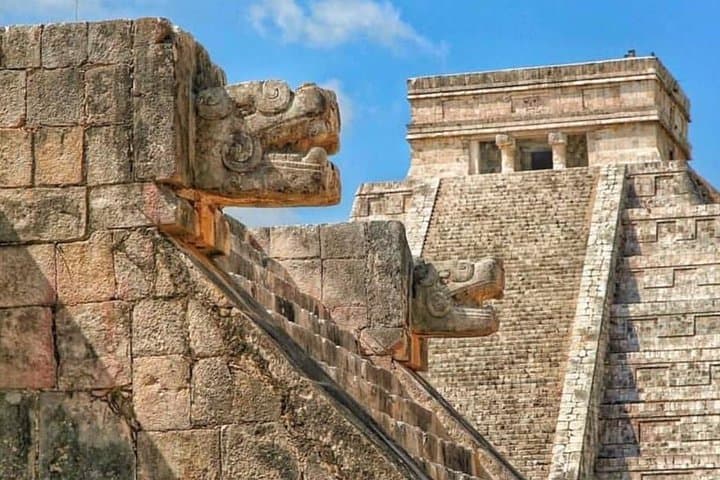
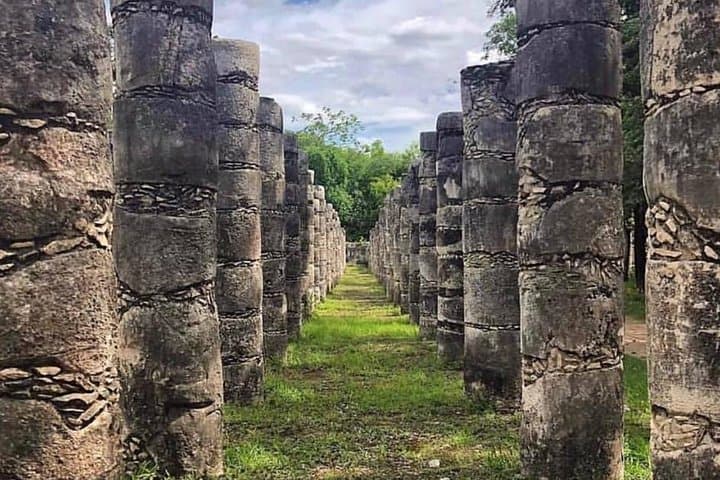
This site, the ceremonial heart of a major Maya city, dates to the Classic and Postclassic eras; its plazas, ball court and El Caracol observatory reflect a people who measured time, tracked Venus, and aligned buildings to solar events. Geologically the Yucatán is a flat limestone platform riddled with sinkholes; cenotes are the open throats of that underground karst, where fresh groundwater collects and invites cooling swims.
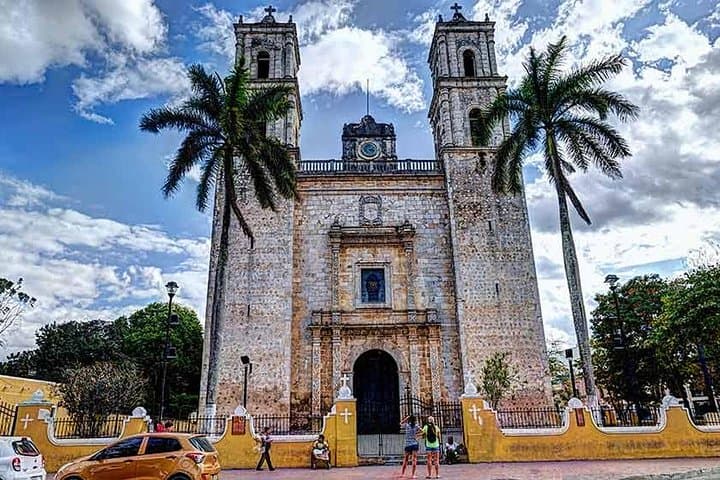
Culturally, the day links living Maya towns and colonial Valladolid—expect roadside stalls selling empanadas, local chocolate and tequila tastings that trace regional flavors. The experience alternates concentrated walking at the ruins (roughly 2–3 km of on-site walking, mostly flat packed earth) with a stair-and-platform descent to a freshwater cenote where water and light create a sudden, quiet contrast to the ruined plaza.
Practical guidance: start early to avoid the midday heat and the largest crowds, carry 2–3 liters of water, wear closed-toe walking shoes for uneven surfaces, and use reef-safe sunscreen before entering cenote waters. Bring small bills for local vendors and be prepared for a 12-hour day that blends motorized transport with gentle walking and a refreshing swim.
easy.
12 hours.
Suitable for most fitness levels; requires the ability to walk 2–3 km and negotiate stairs into the cenote.
Yes—this tour includes entrance to Chichen Itza as part of the itinerary.
Expect roughly 2.5–3 hours each way by coach depending on traffic; the full trip is about 12 hours door-to-door.
Most organized cenote stops provide life jackets and supervised swim areas; ask the guide if you require flotation support before entering.
No—climbing El Castillo has been prohibited for preservation and safety; visitors can walk around and photograph the structure.
Chichen Itza grew into a major Maya ceremonial center between the Classic and Postclassic periods; El Castillo encodes calendrical and astronomical knowledge in its steps and shadows.
The site limits climbing to protect structures; visitors should use biodegradable sunscreen and avoid introducing pollutants to cenotes to preserve freshwater ecosystems.
Cancunbook operates guided outdoor trips and adventures with an emphasis on safety, stewardship, and memorable experiences.
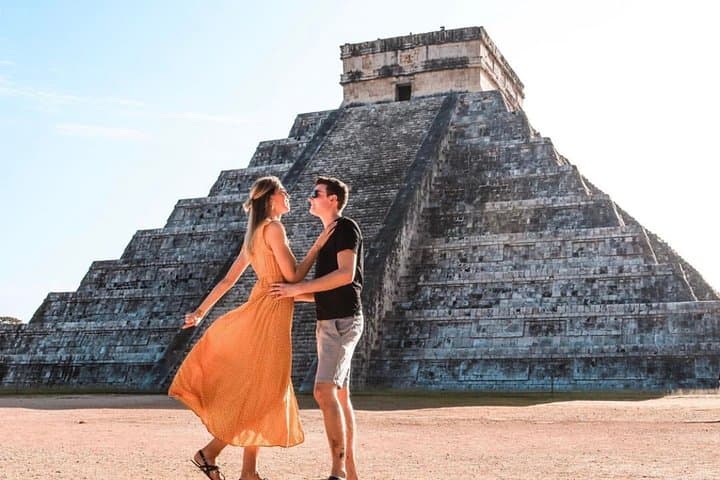
You step off the air-conditioned shuttle into a wide scrubland where the stone faces of Chichen Itza rise against a hard tropical sky. The pyramid of El Castillo fills the view—its stepped planes throwing sharp shadows as guide narration threads astronomy, ritual and architecture into each stone.
You step off the air-conditioned shuttle into a wide scrubland where the stone faces of Chichen Itza rise against a hard tropical sky. The pyramid of El Castillo fills the view—its stepped planes throwing sharp shadows as guide narration threads astronomy, ritual and architecture into each stone.
This site, the ceremonial heart of a major Maya city, dates to the Classic and Postclassic eras; its plazas, ball court and El Caracol observatory reflect a people who measured time, tracked Venus, and aligned buildings to solar events. Geologically the Yucatán is a flat limestone platform riddled with sinkholes; cenotes are the open throats of that underground karst, where fresh groundwater collects and invites cooling swims.
Culturally, the day links living Maya towns and colonial Valladolid—expect roadside stalls selling empanadas, local chocolate and tequila tastings that trace regional flavors. The experience alternates concentrated walking at the ruins (roughly 2–3 km of on-site walking, mostly flat packed earth) with a stair-and-platform descent to a freshwater cenote where water and light create a sudden, quiet contrast to the ruined plaza.
Practical guidance: start early to avoid the midday heat and the largest crowds, carry 2–3 liters of water, wear closed-toe walking shoes for uneven surfaces, and use reef-safe sunscreen before entering cenote waters. Bring small bills for local vendors and be prepared for a 12-hour day that blends motorized transport with gentle walking and a refreshing swim.