THE ADVENTURE COLLECTIVE® · Independent discovery and booking for outdoor travel

A single-day road trip from Tbilisi that combines hilltop churches, a riverside castle and sweeping high‑mountain views. Expect long drives, short walks to viewpoints, and dramatic shifts in weather along the Greater Caucasus.
A single-day road trip from Tbilisi that combines hilltop churches, a riverside castle and sweeping high‑mountain views. Expect long drives, short walks to viewpoints, and dramatic shifts in weather along the Greater Caucasus.
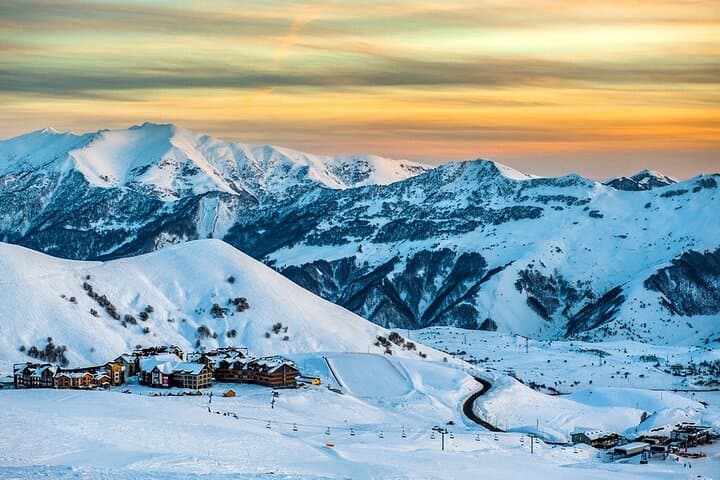
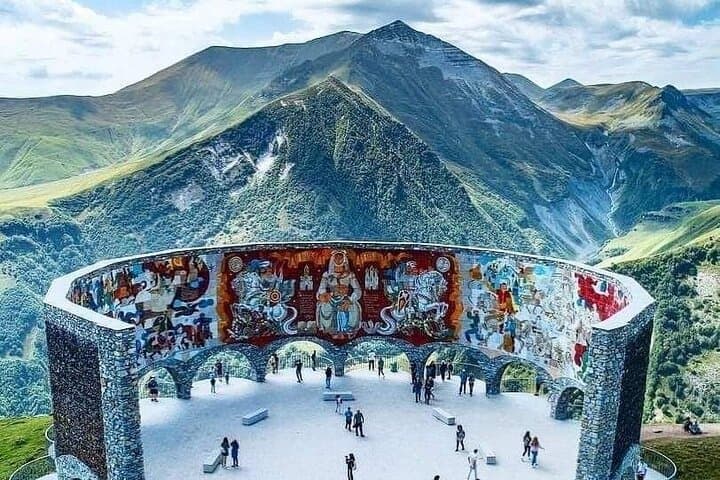
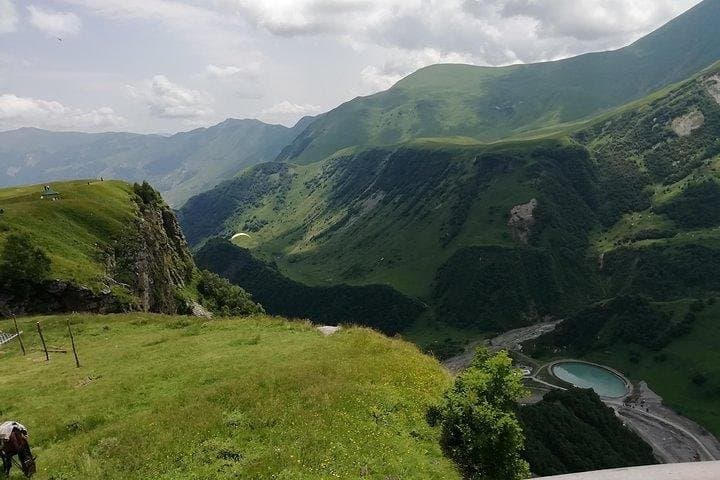
By the time the highway leaves Tbilisi behind, the air tastes colder and the Greater Caucasus rises like a moving skyline. The tour threads river valleys and hairpin turns to Mtskheta’s Jvari Monastery, where the Kura and Aragvi rivers meet, then climbs past Jinvali Dam and the crenelated stones of Ananuri before reaching the high pasturelands around Gudauri and Kazbegi.
Verified experiences and guided adventures in the surrounding area.
Operated by Geoviptours · Stepantsminda, Mtskheta-Mtianeti
By the time the highway leaves Tbilisi behind, the air tastes colder and the Greater Caucasus rises like a moving skyline. The tour threads river valleys and hairpin turns to Mtskheta’s Jvari Monastery, where the Kura and Aragvi rivers meet, then climbs past Jinvali Dam and the crenelated stones of Ananuri before reaching the high pasturelands around Gudauri and Kazbegi.
The region’s story is geological and human: glacially scoured valleys and volcanic ridges shape routes that have carried traders and pilgrims for centuries. Mtskheta was Georgia’s early capital and a center of Orthodox Christianity; Ananuri’s 17th‑century towers guarded trade along the Aragvi. Today roadside stands sell churchkhela and local cheeses, and mountain shepherds still move livestock on seasonal circuits.
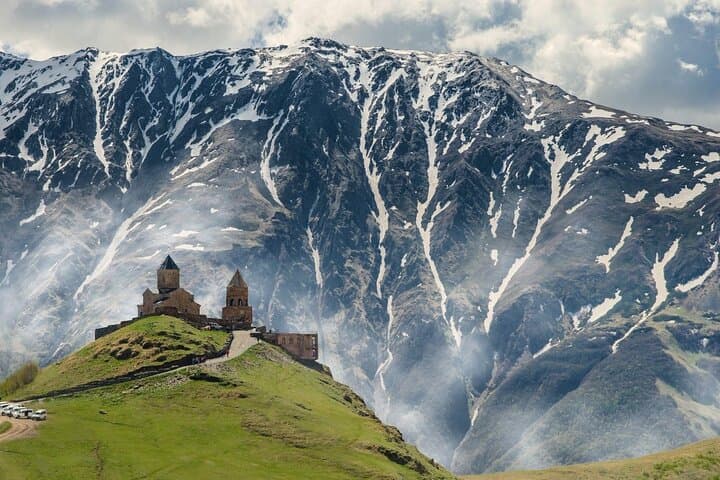
Expect a long but accessible day—short walks, steps to hilltop churches and sweeping roadside lookouts rather than technical trekking. The highlight is the approach to Gergeti Trinity Church, a lone stone chapel above Stepantsminda with Mount Kazbek often presiding above the clouds. Weather shifts fast here: sun, wind and snow can arrive within an hour.
Practical guidance: plan for a 10–12 hour outing from Tbilisi, wear layers and sturdy shoes, carry water and small cash for rural stalls, and allow time for photos and brief acclimatization above 1,500 m. Arrive early at Jvari and Ananuri to avoid buses; respect sacred sites with modest dress and keep trails and meadows free of litter.
moderate.
10–12 hours.
Suitable for most active travelers; requires being comfortable with long vehicle transfers and short uphill walks to viewpoints.
Most full‑day tours run about 10–12 hours round trip from Tbilisi, with several stops and short walks at each site.
Walking is generally short and not technical—steps and uneven paths exist at viewpoints and churches, but no climbing skills are required.
Yes; modest dress is expected at religious sites—cover shoulders and knees and avoid hats inside chapels.
Highway and weather conditions in winter can affect timing; operators may adjust the itinerary for safety but standard cancellation policies apply.
Mtskheta served as Georgia’s first capital and a major Christian center from the 4th century; the Jvari Monastery dates to the 6th century. Ananuri was a strategic fortress complex guarding trade routes through the Aragvi valley.
Alpine meadows around Kazbegi are sensitive to trampling and litter; stick to established paths and pack out waste. Support local businesses that practice low‑impact tourism.
Geoviptours operates guided outdoor trips and adventures with an emphasis on safety, stewardship, and memorable experiences.
By the time the highway leaves Tbilisi behind, the air tastes colder and the Greater Caucasus rises like a moving skyline. The tour threads river valleys and hairpin turns to Mtskheta’s Jvari Monastery, where the Kura and Aragvi rivers meet, then climbs past Jinvali Dam and the crenelated stones of Ananuri before reaching the high pasturelands around Gudauri and Kazbegi.
By the time the highway leaves Tbilisi behind, the air tastes colder and the Greater Caucasus rises like a moving skyline. The tour threads river valleys and hairpin turns to Mtskheta’s Jvari Monastery, where the Kura and Aragvi rivers meet, then climbs past Jinvali Dam and the crenelated stones of Ananuri before reaching the high pasturelands around Gudauri and Kazbegi.
The region’s story is geological and human: glacially scoured valleys and volcanic ridges shape routes that have carried traders and pilgrims for centuries. Mtskheta was Georgia’s early capital and a center of Orthodox Christianity; Ananuri’s 17th‑century towers guarded trade along the Aragvi. Today roadside stands sell churchkhela and local cheeses, and mountain shepherds still move livestock on seasonal circuits.
Expect a long but accessible day—short walks, steps to hilltop churches and sweeping roadside lookouts rather than technical trekking. The highlight is the approach to Gergeti Trinity Church, a lone stone chapel above Stepantsminda with Mount Kazbek often presiding above the clouds. Weather shifts fast here: sun, wind and snow can arrive within an hour.
Practical guidance: plan for a 10–12 hour outing from Tbilisi, wear layers and sturdy shoes, carry water and small cash for rural stalls, and allow time for photos and brief acclimatization above 1,500 m. Arrive early at Jvari and Ananuri to avoid buses; respect sacred sites with modest dress and keep trails and meadows free of litter.