THE ADVENTURE COLLECTIVE® · Independent discovery and booking for outdoor travel

Spend a long day driving from Marrakech to Casablanca to see the Hassan II Mosque, walk the Atlantic Corniche, and sample Casablanca’s urban coastal character. This full-day private tour includes hotel pickup, an air-conditioned vehicle, and a guided stop at the mosque when available.
Spend a long day driving from Marrakech to Casablanca to see the Hassan II Mosque, walk the Atlantic Corniche, and sample Casablanca’s urban coastal character. This full-day private tour includes hotel pickup, an air-conditioned vehicle, and a guided stop at the mosque when available.
A low, briny wind meets the minivan as it leaves Marrakech’s ochre walls and pushes across the fertile Haouz plains toward Casablanca’s Atlantic edge. Concrete towers and palm-lined boulevards rise into view; the Hassan II Mosque crowns the waterfront, its minaret cutting a precise silhouette against the ocean. Travelers step from the vehicle into a place where sea spray and city industry share the same horizon.
Verified experiences and guided adventures in the surrounding area.
Operated by DESERT MOROCCO ADVENTURE · Casablanca, Casablanca-Settat
A low, briny wind meets the minivan as it leaves Marrakech’s ochre walls and pushes across the fertile Haouz plains toward Casablanca’s Atlantic edge. Concrete towers and palm-lined boulevards rise into view; the Hassan II Mosque crowns the waterfront, its minaret cutting a precise silhouette against the ocean. Travelers step from the vehicle into a place where sea spray and city industry share the same horizon.
Casablanca grew rapidly in the 20th century as Morocco’s commercial engine; its urban fabric mixes French art-deco avenues, 1960s concrete, and traditional souks. The Hassan II Mosque — completed in 1993 and designed by Michel Pinseau — sits partly over the Atlantic, its platform and mosaic work reflecting a recent architectural chapter. Geologically the coast is a narrow shelf of reclaimed and natural sand, kissed by Atlantic swells and dotted with rocky outcrops at low tide.
Culturally, Casa is pragmatic and public: cafés hum with business, fishermen mend nets along the Corniche, and the Habous Quarter preserves artisanal shops. On a day tour from Marrakech expect a 12-hour round trip with hotel pickup, an air-conditioned vehicle, and a driver/guide. Visits typically include an exterior and guided interior stop at the mosque when open to non-Muslims, a stroll along the Ain Diab Corniche, and time in the central city.
Practical notes: dress modestly and be ready to remove shoes for mosque entry; bring water and sunscreen for coastal winds; allow time for traffic both ways and check Friday schedules for restricted interior access. Comfortable walking shoes and a small bag for valuables make the day more relaxed.
easy.
12 hours.
Suitable for most fitness levels; involves short to moderate amounts of walking and standing.
The drive is roughly 240 km and typically takes 2.5–3.5 hours each way depending on traffic and stops.
Yes — guided visits for non-Muslims are available outside prayer times, but interior access may be restricted on Fridays and during religious holidays.
Yes — the tour includes hotel pickup and drop-off in Marrakech as stated in the inclusions.
Meals are not listed as included; vegetarian options may be accommodated if requested when booking, but budget for food on your own.
Casablanca became Morocco’s economic center in the 20th century; the modern Hassan II Mosque (completed 1993) is a recent landmark reflecting that urban growth.
Coastal areas face erosion and litter pressures from heavy urban use; travelers are encouraged to minimize plastic waste and follow local signage near marine areas.
DESERT MOROCCO ADVENTURE operates guided outdoor trips and adventures with an emphasis on safety, stewardship, and memorable experiences.
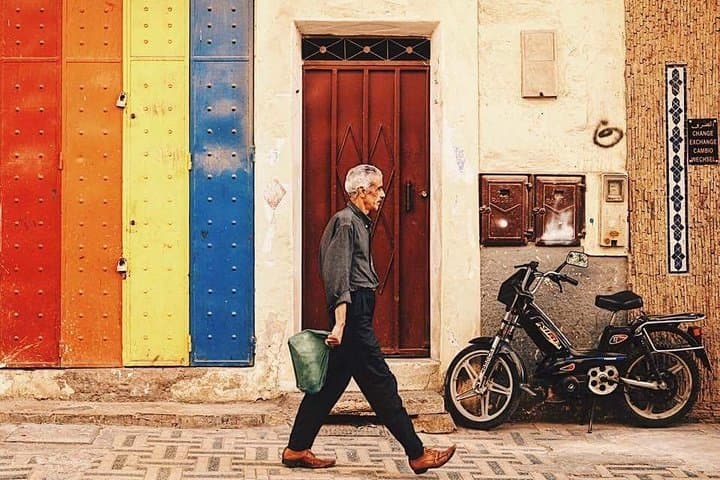
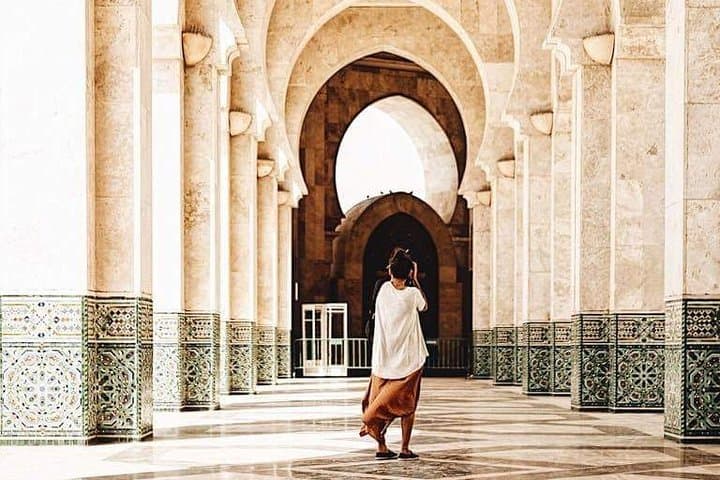
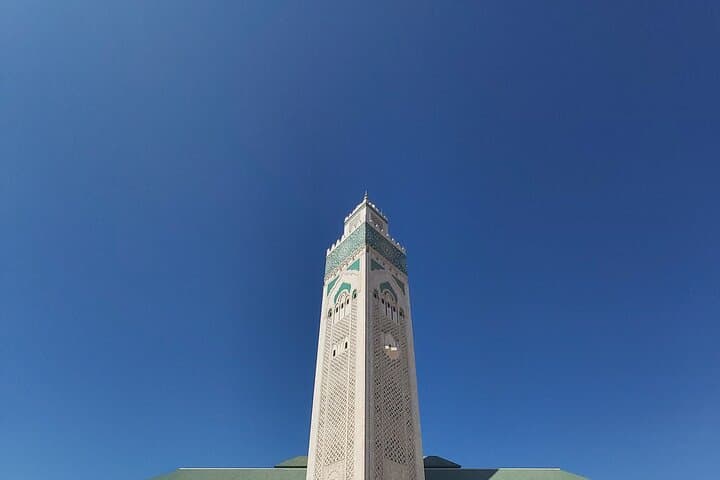
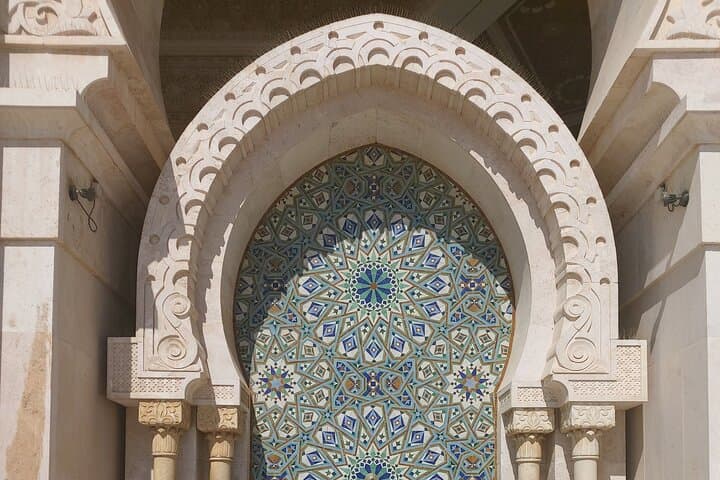
A low, briny wind meets the minivan as it leaves Marrakech’s ochre walls and pushes across the fertile Haouz plains toward Casablanca’s Atlantic edge. Concrete towers and palm-lined boulevards rise into view; the Hassan II Mosque crowns the waterfront, its minaret cutting a precise silhouette against the ocean. Travelers step from the vehicle into a place where sea spray and city industry share the same horizon.
A low, briny wind meets the minivan as it leaves Marrakech’s ochre walls and pushes across the fertile Haouz plains toward Casablanca’s Atlantic edge. Concrete towers and palm-lined boulevards rise into view; the Hassan II Mosque crowns the waterfront, its minaret cutting a precise silhouette against the ocean. Travelers step from the vehicle into a place where sea spray and city industry share the same horizon.
Casablanca grew rapidly in the 20th century as Morocco’s commercial engine; its urban fabric mixes French art-deco avenues, 1960s concrete, and traditional souks. The Hassan II Mosque — completed in 1993 and designed by Michel Pinseau — sits partly over the Atlantic, its platform and mosaic work reflecting a recent architectural chapter. Geologically the coast is a narrow shelf of reclaimed and natural sand, kissed by Atlantic swells and dotted with rocky outcrops at low tide.
Culturally, Casa is pragmatic and public: cafés hum with business, fishermen mend nets along the Corniche, and the Habous Quarter preserves artisanal shops. On a day tour from Marrakech expect a 12-hour round trip with hotel pickup, an air-conditioned vehicle, and a driver/guide. Visits typically include an exterior and guided interior stop at the mosque when open to non-Muslims, a stroll along the Ain Diab Corniche, and time in the central city.
Practical notes: dress modestly and be ready to remove shoes for mosque entry; bring water and sunscreen for coastal winds; allow time for traffic both ways and check Friday schedules for restricted interior access. Comfortable walking shoes and a small bag for valuables make the day more relaxed.