THE ADVENTURE COLLECTIVE® · Independent discovery and booking for outdoor travel

A full-day route from Naples that pairs Capri’s luminous Blue Grotto with Sorrento’s lemon-scented streets and the haunting ruins of Pompeii. Fast ferries, short boat transfers and guided walks combine coastal scenery with Roman history.
A full-day route from Naples that pairs Capri’s luminous Blue Grotto with Sorrento’s lemon-scented streets and the haunting ruins of Pompeii. Fast ferries, short boat transfers and guided walks combine coastal scenery with Roman history.
The day begins at Molo Beverello as the port wakes with gulls and engine hums; a fast ferry slices through the Bay of Naples and the island of Capri appears like a folded shoulder against the horizon.
Verified experiences and guided adventures in the surrounding area.
Operated by Tours of Capri-Private Tours of Amalfi Coast & Pompeii · Naples, Campania
The day begins at Molo Beverello as the port wakes with gulls and engine hums; a fast ferry slices through the Bay of Naples and the island of Capri appears like a folded shoulder against the horizon.
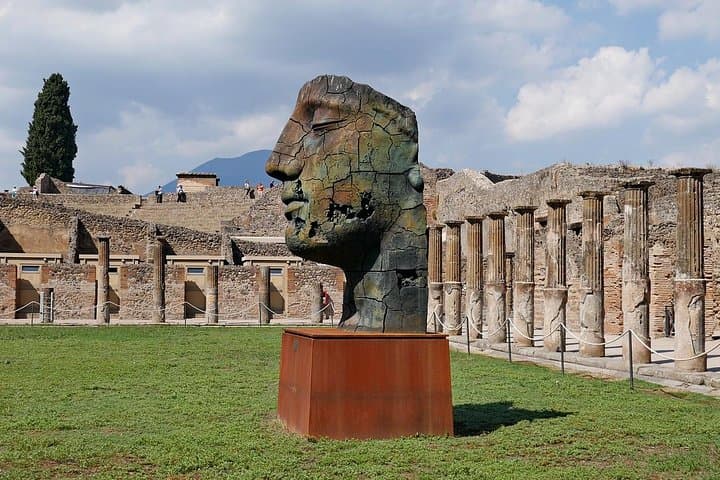
Capri has drawn visitors since Roman times — Tiberius sought its cliffs and calm seas. Geologically the island is limestone and dolomite, sculpted by waves and time into sea caves like the Blue Grotto, where a narrow mouth and reflected sunlight give the water an electric blue that seems to glow from below. Sorrento’s terraces of citrus and the narrow streets offer a change of pace: lemon aromas and wood-fired pastries, the region’s living culinary expression. Later, Pompeii exposes a harder history — ash from Vesuvius preserved homes, frescoes and streets into an archaeological snapshot of Roman daily life.
Expect varied terrain: ferry decks and short boat transfers, cobbled alleys in Sorrento, and several kilometers of walking across uneven, often sun-exposed paths at Pompeii; the archaeological site includes steps and loose flagstones.
Practical guidance: start early to avoid crowds, bring sunscreen and refillable water, and wear sturdy shoes for ruins. If the Blue Grotto is closed by tide or weather you’ll get a perimeter boat tour of Capri instead. Carry local cash for small purchases in Sorrento and allow flexibility—sea conditions and tides can change timing. The tour blends scenic boating with cultural immersion and requires a moderate fitness level but rewards with dramatic coastal views and a rare window into Roman life.
moderate.
8 hours.
Suitable for travelers in good general health who can stand and walk for multiple short periods and navigate uneven ground.
No — access depends on tide and weather; if closed you’ll typically take a shared boat tour around Capri instead.
Expect 1–3 kilometers of walking over uneven stone streets and steps; mobility restrictions are possible but some paths are accessible.
Yes — ferry, Blue Grotto (when open) and Pompeii admission tickets are included in the tour package as described.
Children are welcome but strollers can be difficult on cobbles and ruins; the tour notes stroller accessibility for port areas but parents should prepare for carrying infants in some sections.
Capri served as a Roman imperial retreat and contains remnants of villas and ancient maritime structures; Pompeii’s ash-layer preservation offers direct artifacts of daily life frozen in AD 79.
High visitor numbers stress fragile archaeological sites and coastal habitats—stay on marked paths, avoid touching frescoes and support local businesses that follow sustainable practices.
Tours of Capri-Private Tours of Amalfi Coast & Pompeii operates guided outdoor trips and adventures with an emphasis on safety, stewardship, and memorable experiences.



The day begins at Molo Beverello as the port wakes with gulls and engine hums; a fast ferry slices through the Bay of Naples and the island of Capri appears like a folded shoulder against the horizon.
The day begins at Molo Beverello as the port wakes with gulls and engine hums; a fast ferry slices through the Bay of Naples and the island of Capri appears like a folded shoulder against the horizon.
Capri has drawn visitors since Roman times — Tiberius sought its cliffs and calm seas. Geologically the island is limestone and dolomite, sculpted by waves and time into sea caves like the Blue Grotto, where a narrow mouth and reflected sunlight give the water an electric blue that seems to glow from below. Sorrento’s terraces of citrus and the narrow streets offer a change of pace: lemon aromas and wood-fired pastries, the region’s living culinary expression. Later, Pompeii exposes a harder history — ash from Vesuvius preserved homes, frescoes and streets into an archaeological snapshot of Roman daily life.
Expect varied terrain: ferry decks and short boat transfers, cobbled alleys in Sorrento, and several kilometers of walking across uneven, often sun-exposed paths at Pompeii; the archaeological site includes steps and loose flagstones.
Practical guidance: start early to avoid crowds, bring sunscreen and refillable water, and wear sturdy shoes for ruins. If the Blue Grotto is closed by tide or weather you’ll get a perimeter boat tour of Capri instead. Carry local cash for small purchases in Sorrento and allow flexibility—sea conditions and tides can change timing. The tour blends scenic boating with cultural immersion and requires a moderate fitness level but rewards with dramatic coastal views and a rare window into Roman life.