THE ADVENTURE COLLECTIVE® · Independent discovery and booking for outdoor travel

Board a hydrofoil from Naples for a full-day trip to Capri: pass the Faraglioni, visit the luminous Blue Grotto by rowboat, and explore Capri’s town and Augustus Gardens. This full-day excursion blends shoreline views, Roman history, and narrow island streets — with weather-dependent cave access.
Board a hydrofoil from Naples for a full-day trip to Capri: pass the Faraglioni, visit the luminous Blue Grotto by rowboat, and explore Capri’s town and Augustus Gardens. This full-day excursion blends shoreline views, Roman history, and narrow island streets — with weather-dependent cave access.
You step out of the air-conditioned van in Naples just as the first hydrofoils start cutting the Tyrrhenian like silver knives.
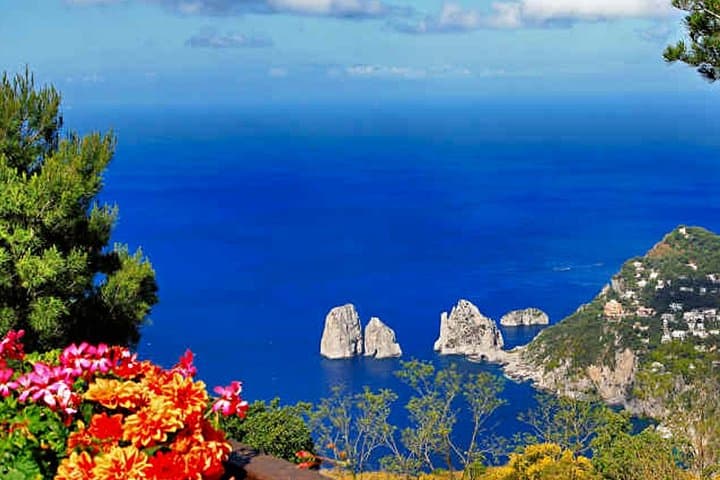
Salt wind tugs at your hair and Capri’s limestone cliffs loom: white faces pitted by sea and time, crowned with scrub and villas. The boat skirts the island, threading past the Faraglioni stacks — rock pillars that dare you to look over the rail — before easing toward the tiny mouth of the Blue Grotto.
Verified experiences and guided adventures in the surrounding area.
Operated by Top Excursions-Italy · Capri, Campania
You step out of the air-conditioned van in Naples just as the first hydrofoils start cutting the Tyrrhenian like silver knives.
Salt wind tugs at your hair and Capri’s limestone cliffs loom: white faces pitted by sea and time, crowned with scrub and villas. The boat skirts the island, threading past the Faraglioni stacks — rock pillars that dare you to look over the rail — before easing toward the tiny mouth of the Blue Grotto.
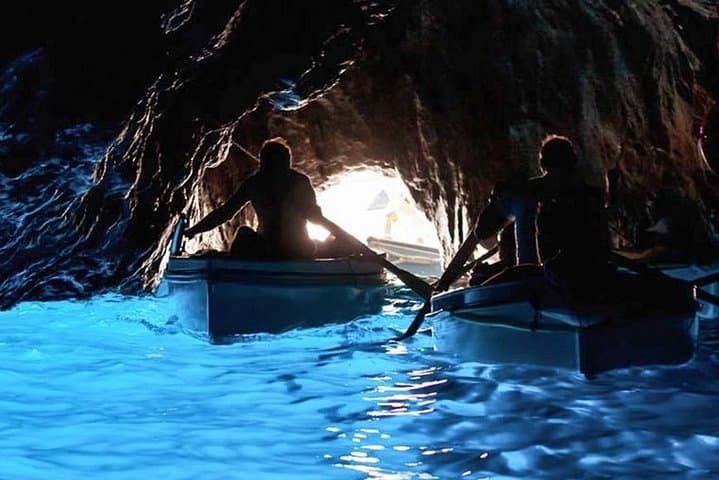
Capri’s story is visible in the stone. The island’s karst limestone has been sculpted by waves into grottos and arches; Romans prized Capri as Tiberius’ retreat and left villa ruins across the island. The Blue Grotto itself is a shallow cave whose midday light, refracting through the submerged entrance, turns the water an intense blue — a phenomenon locals have revered since antiquity.
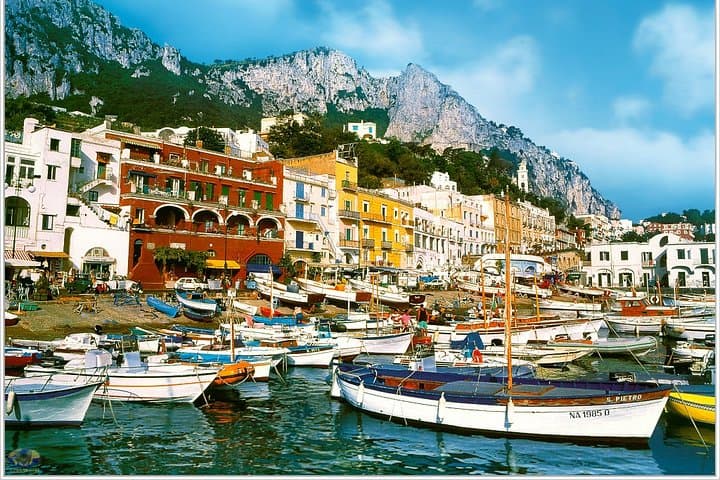
You’ll also see Anacapri’s quieter lanes, the formal Gardens of Augustus with sweeping views to the Faraglioni, and the funicular and narrow shopping streets of Capri town where fashion mixes with seafood smells.
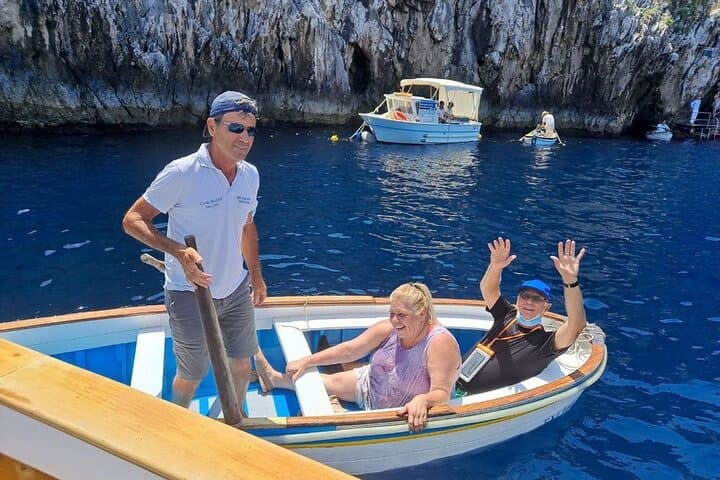
Practical notes: the Blue Grotto requires an entrance ticket bought at the floating office and is visited in shared rowboats for about five minutes; entrance depends on sea conditions and may be closed in bad weather. The day is long (about 12 hours from Rome), so bring sunscreen, sturdy shoes for steep streets and steps, and some euros for small-ticket items (funicular, grotto ticket, lunch). Expect moderate walking, crowded peak-season piers, and a mix of public boats and buses while on the island.
moderate.
12 hours.
Basic day-long stamina; able to walk on uneven, stepped streets and board small boats
No — Blue Grotto entrance tickets are purchased at the floating ticket office at the cave and are not included in the tour price.
If official management closes the grotto for safety, most operators take visitors to Anacapri for panoramic viewpoints instead; no refund is typically issued for grotto closure.
Yes — the itinerary includes private round-trip transfer from Rome to Naples port and back in an air-conditioned vehicle with an English-speaking driver.
Children are welcome but expect boat transfers and steps; limited mobility travelers may find boarding small rowboats for the Blue Grotto difficult and should consult the operator ahead of booking.
Capri was a favored imperial retreat — Emperor Tiberius built villas here in the 1st century AD — and its caves and coastal features have been used and admired since Roman times.
Capri faces overtourism and sensitive marine habitats; limit single-use plastics, follow local signage near cliffs, and use licensed boat operators to reduce environmental impact.
Top Excursions-Italy operates guided outdoor trips and adventures with an emphasis on safety, stewardship, and memorable experiences.
You step out of the air-conditioned van in Naples just as the first hydrofoils start cutting the Tyrrhenian like silver knives.
Salt wind tugs at your hair and Capri’s limestone cliffs loom: white faces pitted by sea and time, crowned with scrub and villas. The boat skirts the island, threading past the Faraglioni stacks — rock pillars that dare you to look over the rail — before easing toward the tiny mouth of the Blue Grotto.
Capri’s story is visible in the stone. The island’s karst limestone has been sculpted by waves into grottos and arches; Romans prized Capri as Tiberius’ retreat and left villa ruins across the island. The Blue Grotto itself is a shallow cave whose midday light, refracting through the submerged entrance, turns the water an intense blue — a phenomenon locals have revered since antiquity.
You’ll also see Anacapri’s quieter lanes, the formal Gardens of Augustus with sweeping views to the Faraglioni, and the funicular and narrow shopping streets of Capri town where fashion mixes with seafood smells.
Practical notes: the Blue Grotto requires an entrance ticket bought at the floating office and is visited in shared rowboats for about five minutes; entrance depends on sea conditions and may be closed in bad weather. The day is long (about 12 hours from Rome), so bring sunscreen, sturdy shoes for steep streets and steps, and some euros for small-ticket items (funicular, grotto ticket, lunch). Expect moderate walking, crowded peak-season piers, and a mix of public boats and buses while on the island.