THE ADVENTURE COLLECTIVE® · Independent discovery and booking for outdoor travel

Spend a full day moving between Cappadocia's surface wonders and secret depths. Hike through colored valleys, watch artisans at a pottery wheel, and squeeze into an ancient underground city to see how communities lived out of sight.
Spend a full day moving between Cappadocia's surface wonders and secret depths. Hike through colored valleys, watch artisans at a pottery wheel, and squeeze into an ancient underground city to see how communities lived out of sight.
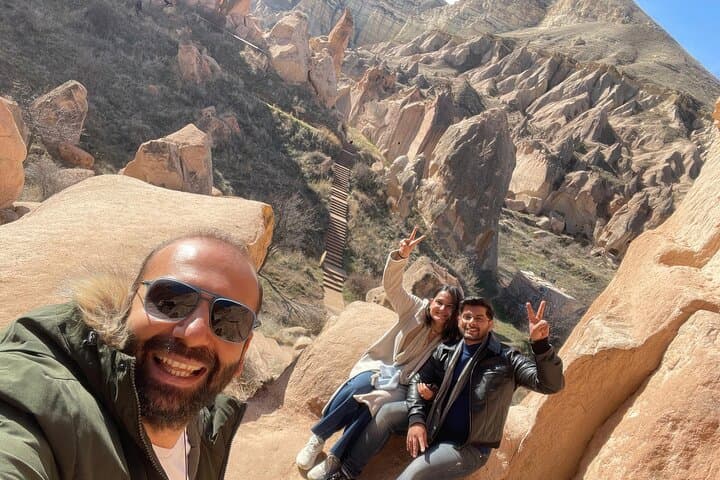
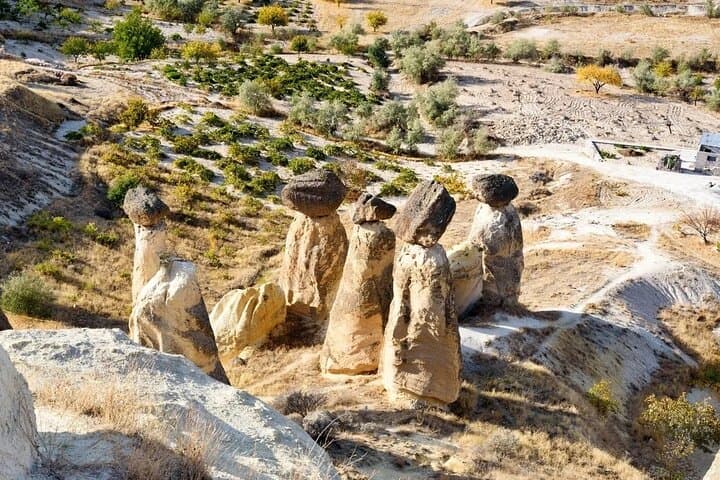
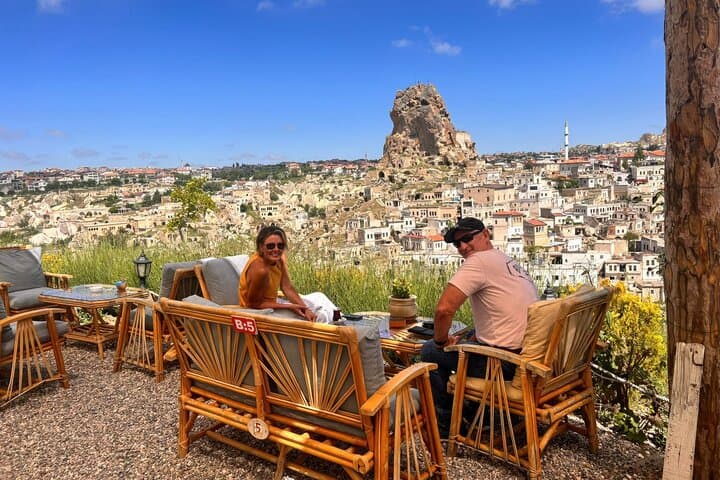
You step out of your hotel before the town wakes, the air still cool and the rock spires of Cappadocia cut sharp against an early sky. A minivan hums to life and there, on the ridge at Göreme Esentepe, the guide points out the first panorama: a field of fairy chimneys lit from the side, shadows carving the valleys deeper. For the next six to eight hours the region insists on your attention — geological oddities, carved churches, living caves and a subterranean city where history squeezes into narrow tunnels.
Verified experiences and guided adventures in the surrounding area.
Operated by Northwest Tour · Göreme, Nevşehir
You step out of your hotel before the town wakes, the air still cool and the rock spires of Cappadocia cut sharp against an early sky. A minivan hums to life and there, on the ridge at Göreme Esentepe, the guide points out the first panorama: a field of fairy chimneys lit from the side, shadows carving the valleys deeper. For the next six to eight hours the region insists on your attention — geological oddities, carved churches, living caves and a subterranean city where history squeezes into narrow tunnels.
Cappadocia sits on an ancient volcanic plateau. Millennia of ash and tuff compacted into soft rock, which local communities carved into dwellings, chapels and entire underground settlements to escape raids and seasonal extremes. The tour threads both the well-known and the overlooked: Devrent Valley's animal-formed pillars, the three-headed chimneys of Pasabag, and the Rose and Red Valleys where iron-rich strata flush the stone warm tones at sunset.
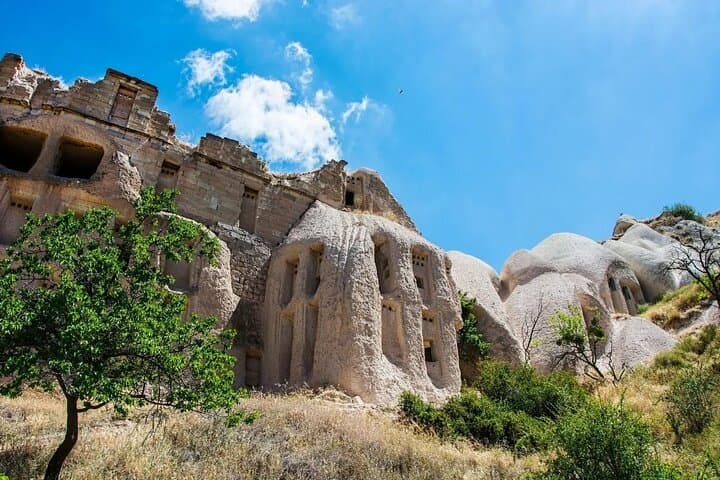
The underground cities are the region's most visceral history lesson. These multi-level complexes include kitchens, stables and wine cellars; low ceilings and winding passages reveal how people engineered defense and daily life below the surface. Aboveground, you move between open-air vistas and intimate cave churches whose frescoes survive as faded pigments on sculpted walls.
Culture is tangible here: in Avanos, potters still shape red-clay from the Kizilirmak River the way their ancestors did. A workshop stop is less tourist stop than a demonstration of technique — the wheel, the hands, the clay — and a reminder that Cappadocia's living traditions parallel its ruined ones.
Practicalities matter. Expect 6–8 hours in an air-conditioned vehicle with short walks in uneven terrain totaling roughly 4–7 km over the day and elevation changes under 300 meters. The underground city requires crouching and steady footing; shoes with grip are non-negotiable. Bring layered clothing for temperature swings, a sun hat, and at least 1.5 liters of water. Many sites have small entry fees not always included in tour price, and parts of the route include steps and narrow passages unsuitable for travelers with mobility issues.
Timing tip: mornings and late afternoons offer the softest light for photos and the coolest walking conditions; midday can be hot and bright, especially in summer. The tour pairs well with an early morning hot-air-balloon watch, but balloons are separate and weather-dependent.
This private full-day itinerary is pragmatic and immersive: it delivers geology, history and craft with a guide who stitches context to each stop. For travelers who want both panoramic spectacle and the small-scale details — pottery clay under nails, frescos behind low doors, the cool hush of rooms carved underground — this route is a tightly organized way to see why Cappadocia keeps asking to be explored.
moderate.
6–8 hours.
Moderate fitness; comfortable walking on uneven ground and negotiating stairs and narrow tunnels is required.
This private tour runs approximately 6 to 8 hours, depending on traffic, walking pace and time spent at each stop.
Yes — pickup and drop-off at Göreme hotels is included; be ready at reception roughly 10 minutes before your scheduled pickup time.
Some admissions are not included; expect to pay modest fees at certain cave churches or the underground city unless specified otherwise by the operator.
The underground city involves narrow, low-ceiling tunnels and tight stairways; it may be uncomfortable for those with claustrophobia or mobility limitations.
Lunch is typically not included unless your booking states otherwise; guides usually stop at a local restaurant so you can buy a meal.
Children can join but should be able to walk uneven trails and tolerate confined spaces; the tour is not recommended for pregnant travelers or those with serious heart conditions.
Cappadocia's carved landscape grew from volcanic tuff over millions of years and was adapted by Byzantine Christian communities and earlier peoples into churches and underground refuges.
Visitor pressure can erode fragile tuff formations and frescoes; stick to marked paths, avoid touching painted surfaces and support local conservation-minded guides.
Northwest Tour operates guided outdoor trips and adventures with an emphasis on safety, stewardship, and memorable experiences.
You step out of your hotel before the town wakes, the air still cool and the rock spires of Cappadocia cut sharp against an early sky. A minivan hums to life and there, on the ridge at Göreme Esentepe, the guide points out the first panorama: a field of fairy chimneys lit from the side, shadows carving the valleys deeper. For the next six to eight hours the region insists on your attention — geological oddities, carved churches, living caves and a subterranean city where history squeezes into narrow tunnels.
You step out of your hotel before the town wakes, the air still cool and the rock spires of Cappadocia cut sharp against an early sky. A minivan hums to life and there, on the ridge at Göreme Esentepe, the guide points out the first panorama: a field of fairy chimneys lit from the side, shadows carving the valleys deeper. For the next six to eight hours the region insists on your attention — geological oddities, carved churches, living caves and a subterranean city where history squeezes into narrow tunnels.
Cappadocia sits on an ancient volcanic plateau. Millennia of ash and tuff compacted into soft rock, which local communities carved into dwellings, chapels and entire underground settlements to escape raids and seasonal extremes. The tour threads both the well-known and the overlooked: Devrent Valley's animal-formed pillars, the three-headed chimneys of Pasabag, and the Rose and Red Valleys where iron-rich strata flush the stone warm tones at sunset.
The underground cities are the region's most visceral history lesson. These multi-level complexes include kitchens, stables and wine cellars; low ceilings and winding passages reveal how people engineered defense and daily life below the surface. Aboveground, you move between open-air vistas and intimate cave churches whose frescoes survive as faded pigments on sculpted walls.
Culture is tangible here: in Avanos, potters still shape red-clay from the Kizilirmak River the way their ancestors did. A workshop stop is less tourist stop than a demonstration of technique — the wheel, the hands, the clay — and a reminder that Cappadocia's living traditions parallel its ruined ones.
Practicalities matter. Expect 6–8 hours in an air-conditioned vehicle with short walks in uneven terrain totaling roughly 4–7 km over the day and elevation changes under 300 meters. The underground city requires crouching and steady footing; shoes with grip are non-negotiable. Bring layered clothing for temperature swings, a sun hat, and at least 1.5 liters of water. Many sites have small entry fees not always included in tour price, and parts of the route include steps and narrow passages unsuitable for travelers with mobility issues.
Timing tip: mornings and late afternoons offer the softest light for photos and the coolest walking conditions; midday can be hot and bright, especially in summer. The tour pairs well with an early morning hot-air-balloon watch, but balloons are separate and weather-dependent.
This private full-day itinerary is pragmatic and immersive: it delivers geology, history and craft with a guide who stitches context to each stop. For travelers who want both panoramic spectacle and the small-scale details — pottery clay under nails, frescos behind low doors, the cool hush of rooms carved underground — this route is a tightly organized way to see why Cappadocia keeps asking to be explored.