THE ADVENTURE COLLECTIVE® · Independent discovery and booking for outdoor travel

A private, full‑day tour that packs Cappadocia’s must‑see valleys, rock formations and an ancient underground city into one efficient itinerary. Perfect for first‑time visitors who want context — geology, history and local craft — alongside practical guidance for exploring uneven terrain and carved interiors.
A private, full‑day tour that packs Cappadocia’s must‑see valleys, rock formations and an ancient underground city into one efficient itinerary. Perfect for first‑time visitors who want context — geology, history and local craft — alongside practical guidance for exploring uneven terrain and carved interiors.
You step from an air-conditioned van and the valley exhales: honey‑colored rock, columns and caps shaped by epochs of wind and water. In a single day this private tour moves like a well-paced film through Cappadocia’s headlines — Love Valley’s phallic pillars, the stair-stepped silhouette of Uçhisar Castle, the clustered caps of Paşabağı — and then dives, literally, underground into an ancient subterranean town where light thins and history narrows.
Verified experiences and guided adventures in the surrounding area.
Operated by Old town travel · Göreme, Nevşehir
You step from an air-conditioned van and the valley exhales: honey‑colored rock, columns and caps shaped by epochs of wind and water. In a single day this private tour moves like a well-paced film through Cappadocia’s headlines — Love Valley’s phallic pillars, the stair-stepped silhouette of Uçhisar Castle, the clustered caps of Paşabağı — and then dives, literally, underground into an ancient subterranean town where light thins and history narrows.
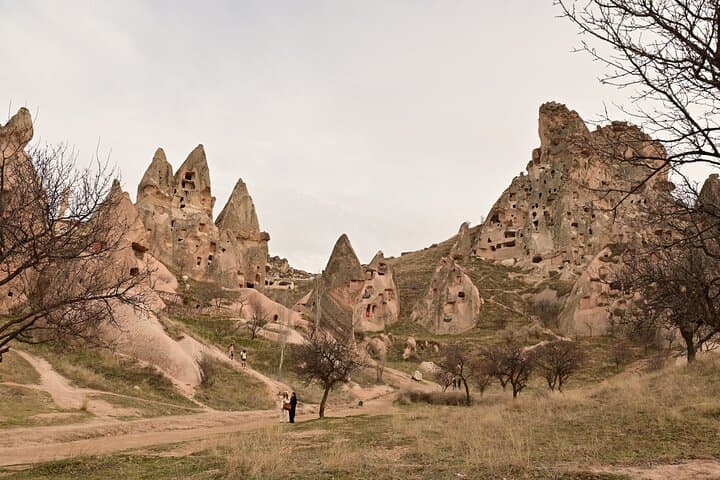
The landscape itself is geological biography. Millions of years after volcanic eruptions blanketed central Anatolia with soft tuff, erosion carved chimneys and cones; later human hands hollowed them into churches, homes and wineries. From the Goreme Open-Air Museum’s rock-cut chapels to Zelve’s three-valley ruins, visitors trace a story of early Christian communities who used these hollows for worship and refuge between the 9th and 13th centuries.
Culturally, Cappadocia still hums with craft: potters at the wheel in Avanos, local guides who read the rock like a library, and wishing trees threaded with beads and cloth — small, human gestures layered onto deep time. The underground city you’ll visit was not a curiosity but a survival system: ventilation shafts, stables, food stores and narrow corridors that sheltered whole populations for days.
Practically, this is a long but accessible day. Expect 6–8 hours door-to-door with multiple short walks across uneven, often gravelly terrain; some climbs — Uçhisar involves a 100–150m scramble of stairs and carved paths — and tight, low-ceiling passages underground. Many of the open‑air museum and valley sites have modest entrance fees (Zelve listed at about €15) that sometimes are not included. Lunch is provided as part of the tour, and your private guide will tailor stops to your pace.
Bring sturdy shoes, a headlamp or reliable phone flashlight for the underground passages, and at least 2 liters of water. Mornings are best for softer light and smaller crowds; afternoons warm quickly and shadows make the rock glow. For those prone to claustrophobia, notify your guide — there are ways to see the underground layers without pushing into the narrowest tunnels.
A private full‑day run through Cappadocia gives you the sweep and the detail: sweeping viewpoints that let you read the entire valley, and quiet nooks where geology and human history press close. Well planned, it’s an efficient primer — and an invitation to return for sunrise hot-air balloons and longer hikes.
moderate.
6–8 hours.
Comfortable with several short walks (total on-foot distance around 3–5 km) and occasional stairs; basic mobility required.
The private tour runs about 6–8 hours; it includes an air‑conditioned vehicle, professional guide and lunch — but some site admissions (e.g., Zelve) may be extra.
Some admissions are not included in the base price; the Zelve or Goreme Open Air Museum often charge a separate fee (~€15) — confirm with your operator.
Children may enjoy it, but the underground passages are narrow and uneven; people with limited mobility or severe claustrophobia should discuss alternate viewing options with the guide.
Yes — the tour is private and the operator notes it can be tailored to your interests and pace, within the 6–8 hour window.
Layered clothing for temperature swings, closed‑toe shoes for rough ground, and a hat or sunscreen for sun‑exposed valleys.
Pickup is available from Göreme-area hotels (20 minutes before the departure time listed); full refund if you cancel at least 24 hours before departure.
Cappadocia’s rock settlements were a refuge for early Christians from roughly the 4th to 13th centuries; many cave churches still preserve fresco fragments.
Erosion is a natural process but visitor pressure accelerates wear; stick to marked paths, avoid carving or graffiti, and support local conservation fees when requested.
Old town travel operates guided outdoor trips and adventures with an emphasis on safety, stewardship, and memorable experiences.
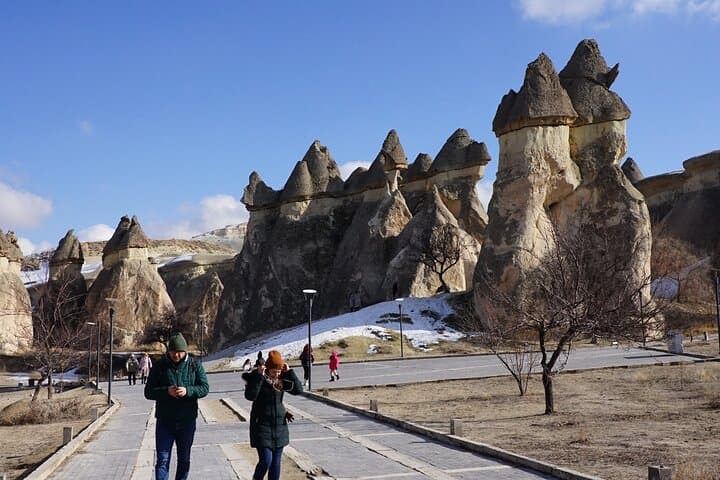
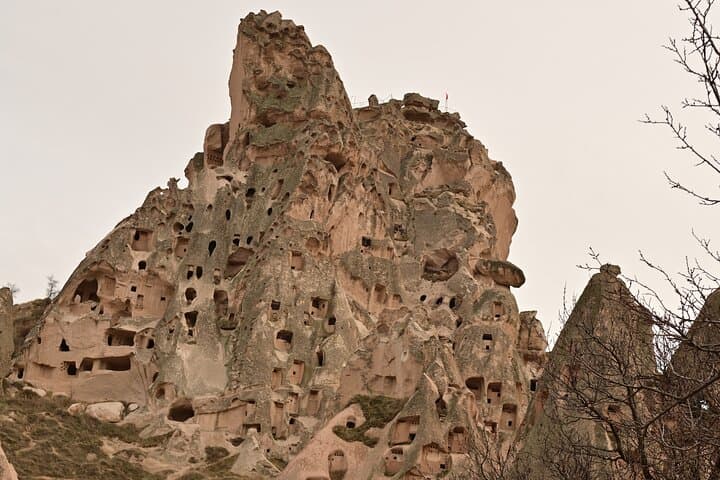
You step from an air-conditioned van and the valley exhales: honey‑colored rock, columns and caps shaped by epochs of wind and water. In a single day this private tour moves like a well-paced film through Cappadocia’s headlines — Love Valley’s phallic pillars, the stair-stepped silhouette of Uçhisar Castle, the clustered caps of Paşabağı — and then dives, literally, underground into an ancient subterranean town where light thins and history narrows.
You step from an air-conditioned van and the valley exhales: honey‑colored rock, columns and caps shaped by epochs of wind and water. In a single day this private tour moves like a well-paced film through Cappadocia’s headlines — Love Valley’s phallic pillars, the stair-stepped silhouette of Uçhisar Castle, the clustered caps of Paşabağı — and then dives, literally, underground into an ancient subterranean town where light thins and history narrows.
The landscape itself is geological biography. Millions of years after volcanic eruptions blanketed central Anatolia with soft tuff, erosion carved chimneys and cones; later human hands hollowed them into churches, homes and wineries. From the Goreme Open-Air Museum’s rock-cut chapels to Zelve’s three-valley ruins, visitors trace a story of early Christian communities who used these hollows for worship and refuge between the 9th and 13th centuries.
Culturally, Cappadocia still hums with craft: potters at the wheel in Avanos, local guides who read the rock like a library, and wishing trees threaded with beads and cloth — small, human gestures layered onto deep time. The underground city you’ll visit was not a curiosity but a survival system: ventilation shafts, stables, food stores and narrow corridors that sheltered whole populations for days.
Practically, this is a long but accessible day. Expect 6–8 hours door-to-door with multiple short walks across uneven, often gravelly terrain; some climbs — Uçhisar involves a 100–150m scramble of stairs and carved paths — and tight, low-ceiling passages underground. Many of the open‑air museum and valley sites have modest entrance fees (Zelve listed at about €15) that sometimes are not included. Lunch is provided as part of the tour, and your private guide will tailor stops to your pace.
Bring sturdy shoes, a headlamp or reliable phone flashlight for the underground passages, and at least 2 liters of water. Mornings are best for softer light and smaller crowds; afternoons warm quickly and shadows make the rock glow. For those prone to claustrophobia, notify your guide — there are ways to see the underground layers without pushing into the narrowest tunnels.
A private full‑day run through Cappadocia gives you the sweep and the detail: sweeping viewpoints that let you read the entire valley, and quiet nooks where geology and human history press close. Well planned, it’s an efficient primer — and an invitation to return for sunrise hot-air balloons and longer hikes.