THE ADVENTURE COLLECTIVE® · Independent discovery and booking for outdoor travel

Walk the edge of one of Spain’s most dramatic gorges on a guided full-day tour from Málaga. This 7.7 km route threads high walkways and a 100-meter suspension bridge through the Desfiladero de los Gaitanes—history, geology, and exposed views in one compact adventure.
Walk the edge of one of Spain’s most dramatic gorges on a guided full-day tour from Málaga. This 7.7 km route threads high walkways and a 100-meter suspension bridge through the Desfiladero de los Gaitanes—history, geology, and exposed views in one compact adventure.
You step out of the minibus and the air tastes of limestone dust and river. The Gaitanejo reservoir lies still at your feet, a sheet of dark water that dares you toward the gorge. A guide checks helmets and shoelaces, hands out the tickets, and with a few words in Spanish and English points to the first footbridge threading the rock face: a narrow ribbon clinging more than 100 meters above the river.
Verified experiences and guided adventures in the surrounding area.
Operated by WE4TRIPS · Ardales, Andalusia
You step out of the minibus and the air tastes of limestone dust and river. The Gaitanejo reservoir lies still at your feet, a sheet of dark water that dares you toward the gorge. A guide checks helmets and shoelaces, hands out the tickets, and with a few words in Spanish and English points to the first footbridge threading the rock face: a narrow ribbon clinging more than 100 meters above the river.
The route is compact and cinematic—roughly 7.7 kilometers that unspool through the Desfiladero de los Gaitanes. For the first kilometers you’ll walk a gravel approach to the control point, then cross the Gaitanejo Gorge where the canyon tightens to about 10 meters and the sound of water becomes a low, constant engine. The trail moves from packed earth to engineered walkways bolted into limestone, culminating on the high walkways and the final suspension span that delivers you toward El Chorro station.
Caminito del Rey was born of industry: early 20th-century engineers built the walkway to service the hydroelectric works that reshaped these gorges. The path gained a royal stamp in 1921 when King Alfonso XIII traversed it, and after decades of decay it was fully restored and reopened with strict safety controls—hence the helmets and the managed ticketing that your guide handles.
Geology shapes every step. The gorge is cut from Jurassic limestone, polished by the river into sheer walls and narrow chutes, and the sun paints bands of ochre and grey across the rock. Birds of prey wheel on the thermals; their silhouettes are built into the experience. Locals in Ardales and El Chorro are used to hearing visitors recount the vertigo and the views in the same breath.
Practical essentials: the tour runs about 5–6 hours door-to-door from Málaga (pick-up at Avenida Andalucía, Bus Stop No. 11, typically 8:00 a.m.). Expect 7.7 km of walking on mixed terrain, exposure to heights, and a final suspension bridge at about 100 m. The guide provides helmets and handles entrance tickets; bring sturdy footwear, at least 1–1.5 liters of water, layered clothing, and a compact camera. In winter dress warmer—wind whistles through the gorge—and in summer go early to avoid midday heat. The tour isn’t recommended for people with serious heart or back problems, pregnant travelers, or children under eight.
Logistics are straightforward: the route ends near El Chorro station, with shuttle options back to your starting area or return transfers depending on your booking. Bring patience for narrow sections and allow extra time for photos—the canyon rewards it.
moderate.
5–6 hours.
Suitable for regular walkers comfortable with 7–8 km and some exposed sections; not for people with severe vertigo or mobility issues.
The guided portion covers roughly 7.7 kilometers along trails and raised walkways, ending at El Chorro station.
Yes—the guide manages entrance tickets and issues protective helmets before you enter the controlled walkway.
Children under 8 are not permitted; age documentation may be required.
No—this tour is not recommended for travelers with serious cardiovascular or spinal conditions due to exposure and walking demands.
The operator may cancel the tour for safety in bad weather; their cancellation policy allows a full refund if canceled at least 24 hours before departure or if the provider cancels due to weather.
The walkway was built in the early 20th century to give workers access to the hydroelectric installations; King Alfonso XIII crossed it in 1921, giving the path its royal name.
The site is tightly managed with regulated ticketing and safety controls to limit erosion and preserve fragile cliff habitats; stay on the path and avoid littering.
WE4TRIPS operates guided outdoor trips and adventures with an emphasis on safety, stewardship, and memorable experiences.
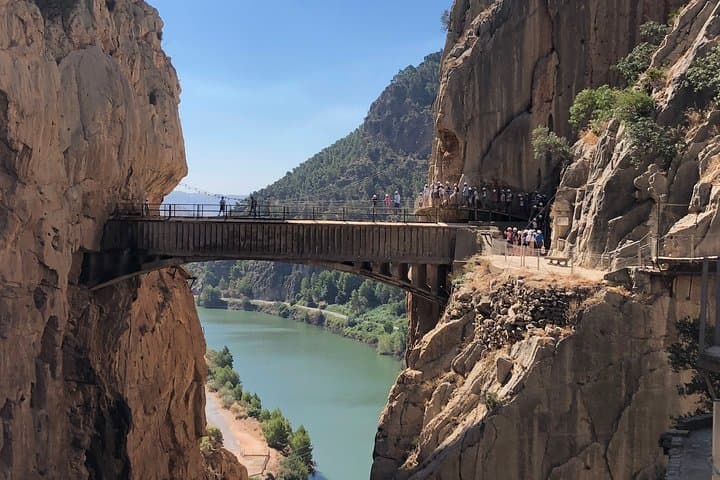
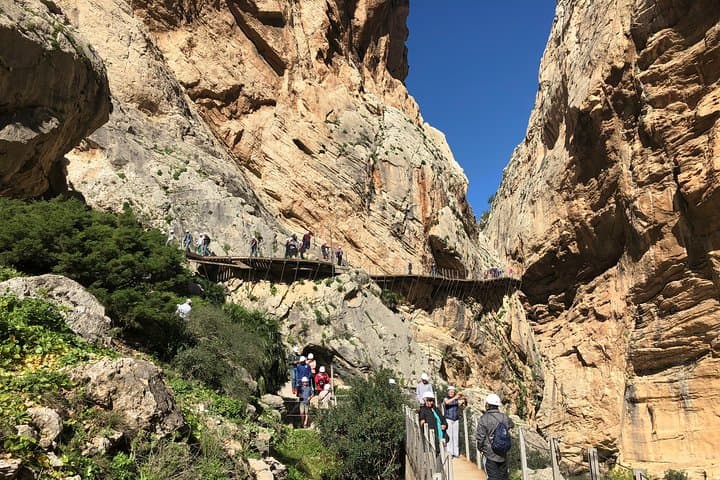
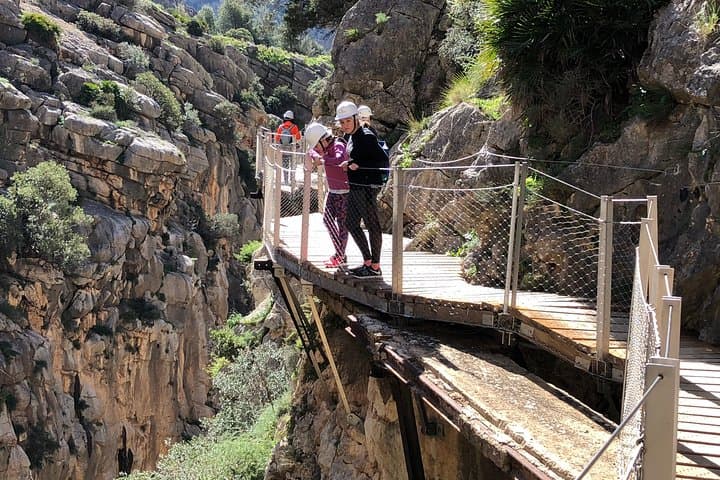
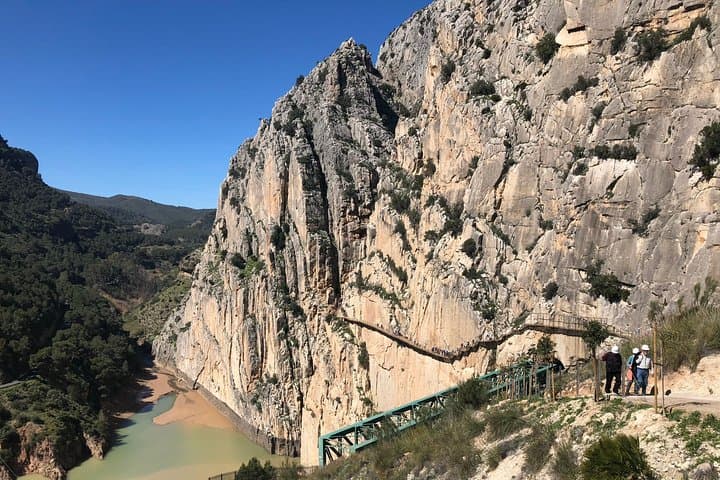
You step out of the minibus and the air tastes of limestone dust and river. The Gaitanejo reservoir lies still at your feet, a sheet of dark water that dares you toward the gorge. A guide checks helmets and shoelaces, hands out the tickets, and with a few words in Spanish and English points to the first footbridge threading the rock face: a narrow ribbon clinging more than 100 meters above the river.
You step out of the minibus and the air tastes of limestone dust and river. The Gaitanejo reservoir lies still at your feet, a sheet of dark water that dares you toward the gorge. A guide checks helmets and shoelaces, hands out the tickets, and with a few words in Spanish and English points to the first footbridge threading the rock face: a narrow ribbon clinging more than 100 meters above the river.
The route is compact and cinematic—roughly 7.7 kilometers that unspool through the Desfiladero de los Gaitanes. For the first kilometers you’ll walk a gravel approach to the control point, then cross the Gaitanejo Gorge where the canyon tightens to about 10 meters and the sound of water becomes a low, constant engine. The trail moves from packed earth to engineered walkways bolted into limestone, culminating on the high walkways and the final suspension span that delivers you toward El Chorro station.
Caminito del Rey was born of industry: early 20th-century engineers built the walkway to service the hydroelectric works that reshaped these gorges. The path gained a royal stamp in 1921 when King Alfonso XIII traversed it, and after decades of decay it was fully restored and reopened with strict safety controls—hence the helmets and the managed ticketing that your guide handles.
Geology shapes every step. The gorge is cut from Jurassic limestone, polished by the river into sheer walls and narrow chutes, and the sun paints bands of ochre and grey across the rock. Birds of prey wheel on the thermals; their silhouettes are built into the experience. Locals in Ardales and El Chorro are used to hearing visitors recount the vertigo and the views in the same breath.
Practical essentials: the tour runs about 5–6 hours door-to-door from Málaga (pick-up at Avenida Andalucía, Bus Stop No. 11, typically 8:00 a.m.). Expect 7.7 km of walking on mixed terrain, exposure to heights, and a final suspension bridge at about 100 m. The guide provides helmets and handles entrance tickets; bring sturdy footwear, at least 1–1.5 liters of water, layered clothing, and a compact camera. In winter dress warmer—wind whistles through the gorge—and in summer go early to avoid midday heat. The tour isn’t recommended for people with serious heart or back problems, pregnant travelers, or children under eight.
Logistics are straightforward: the route ends near El Chorro station, with shuttle options back to your starting area or return transfers depending on your booking. Bring patience for narrow sections and allow extra time for photos—the canyon rewards it.