THE ADVENTURE COLLECTIVE® · Independent discovery and booking for outdoor travel

Take a single, efficient day through Cairo’s most iconic sites: the Giza pyramids and Sphinx, the Egyptian Museum’s pharaonic treasures, and the hilltop Citadel with its Ottoman mosque. This private tour pairs close-up history with practical logistics for a long but manageable day of exploration.
Take a single, efficient day through Cairo’s most iconic sites: the Giza pyramids and Sphinx, the Egyptian Museum’s pharaonic treasures, and the hilltop Citadel with its Ottoman mosque. This private tour pairs close-up history with practical logistics for a long but manageable day of exploration.
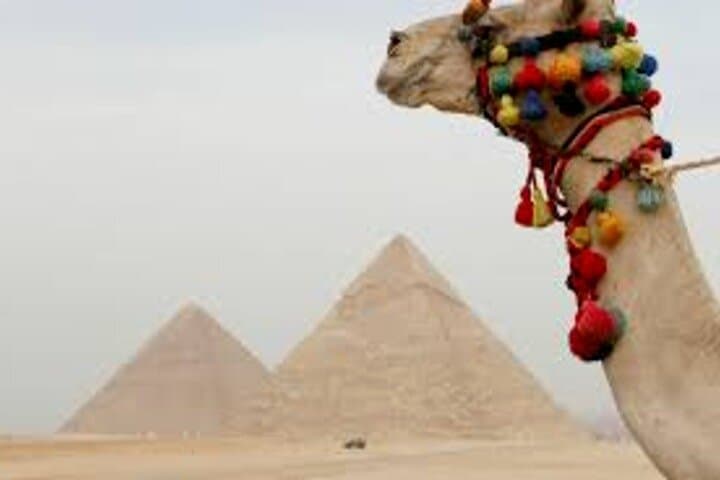
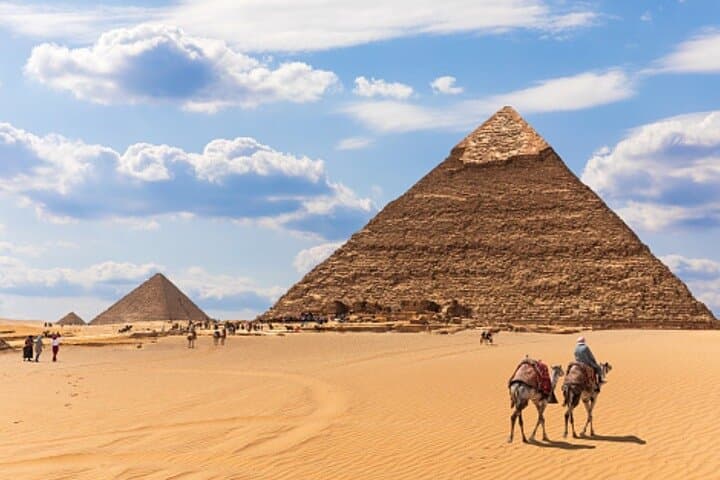
You arrive at daybreak and the plateau waits like a hard-won horizon: limestone slopes under a wide sky, camels shifting in the wash of morning light, and the Great Pyramid rising with patient geometry. The guide ushers you forward; the air tastes faintly of dust and diesel, the modern city a low hum beyond the plateau.
Verified experiences and guided adventures in the surrounding area.
Operated by Higher Travel · Cairo, Cairo Governorate
You arrive at daybreak and the plateau waits like a hard-won horizon: limestone slopes under a wide sky, camels shifting in the wash of morning light, and the Great Pyramid rising with patient geometry. The guide ushers you forward; the air tastes faintly of dust and diesel, the modern city a low hum beyond the plateau.
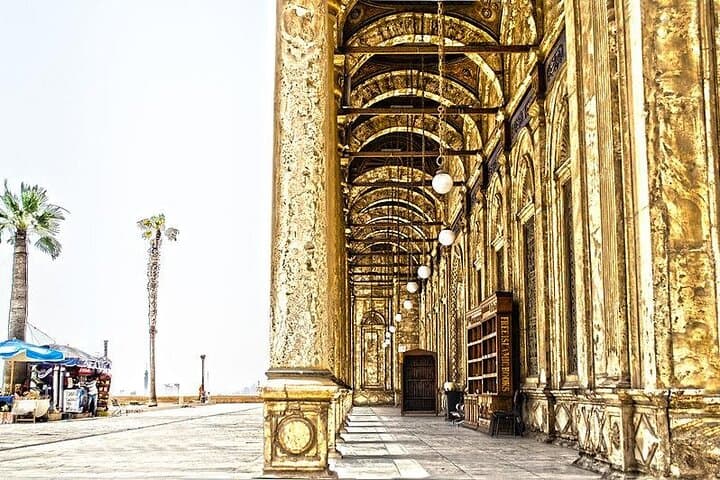
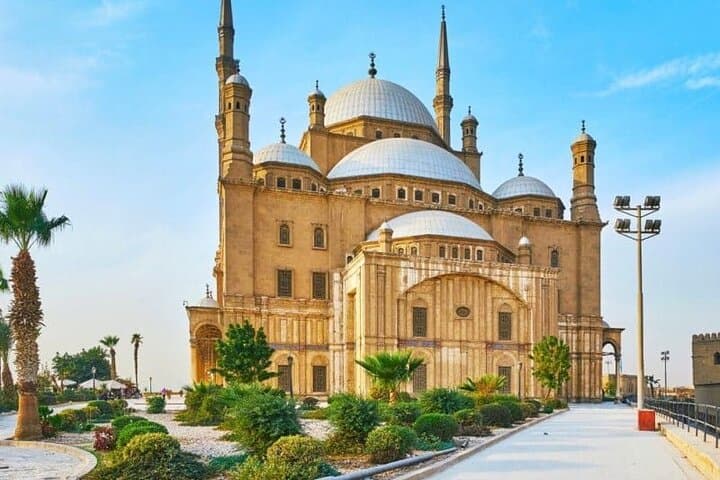
This itinerary threads through layers of Cairo’s story. On the Giza Plateau the three main pyramids and the Sphinx speak to Old Kingdom engineering—limestone blocks hewn and set over millennia. The Egyptian Museum in Tahrir Square gathers later chapters: gold funerary masks, mummified kings, and artefacts that map dynasties. The Citadel and the Mosque of Muhammad Ali add Ottoman-era scale and a different architectural vocabulary, perched on the city’s strategic ridge.
Expect hard-packed sand, paved museum floors, and short walks between sites plus concentrated time standing during explanations. Cultural notes: bargaining is part of market exchanges at Khan el-Khalili, and polite dress (shoulders and knees covered) is appreciated in religious sites. Local guides add depth—stories about pharaonic rituals, Ottoman politics and modern Cairo’s revolutions—that make the monuments feel lived-in rather than static.
Practical guidance: plan for a full 9–10 hour day, bring sun protection and comfortable walking shoes, and carry a refillable bottle—the tour provides water and lunch. If you want to enter a pyramid or skip museum sections, flag that early so your driver and guide can adapt the pace.
easy.
9–10 hours.
Moderate walking stamina for museum galleries, short uneven stretches on the plateau, and standing during explanations.
No—access inside the pyramids requires additional tickets that can be purchased locally; confirm with your guide if you want to add this option.
Many areas (vehicle, some museum sections) are accessible, but the Giza Plateau has uneven terrain—notify the operator in advance to arrange assistance.
The tour notes that several site admissions and lunch are included; check the booking details for which entrances are covered and bring cash for any optional extras.
Expect several short walks on uneven ground at Giza, stairs at the Citadel, and standing during museum tours—comfortable shoes are recommended.
The Giza complex dates to the 4th Dynasty (c. 2600–2500 BCE); the Egyptian Museum collects material spanning pharaonic to Greco-Roman periods, while the Citadel was a 19th-century Ottoman development under Muhammad Ali Pasha.
Heavy tourism stresses fragile sites—stay on marked paths, avoid touching stone surfaces, and support licensed guides and local conservation initiatives to reduce impact.
Higher Travel operates guided outdoor trips and adventures with an emphasis on safety, stewardship, and memorable experiences.
You arrive at daybreak and the plateau waits like a hard-won horizon: limestone slopes under a wide sky, camels shifting in the wash of morning light, and the Great Pyramid rising with patient geometry. The guide ushers you forward; the air tastes faintly of dust and diesel, the modern city a low hum beyond the plateau.
You arrive at daybreak and the plateau waits like a hard-won horizon: limestone slopes under a wide sky, camels shifting in the wash of morning light, and the Great Pyramid rising with patient geometry. The guide ushers you forward; the air tastes faintly of dust and diesel, the modern city a low hum beyond the plateau.
This itinerary threads through layers of Cairo’s story. On the Giza Plateau the three main pyramids and the Sphinx speak to Old Kingdom engineering—limestone blocks hewn and set over millennia. The Egyptian Museum in Tahrir Square gathers later chapters: gold funerary masks, mummified kings, and artefacts that map dynasties. The Citadel and the Mosque of Muhammad Ali add Ottoman-era scale and a different architectural vocabulary, perched on the city’s strategic ridge.
Expect hard-packed sand, paved museum floors, and short walks between sites plus concentrated time standing during explanations. Cultural notes: bargaining is part of market exchanges at Khan el-Khalili, and polite dress (shoulders and knees covered) is appreciated in religious sites. Local guides add depth—stories about pharaonic rituals, Ottoman politics and modern Cairo’s revolutions—that make the monuments feel lived-in rather than static.
Practical guidance: plan for a full 9–10 hour day, bring sun protection and comfortable walking shoes, and carry a refillable bottle—the tour provides water and lunch. If you want to enter a pyramid or skip museum sections, flag that early so your driver and guide can adapt the pace.