THE ADVENTURE COLLECTIVE® · Independent discovery and booking for outdoor travel

Leave Sharm El-Sheikh before dawn for a marathon day in Cairo: the Egyptian Museum, the Great Sphinx and the Pyramids of Giza. Long transfers and expert guiding make this a compact way to see Egypt’s headline sights in a single, intense day.
Leave Sharm El-Sheikh before dawn for a marathon day in Cairo: the Egyptian Museum, the Great Sphinx and the Pyramids of Giza. Long transfers and expert guiding make this a compact way to see Egypt’s headline sights in a single, intense day.
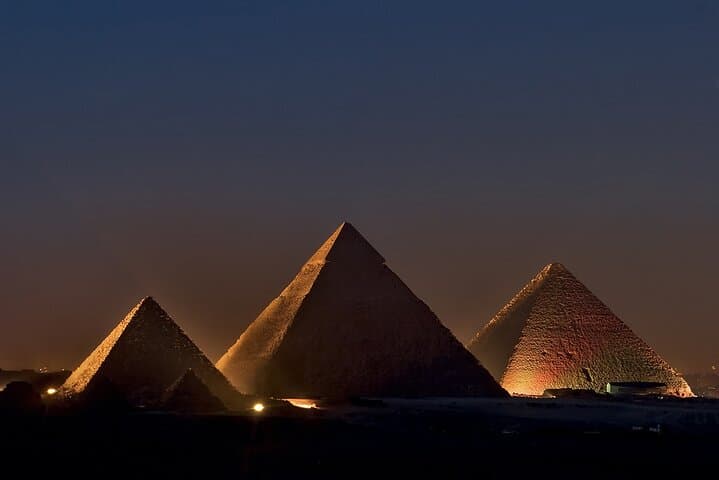
The bus slides out of Sharm El-Sheikh under a star-sparse sky and the desert begins to breathe around you—wide, flat plains that seem to dare a traveler to keep going. By dawn the city of Cairo unfurls: traffic, minarets, and the hulking silhouettes of the Giza Plateau rising from the sand.
Verified experiences and guided adventures in the surrounding area.
Operated by Al Rose Travel · Cairo, Cairo Governorate
The bus slides out of Sharm El-Sheikh under a star-sparse sky and the desert begins to breathe around you—wide, flat plains that seem to dare a traveler to keep going. By dawn the city of Cairo unfurls: traffic, minarets, and the hulking silhouettes of the Giza Plateau rising from the sand.
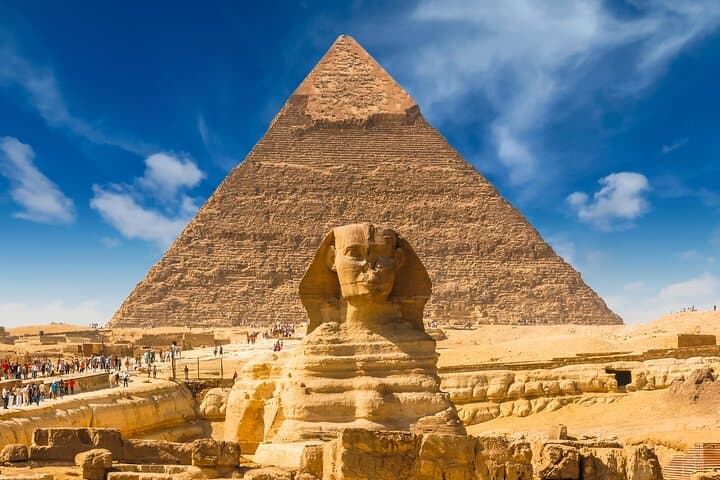
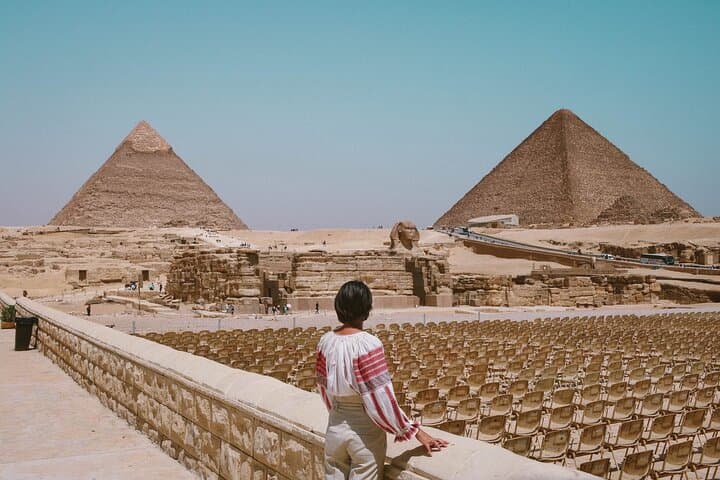
Visitors spend the day moving through layers of time. The Egyptian Museum holds bronze, gold and the gilded mask of Tutankhamen—objects pulled from tombs and riverside sands that chronicle millennia of centralized power and funerary craft. The Great Sphinx, carved from limestone, meets the wind and occasional sand with a weathered calm; the pyramids themselves are geological and engineering proof—massive blocks of limestone and granite stacked with millimeter patience.
Culture here is immediate: Arabic conversations, the scent of strong coffee, and vendors who understand how tourists move. Expect a guided rhythm—museum, Sphinx viewpoint, then the pyramids—interspersed with a lunch that introduces straightforward Egyptian staples.
Practical points matter: the round trip is long (roughly 20–23 hours door-to-door on scheduled tours) and includes many hours on a comfortable coach. Bring sun protection, a refillable water bottle, and shoes for walking on uneven stone and sand. Cameras are welcome but respect signs and staffed areas—some sections of monuments are roped off. If you plan to photoshoot at golden hour, coordinate with your guide for timing. The reward is immediate: standing close to monuments that have watched history move across the desert for four thousand years.
moderate.
20–23 hours.
You’ll need the endurance for a very long day with multiple short walks; no special fitness level required but be prepared for fatigue.
The round trip is included in the advertised 20–23 hour duration; expect roughly 6–7 hours one-way by coach depending on traffic and stops.
Yes—this tour includes admission to the Egyptian Museum and the Giza Plateau, plus a provided lunch as listed in the inclusions.
The tour is physically easy but very long; infants must sit on laps and families should consider the extended travel time when booking.
Photography policies can change; photography is generally allowed in many areas but flash and tripods may be restricted—follow your guide and posted signs.
The Giza Plateau and the artifacts in the Egyptian Museum trace continuous civilization back four thousand years, reflecting ancient funerary practices and centralized statecraft under the pharaohs.
High visitor numbers stress fragile stone and onsite conservation limits access; follow roped routes, avoid touching ancient surfaces and use approved walkways to minimize damage.
Al Rose Travel operates guided outdoor trips and adventures with an emphasis on safety, stewardship, and memorable experiences.
The bus slides out of Sharm El-Sheikh under a star-sparse sky and the desert begins to breathe around you—wide, flat plains that seem to dare a traveler to keep going. By dawn the city of Cairo unfurls: traffic, minarets, and the hulking silhouettes of the Giza Plateau rising from the sand.
The bus slides out of Sharm El-Sheikh under a star-sparse sky and the desert begins to breathe around you—wide, flat plains that seem to dare a traveler to keep going. By dawn the city of Cairo unfurls: traffic, minarets, and the hulking silhouettes of the Giza Plateau rising from the sand.
Visitors spend the day moving through layers of time. The Egyptian Museum holds bronze, gold and the gilded mask of Tutankhamen—objects pulled from tombs and riverside sands that chronicle millennia of centralized power and funerary craft. The Great Sphinx, carved from limestone, meets the wind and occasional sand with a weathered calm; the pyramids themselves are geological and engineering proof—massive blocks of limestone and granite stacked with millimeter patience.
Culture here is immediate: Arabic conversations, the scent of strong coffee, and vendors who understand how tourists move. Expect a guided rhythm—museum, Sphinx viewpoint, then the pyramids—interspersed with a lunch that introduces straightforward Egyptian staples.
Practical points matter: the round trip is long (roughly 20–23 hours door-to-door on scheduled tours) and includes many hours on a comfortable coach. Bring sun protection, a refillable water bottle, and shoes for walking on uneven stone and sand. Cameras are welcome but respect signs and staffed areas—some sections of monuments are roped off. If you plan to photoshoot at golden hour, coordinate with your guide for timing. The reward is immediate: standing close to monuments that have watched history move across the desert for four thousand years.