THE ADVENTURE COLLECTIVE® · Independent discovery and booking for outdoor travel

Spend a full day moving between the open air of the Giza Plateau, the curated halls of the Grand Egyptian Museum, and the crowded alleys of Khan El Khalili. This guided private tour packs Cairo’s essential sights into an efficient, approachable itinerary.
Spend a full day moving between the open air of the Giza Plateau, the curated halls of the Grand Egyptian Museum, and the crowded alleys of Khan El Khalili. This guided private tour packs Cairo’s essential sights into an efficient, approachable itinerary.
You step out of the air‑conditioned vehicle onto the Giza Plateau and the wind immediately rearranges the day's heat into something you can measure — sharp, dry, and relentless. The three pyramids rise like engineered mountains, their limestone faces catching sun and shadow while the Sphinx keeps watch with a still, human gaze.
Verified experiences and guided adventures in the surrounding area.
Operated by Ancient Egypt Walks · Giza, Cairo Governorate
You step out of the air‑conditioned vehicle onto the Giza Plateau and the wind immediately rearranges the day's heat into something you can measure — sharp, dry, and relentless. The three pyramids rise like engineered mountains, their limestone faces catching sun and shadow while the Sphinx keeps watch with a still, human gaze.
This route threads modern Cairo with five millennia of history. The plateau is Pleistocene bedrock capped by quarried limestone; these stones carried royal ritual and astronomical intent. The Grand Egyptian Museum, a few kilometers away, recontextualizes those objects — statues, funerary goods, and Tutankhamun’s treasures — under climate‑controlled glass.
Khan El Khalili shifts the tempo: alleys that have served traders for centuries, copperware gleaming, spices perfuming the air and cafés where locals sip strong coffee. The tour balances open desert expanses, museum galleries, and a living market, each with different sensory demands.
Practical guidance: plan for an eight‑hour day with intermittent walking on sand, packed ground and museum floors. Bring sun protection, refillable water and comfortable shoes with grip. Mornings are cooler and best for photos at Panorama Point; the museum visit is shaded and involves slower, close‑up viewing. Expect measured security checks and limited touching of artifacts. Budget local cash for small purchases and tipping; the guide will handle logistics and entry timing, including optional extras like tomb visits. With straightforward preparation, this one‑day loop gives a compact, layered portrait of ancient and modern Cairo.
easy.
8 hours.
Suitable for most fitness levels; expect moderate walking on uneven, sandy, and paved surfaces throughout the day.
Yes — the tour includes entry to the Giza Plateau main sites and a guided visit to the Grand Egyptian Museum; certain extras like private tomb entry may carry an additional fee.
Many areas are wheelchair accessible and the vehicle accommodates guests, but the plateau has uneven terrain and sand that can limit access to some vantage points.
Photography is generally allowed at the pyramids and in the bazaar; some museum galleries may restrict flash or tripods—follow on‑site signage and the guide’s advice.
Tipping is customary for guides and drivers; small gestures in the bazaar are normal — carry small bills and be polite when bargaining.
The Giza complex dates to the Fourth Dynasty (c. 2600–2500 BCE); the Grand Egyptian Museum gathers objects from different eras to trace Egypt’s long royal and religious history.
Visitor impact is managed through controlled access and museum conservation practices; reduce your footprint by staying on paths, avoiding touching monuments and minimizing plastic waste.
Ancient Egypt Walks operates guided outdoor trips and adventures with an emphasis on safety, stewardship, and memorable experiences.
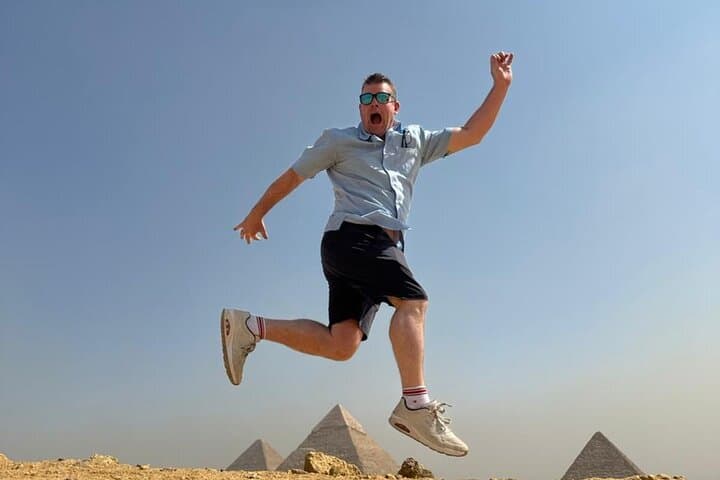
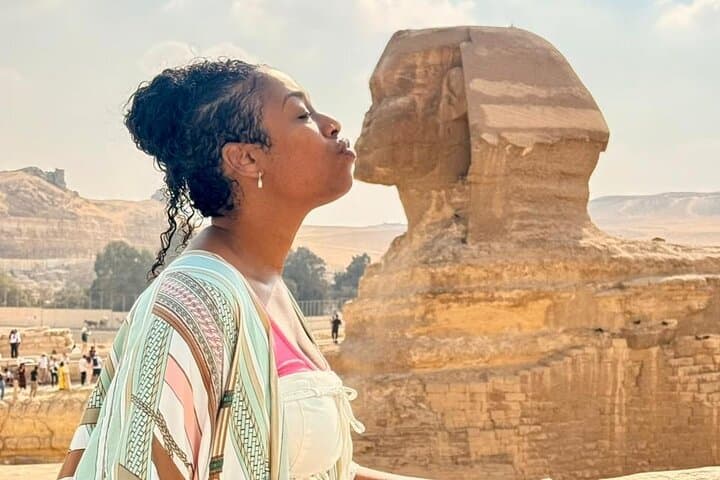
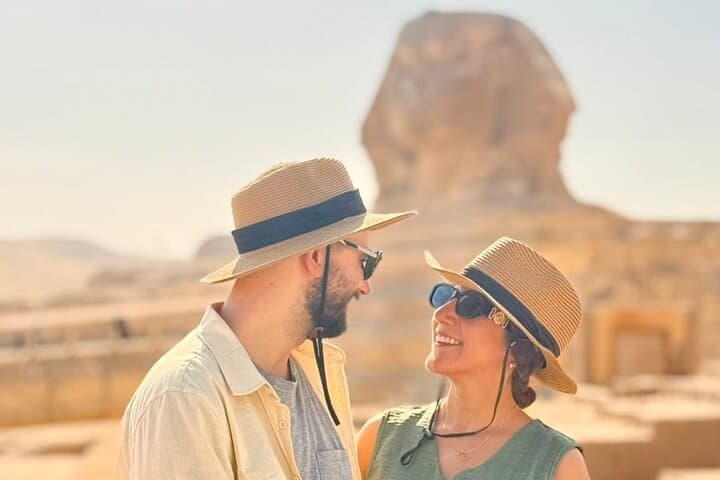
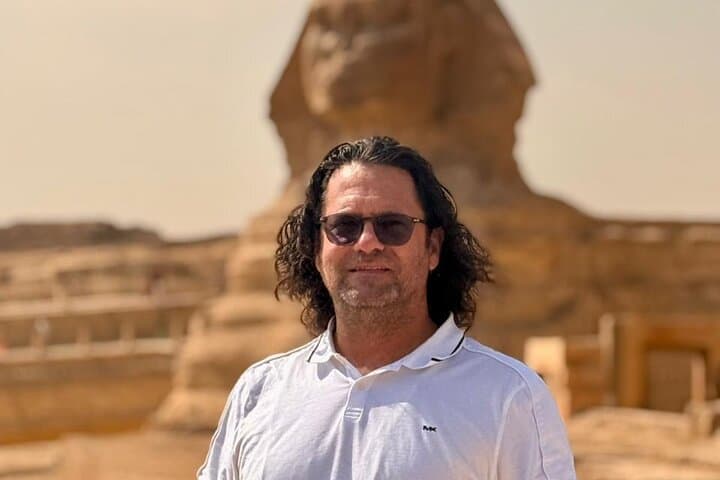
You step out of the air‑conditioned vehicle onto the Giza Plateau and the wind immediately rearranges the day's heat into something you can measure — sharp, dry, and relentless. The three pyramids rise like engineered mountains, their limestone faces catching sun and shadow while the Sphinx keeps watch with a still, human gaze.
You step out of the air‑conditioned vehicle onto the Giza Plateau and the wind immediately rearranges the day's heat into something you can measure — sharp, dry, and relentless. The three pyramids rise like engineered mountains, their limestone faces catching sun and shadow while the Sphinx keeps watch with a still, human gaze.
This route threads modern Cairo with five millennia of history. The plateau is Pleistocene bedrock capped by quarried limestone; these stones carried royal ritual and astronomical intent. The Grand Egyptian Museum, a few kilometers away, recontextualizes those objects — statues, funerary goods, and Tutankhamun’s treasures — under climate‑controlled glass.
Khan El Khalili shifts the tempo: alleys that have served traders for centuries, copperware gleaming, spices perfuming the air and cafés where locals sip strong coffee. The tour balances open desert expanses, museum galleries, and a living market, each with different sensory demands.
Practical guidance: plan for an eight‑hour day with intermittent walking on sand, packed ground and museum floors. Bring sun protection, refillable water and comfortable shoes with grip. Mornings are cooler and best for photos at Panorama Point; the museum visit is shaded and involves slower, close‑up viewing. Expect measured security checks and limited touching of artifacts. Budget local cash for small purchases and tipping; the guide will handle logistics and entry timing, including optional extras like tomb visits. With straightforward preparation, this one‑day loop gives a compact, layered portrait of ancient and modern Cairo.