THE ADVENTURE COLLECTIVE® · Independent discovery and booking for outdoor travel

A full-day guided loop through Cairo’s must-see cultural sites: the Egyptian Museum’s ancient treasures, the hilltop Citadel with sweeping city views, and the maze-like Khan el-Khalili market. Expect several hours of walking, historical depth, and vibrant market energy.
A full-day guided loop through Cairo’s must-see cultural sites: the Egyptian Museum’s ancient treasures, the hilltop Citadel with sweeping city views, and the maze-like Khan el-Khalili market. Expect several hours of walking, historical depth, and vibrant market energy.
You step out of an air-conditioned van onto Tahrir Square and the city punches into focus: honking, hawkers, and the blocky silhouette of the Egyptian Museum closing the horizon. Inside, glass cases hold gold that refuses to be understated; mummies lie placid under museum light while the Tutankhamun mask still draws a hush.
Verified experiences and guided adventures in the surrounding area.
Operated by Emo Tours Sweden · Cairo, Cairo Governorate
You step out of an air-conditioned van onto Tahrir Square and the city punches into focus: honking, hawkers, and the blocky silhouette of the Egyptian Museum closing the horizon. Inside, glass cases hold gold that refuses to be understated; mummies lie placid under museum light while the Tutankhamun mask still draws a hush.
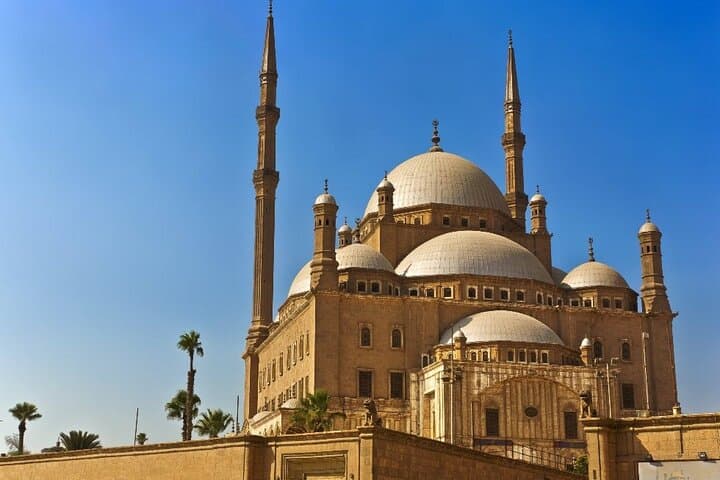
From the museum, the day climbs—literally—to the Citadel of Saladin, a fortified hill that has watched Cairo’s fortunes for centuries. The Citadel’s stonework and the Ottoman-era Mosque of Muhammad Ali reveal layers of medieval military design and 19th-century imperial aspiration, while terraces open onto a sprawl of rooftops and minarets that define Islamic Cairo’s skyline.
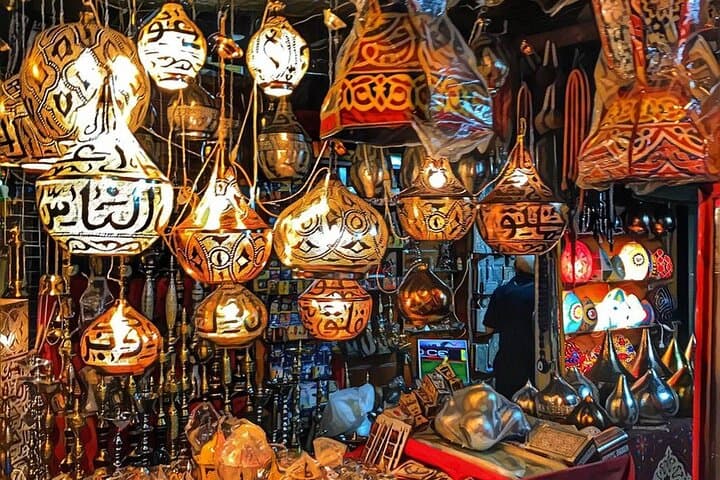
The afternoon dissolves into the lanes of Khan el-Khalili, where alleys dare you to wander, alleys that trade in brass, spices, and glass—items that carry the city’s mercantile past into present bargaining. This circuit of museum, fortress, and bazaar maps Egypt’s archaeological genius, Islamic architecture, and living urban culture.
Practicalities: the tour averages a full day (about eight hours), includes bottled water, lunch, and hotel pickup in an air-conditioned vehicle, and is suitable for most fitness levels but involves several hours on foot and steps at the Citadel. Carry a photocopy of your passport for some sites, wear comfortable closed shoes for uneven floors, and dress respectfully at religious sites. Aim for a morning start to avoid midday heat and allow time to haggle slowly in the bazaar—prices often fall if you walk away and return.
easy.
8 hours.
Basic walking fitness; able to stand and walk for several hours and climb steps.
The itinerary runs about eight hours, including pickup, museum time, Citadel visit, bazaar wandering, and return transfer.
The listing indicates admissions to the Egyptian Museum and Citadel are included in this tour price.
Yes—it's listed as suitable for all fitness levels and the operator can provide infant seats; expect a full day of activity for young children.
Dress modestly: shoulders and knees covered; women may be required to cover their hair—carry a scarf to be ready.
The Citadel was built by Salah ad-Din (Saladin) in the 12th century as a defensive fortress; the Egyptian Museum collects artifacts spanning five millennia of Pharaonic history.
Cairo faces urban conservation challenges—support local guides and licensed shops, avoid single-use plastics, and respect site rules to help preserve fragile artifacts and historic masonry.
Emo Tours Sweden operates guided outdoor trips and adventures with an emphasis on safety, stewardship, and memorable experiences.
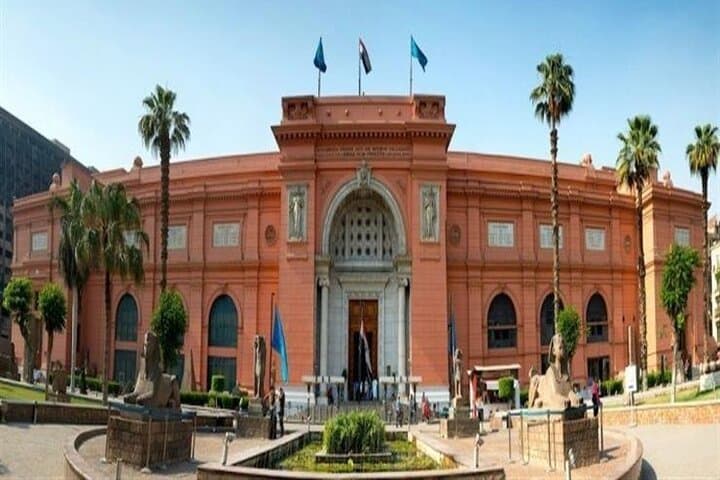
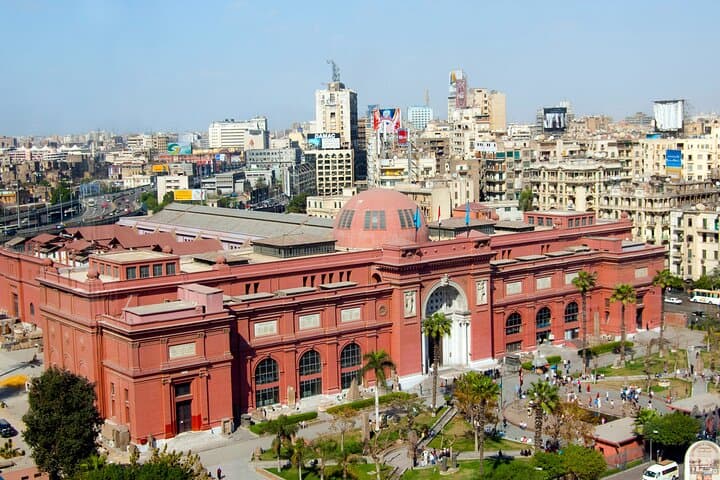
You step out of an air-conditioned van onto Tahrir Square and the city punches into focus: honking, hawkers, and the blocky silhouette of the Egyptian Museum closing the horizon. Inside, glass cases hold gold that refuses to be understated; mummies lie placid under museum light while the Tutankhamun mask still draws a hush.
You step out of an air-conditioned van onto Tahrir Square and the city punches into focus: honking, hawkers, and the blocky silhouette of the Egyptian Museum closing the horizon. Inside, glass cases hold gold that refuses to be understated; mummies lie placid under museum light while the Tutankhamun mask still draws a hush.
From the museum, the day climbs—literally—to the Citadel of Saladin, a fortified hill that has watched Cairo’s fortunes for centuries. The Citadel’s stonework and the Ottoman-era Mosque of Muhammad Ali reveal layers of medieval military design and 19th-century imperial aspiration, while terraces open onto a sprawl of rooftops and minarets that define Islamic Cairo’s skyline.
The afternoon dissolves into the lanes of Khan el-Khalili, where alleys dare you to wander, alleys that trade in brass, spices, and glass—items that carry the city’s mercantile past into present bargaining. This circuit of museum, fortress, and bazaar maps Egypt’s archaeological genius, Islamic architecture, and living urban culture.
Practicalities: the tour averages a full day (about eight hours), includes bottled water, lunch, and hotel pickup in an air-conditioned vehicle, and is suitable for most fitness levels but involves several hours on foot and steps at the Citadel. Carry a photocopy of your passport for some sites, wear comfortable closed shoes for uneven floors, and dress respectfully at religious sites. Aim for a morning start to avoid midday heat and allow time to haggle slowly in the bazaar—prices often fall if you walk away and return.