THE ADVENTURE COLLECTIVE® · Independent discovery and booking for outdoor travel

A full-day birding tour from Guayaquil that visits the Tumbesian dry forest around Chongón and the Estero Salado estuary. Expect endemic species, tidal shorebirds and targeted stops along restored waterfronts.
A full-day birding tour from Guayaquil that visits the Tumbesian dry forest around Chongón and the Estero Salado estuary. Expect endemic species, tidal shorebirds and targeted stops along restored waterfronts.
You step onto the Malecón and the estuary opens like a moving map: mangrove channels shifting with the tide, a line of roseate spoonbills probing mudflats, and a whooping motmot flashing from a scrubby branch. The air is warm, humid, and filled with staccato calls; boats hum in the distance while an inland reservoir reflects a broken skyline of ceiba and guayacan trees.
Verified experiences and guided adventures in the surrounding area.
Operated by Nature Xperience gye · Guayaquil, Guayas
You step onto the Malecón and the estuary opens like a moving map: mangrove channels shifting with the tide, a line of roseate spoonbills probing mudflats, and a whooping motmot flashing from a scrubby branch. The air is warm, humid, and filled with staccato calls; boats hum in the distance while an inland reservoir reflects a broken skyline of ceiba and guayacan trees.
This full-day tour threads two ecosystems important to the Tumbesian endemic bioregion — tropical dry forest around the Chongón reservoir and the brackish estuary of the Estero Salado. Geology here is coastal plain and low hills carved by seasonal streams; soils are shallow and prone to quick changes in vegetation between wet and dry seasons. Culturally, Guayaquil’s waterfronts have been reshaped recently, and the Malecón del Estero Salado is an urban restoration project that doubles as a reliable birding front line.
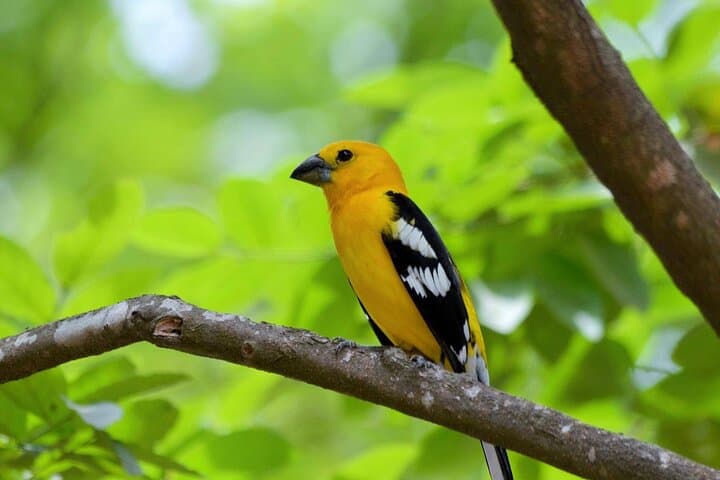
Expect concentrated sightings of local specialties: Ecuadorian trogon, white-tailed jay, yellow-tailed oriole and a host of parakeets, plus shorebirds along tidal flats. The day requires moderate fitness—short walks on uneven trails and boardwalks, occasional muddy stretches and heat exposure.
Practical notes: start early to catch peak activity, carry 2–3 liters of water, sun protection and insect repellent, and use binoculars with at least 8x magnification. Guides usually provide private transport and local knowledge of where birds congregate during dry months when water sources draw them in. Move slowly, listen first, and let the river channels and scrub tell you where to look.
moderate.
6–8 hours.
Should be comfortable walking several short stretches over uneven ground in warm conditions; moderate stamina for a full day.
A typical full day can produce 50–100 species depending on season and tides; around 10–20 regional specialties or Tumbesian endemics are possible with a good guide.
Yes—this private tour includes transport and pickups are typically arranged from central Guayaquil hotels or agreed meeting points.
Trails are generally short and moderate but can be exposed to sun and have muddy sections—expect uneven footing rather than steep climbs.
Moderate fitness is recommended; short walks are manageable but the full-day duration and heat may be challenging for very young children or those with cardiovascular issues.
The Estero Salado shoreline has been transformed through recent urban regeneration projects (notably the Malecón area built in 2009), shifting a once-neglected estuary into a managed public space and birding corridor.
The tropical dry forest around Guayaquil is one of the most threatened biomes in Ecuador; visitors should stick to trails, avoid disturbing nests, and support local guides who practice low-impact wildlife viewing.
Nature Xperience gye operates guided outdoor trips and adventures with an emphasis on safety, stewardship, and memorable experiences.


You step onto the Malecón and the estuary opens like a moving map: mangrove channels shifting with the tide, a line of roseate spoonbills probing mudflats, and a whooping motmot flashing from a scrubby branch. The air is warm, humid, and filled with staccato calls; boats hum in the distance while an inland reservoir reflects a broken skyline of ceiba and guayacan trees.
You step onto the Malecón and the estuary opens like a moving map: mangrove channels shifting with the tide, a line of roseate spoonbills probing mudflats, and a whooping motmot flashing from a scrubby branch. The air is warm, humid, and filled with staccato calls; boats hum in the distance while an inland reservoir reflects a broken skyline of ceiba and guayacan trees.
This full-day tour threads two ecosystems important to the Tumbesian endemic bioregion — tropical dry forest around the Chongón reservoir and the brackish estuary of the Estero Salado. Geology here is coastal plain and low hills carved by seasonal streams; soils are shallow and prone to quick changes in vegetation between wet and dry seasons. Culturally, Guayaquil’s waterfronts have been reshaped recently, and the Malecón del Estero Salado is an urban restoration project that doubles as a reliable birding front line.
Expect concentrated sightings of local specialties: Ecuadorian trogon, white-tailed jay, yellow-tailed oriole and a host of parakeets, plus shorebirds along tidal flats. The day requires moderate fitness—short walks on uneven trails and boardwalks, occasional muddy stretches and heat exposure.
Practical notes: start early to catch peak activity, carry 2–3 liters of water, sun protection and insect repellent, and use binoculars with at least 8x magnification. Guides usually provide private transport and local knowledge of where birds congregate during dry months when water sources draw them in. Move slowly, listen first, and let the river channels and scrub tell you where to look.