THE ADVENTURE COLLECTIVE® · Independent discovery and booking for outdoor travel

Ride a full day from Sapa through rice terraces and minority villages, finishing in Ta Phin for a traditional lunch. Expect mixed surfaces, several climbs, and close cultural encounters with Red Dao and Black Hmong communities.
Ride a full day from Sapa through rice terraces and minority villages, finishing in Ta Phin for a traditional lunch. Expect mixed surfaces, several climbs, and close cultural encounters with Red Dao and Black Hmong communities.
A single pedal stroke out of Sapa town sends you down narrow lanes where terraced rice paddies fold like staircases into the mist. The wind cuts across open ridges, and the valley seems to push and pull at your wheels—sometimes easing, sometimes demanding more power. Villages dot the route; children wave and water buffalo graze at edges of paths.
Verified experiences and guided adventures in the surrounding area.
A single pedal stroke out of Sapa town sends you down narrow lanes where terraced rice paddies fold like staircases into the mist. The wind cuts across open ridges, and the valley seems to push and pull at your wheels—sometimes easing, sometimes demanding more power. Villages dot the route; children wave and water buffalo graze at edges of paths.
This region of northern Vietnam occupies rugged foothills of the Hoang Lien Son range, carved by monsoons into steep, stone-edged terraces that supported rice cultivation for generations. Sapa itself began as a French hill station in the late 19th century; today it’s also home to Red Dao and Black Hmong communities whose crafts, clothing and farm rhythms anchor the area’s cultural texture.
The terrain is mixed: quiet paved stretches, compacted dirt lanes and short rocky climbs that test your handling. Ta Phin village is a highlight—an opportunity to see daily life, textiles and a simple traditional lunch. Geologically, limestone outcrops and quick-draining soils create sudden grade changes; be ready for muddy sections after rain.
Practical guidance: plan for a long, variable day—8–10 hours on the bike with stops. Bring layered clothing for rapid temperature swings, a hydration system, and spare tubes; local guides know the best lines and will navigate permissions to ride through community lands. Respect private plots, ask before photographing people, and carry cash for small purchases. The ride balances scenery with cultural encounters—expect a full day of challenge, views and human-sized moments on mountain roads.
moderate.
8–10 hours.
Good aerobic fitness and leg strength for sustained climbs and long single-day riding
The route is best for riders with some off-road experience; beginners can manage with an e-bike or a supportive guide but should expect long distances and a few steep, technical sections.
Many full-day Sapa biking offerings are day tours from Sapa town; transport from Hanoi is usually separate—confirm with the operator whether Hanoi transfers are included.
Bring small Vietnamese dong for purchases, ask before taking photos, and wear modest clothing out of respect for local customs.
Some operators provide e-bikes on request—reserve ahead if you prefer electrical assistance, especially for steeper sections.
Sapa grew as a French hill station in the late 19th century and sits within traditional lands of Red Dao and Black Hmong communities, whose terrace agriculture shapes the landscape.
Stick to established lanes, avoid stepping on terraces, and use local guides to ensure riding respects private farmland and community rules.
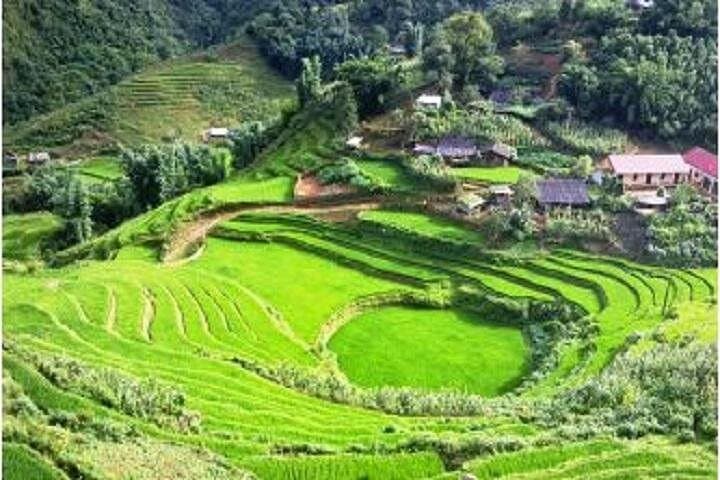
A single pedal stroke out of Sapa town sends you down narrow lanes where terraced rice paddies fold like staircases into the mist. The wind cuts across open ridges, and the valley seems to push and pull at your wheels—sometimes easing, sometimes demanding more power. Villages dot the route; children wave and water buffalo graze at edges of paths.
A single pedal stroke out of Sapa town sends you down narrow lanes where terraced rice paddies fold like staircases into the mist. The wind cuts across open ridges, and the valley seems to push and pull at your wheels—sometimes easing, sometimes demanding more power. Villages dot the route; children wave and water buffalo graze at edges of paths.
This region of northern Vietnam occupies rugged foothills of the Hoang Lien Son range, carved by monsoons into steep, stone-edged terraces that supported rice cultivation for generations. Sapa itself began as a French hill station in the late 19th century; today it’s also home to Red Dao and Black Hmong communities whose crafts, clothing and farm rhythms anchor the area’s cultural texture.
The terrain is mixed: quiet paved stretches, compacted dirt lanes and short rocky climbs that test your handling. Ta Phin village is a highlight—an opportunity to see daily life, textiles and a simple traditional lunch. Geologically, limestone outcrops and quick-draining soils create sudden grade changes; be ready for muddy sections after rain.
Practical guidance: plan for a long, variable day—8–10 hours on the bike with stops. Bring layered clothing for rapid temperature swings, a hydration system, and spare tubes; local guides know the best lines and will navigate permissions to ride through community lands. Respect private plots, ask before photographing people, and carry cash for small purchases. The ride balances scenery with cultural encounters—expect a full day of challenge, views and human-sized moments on mountain roads.