THE ADVENTURE COLLECTIVE® · Independent discovery and booking for outdoor travel

Spend a day in the High Atlas walking to Setti Fatma’s waterfalls, visiting an argan cooperative and a Berber house, all with local guidance and a riverside lunch. This full-day excursion mixes short hikes with cultural stops, ideal for travelers who want nature and authentic encounters near Marrakech.
Spend a day in the High Atlas walking to Setti Fatma’s waterfalls, visiting an argan cooperative and a Berber house, all with local guidance and a riverside lunch. This full-day excursion mixes short hikes with cultural stops, ideal for travelers who want nature and authentic encounters near Marrakech.
You step out of the van and the air tightens—dry, herb-scented, threaded with river coolness—while the High Atlas rises like a folded map. The road from Marrakech unwinds through olive terraces and low stone villages until the valley opens: a green crack in the ridge where the Ourika River dares you closer.
Verified experiences and guided adventures in the surrounding area.
Operated by ToDiscoverMarrakech · Setti Fatma, Marrakech-Safi
You step out of the van and the air tightens—dry, herb-scented, threaded with river coolness—while the High Atlas rises like a folded map. The road from Marrakech unwinds through olive terraces and low stone villages until the valley opens: a green crack in the ridge where the Ourika River dares you closer.
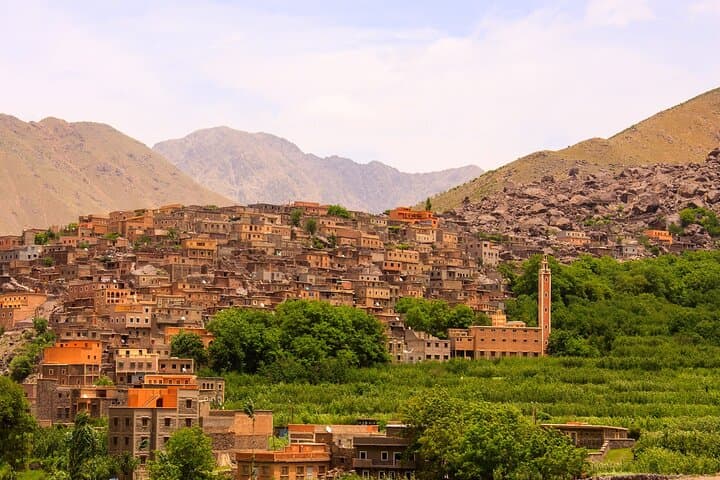
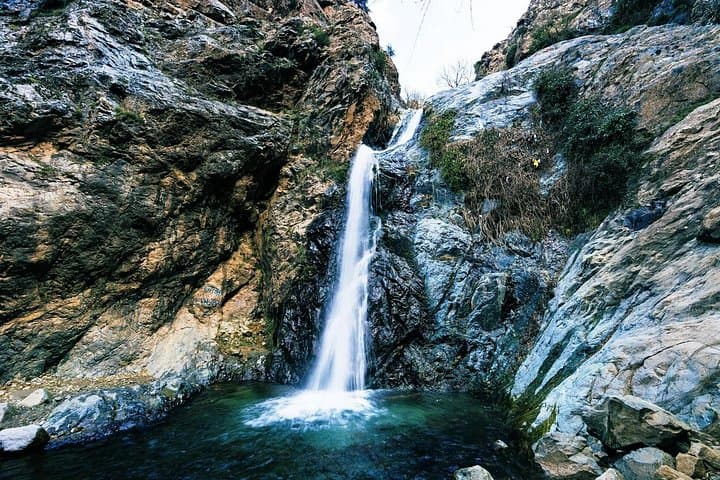
The route follows a long human story. Berber (Amazigh) communities have shaped these slopes for centuries, carving terraces and tending fig and olive trees. Geology here is blunt: ancient metamorphic rock worn into steep gullies and ledges that feed a series of small waterfalls above Setti Fatma. Culture is immediate—women at cooperatives press argan, elders serve mint tea—and the day’s pace is both practical and deliberate.
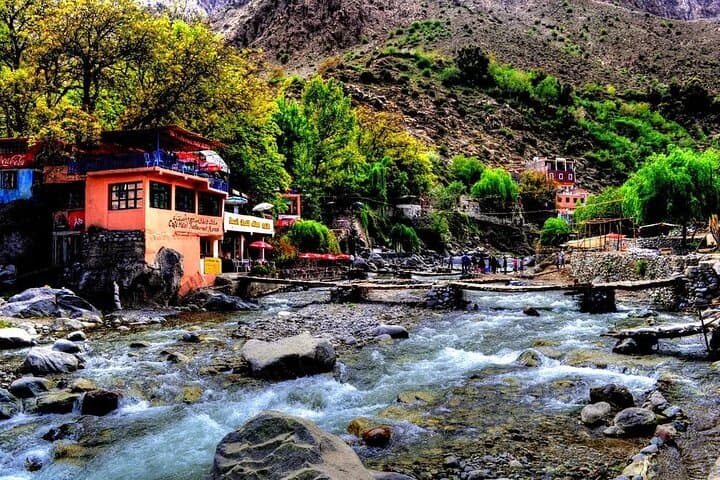
Expect a guided walk to several cascades (roughly 1–2 hours of hiking on uneven, sometimes slippery stone), a riverside lunch, a half-hour cooperative visit, and a short homestay-style visit in a Berber house. The terrain alternates packed dirt trails, rocky steps and flat riverside paths; elevation changes are modest but continuous—bring steady shoes and a readiness for loose footing.
Practical notes: mornings are cooler and water runs stronger; summers bring hot sun and lower flows. Local guides bridge language and custom, and supporting women's cooperatives helps the valley’s economy. Hydrate deliberately, wear layered sun protection, and carry small-change for tea or cooperative purchases. By evening you’ll be back in Marrakech with a clearer sense of how people, rock and water shape life in the High Atlas.
moderate.
7–9 hours.
Suitable for travelers in moderate shape who can handle 1–2 hours of uneven, sometimes steep walking and short riverbank scrambles.
Expect about 45–75 minutes each way depending on traffic and exact pickup point; the drive becomes more scenic as you enter the valley.
Yes if they have moderate mobility; trails include uneven steps and river crossings—inform the operator of any mobility concerns for appropriate arrangements.
A riverside lunch is included; notify your booking of dietary needs in advance so the provider can adapt the meal when possible.
Yes—visits to women’s cooperatives are part of the itinerary and buying products directly supports local producers.
The High Atlas is home to Amazigh (Berber) communities whose mountain agriculture and argan production have shaped valley life for generations.
Argan tree habitats are protected through local cooperatives and sustainable harvesting; stay on trails and buy local products to support conservation-minded livelihoods.
ToDiscoverMarrakech operates guided outdoor trips and adventures with an emphasis on safety, stewardship, and memorable experiences.
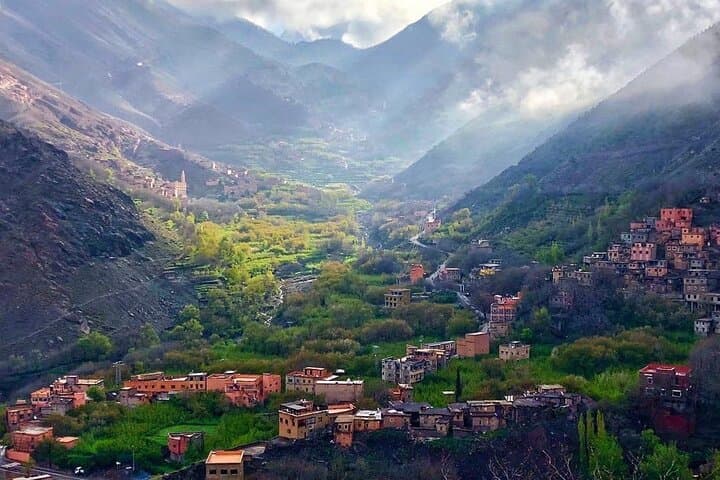
You step out of the van and the air tightens—dry, herb-scented, threaded with river coolness—while the High Atlas rises like a folded map. The road from Marrakech unwinds through olive terraces and low stone villages until the valley opens: a green crack in the ridge where the Ourika River dares you closer.
You step out of the van and the air tightens—dry, herb-scented, threaded with river coolness—while the High Atlas rises like a folded map. The road from Marrakech unwinds through olive terraces and low stone villages until the valley opens: a green crack in the ridge where the Ourika River dares you closer.
The route follows a long human story. Berber (Amazigh) communities have shaped these slopes for centuries, carving terraces and tending fig and olive trees. Geology here is blunt: ancient metamorphic rock worn into steep gullies and ledges that feed a series of small waterfalls above Setti Fatma. Culture is immediate—women at cooperatives press argan, elders serve mint tea—and the day’s pace is both practical and deliberate.
Expect a guided walk to several cascades (roughly 1–2 hours of hiking on uneven, sometimes slippery stone), a riverside lunch, a half-hour cooperative visit, and a short homestay-style visit in a Berber house. The terrain alternates packed dirt trails, rocky steps and flat riverside paths; elevation changes are modest but continuous—bring steady shoes and a readiness for loose footing.
Practical notes: mornings are cooler and water runs stronger; summers bring hot sun and lower flows. Local guides bridge language and custom, and supporting women's cooperatives helps the valley’s economy. Hydrate deliberately, wear layered sun protection, and carry small-change for tea or cooperative purchases. By evening you’ll be back in Marrakech with a clearer sense of how people, rock and water shape life in the High Atlas.