THE ADVENTURE COLLECTIVE® · Independent discovery and booking for outdoor travel

Spend a day with Abu Mishaal exploring Shaqri and Al-Shaq: herd camels, taste fresh camel milk, and share a fire-cooked Bedouin lunch. This private full-day trip from Tabuk blends hands-on cultural exchange with desert geology and straightforward logistics.
Spend a day with Abu Mishaal exploring Shaqri and Al-Shaq: herd camels, taste fresh camel milk, and share a fire-cooked Bedouin lunch. This private full-day trip from Tabuk blends hands-on cultural exchange with desert geology and straightforward logistics.
The morning light strips the horizon to copper as a low convoy moves across firm sand toward Shaqri. Wind sketches thin ripples on dunes; the desert seems to test the traveler with open geometry and quiet. Visitors meet Abu Mishaal at a pickup in Tabuk, then wind along sun-baked tracks into grazing lands where tents, animals and stories await.
Verified experiences and guided adventures in the surrounding area.
Operated by Reef El Shamal · Tabuk, Tabuk
The morning light strips the horizon to copper as a low convoy moves across firm sand toward Shaqri. Wind sketches thin ripples on dunes; the desert seems to test the traveler with open geometry and quiet. Visitors meet Abu Mishaal at a pickup in Tabuk, then wind along sun-baked tracks into grazing lands where tents, animals and stories await.
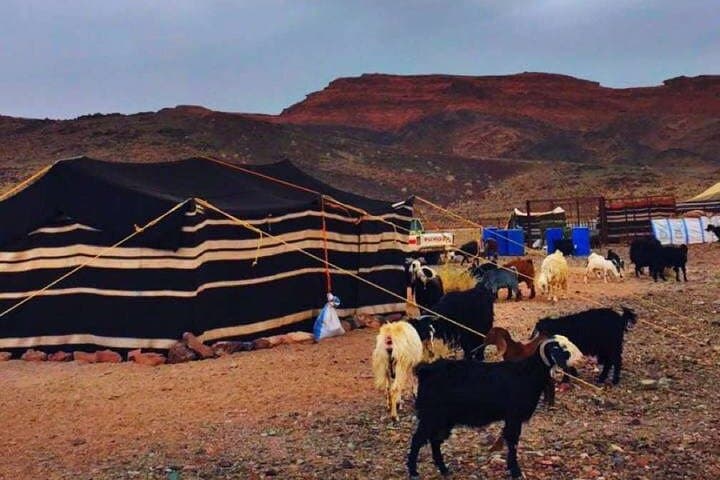
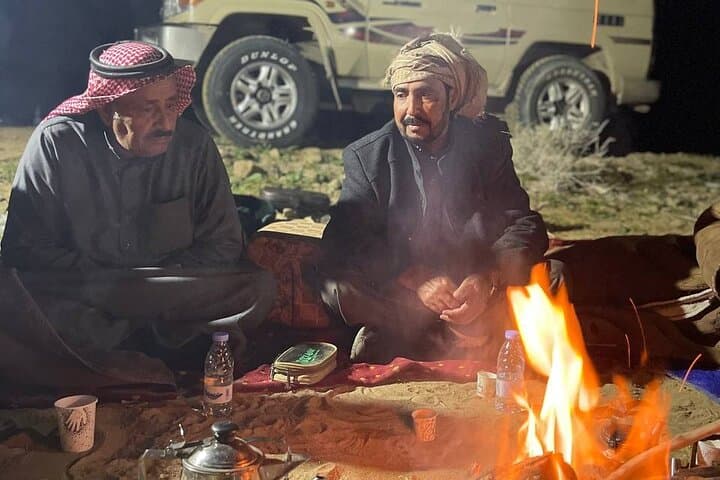
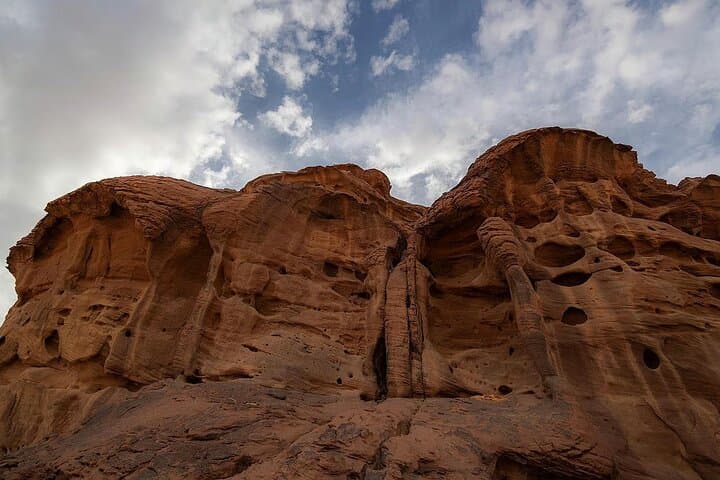
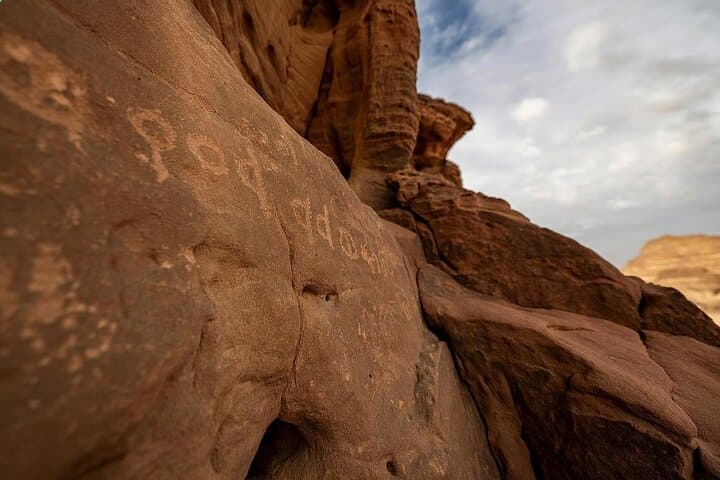
This full-day experience sits at the intersection of culture and geology: Tabuk’s desert is an extension of the Arabian Shield, folded rock outcrops like Al-Shaq rising out of sand and gravel plains. Bedouin life here evolved around scarce water, seasonal pastures and caravan routes that linked Hijaz to northern Arabia—skills still practiced by hosts who herd camels and sheep, make coffee over coals, and cook mandi and kabsa as communal rituals.
Guests are shown the mechanics of traditional tents, invited to try camel milking, and introduced to the rhythms of pastoral care. The landscape will feel alive—wind that nudges camel flanks, stones that keep heat long after sunset.
Practicalities: this is a private, full-day outing (about 8 hours) with pickup from Tabuk. Expect light walking on uneven desert terrain and periods of standing. Bring sun protection, a refillable water bottle, closed-toe shoes and modest clothing in keeping with local customs. Photography is welcomed but ask before photographing people. Hydrate, wear layers for large daytime-to-evening temperature swings, and follow the guide’s directions around livestock and fires. The trip balances hands-on cultural exchange with straightforward logistics, making it accessible for most travelers who want an authentic, low-impact desert day.
easy.
8 hours.
Suitable for most fitness levels; requires light walking, standing and basic mobility for getting on/off vehicles and camels.
Yes; pickup from hotels, the airport or arranged meeting points in Tabuk is typically included—confirm pickup details when you book.
A traditional Bedouin lunch (e.g., mandi or kabsa), snacks, Arabic coffee and tea and bottled water are included in the full-day itinerary.
The tour is family-friendly and listed as physically easy; infants must sit on an adult’s lap and specialized seats may be available—confirm when booking.
Most essentials are included, but small cash for tips, extra snacks or incidental needs is recommended and appreciated by local hosts.
Bedouin communities in the Tabuk region have long-lived pastoral traditions tied to caravan routes and seasonal pastures; hospitality and oral storytelling are cultural cornerstones.
The desert is ecologically fragile—stay on established tracks, avoid disturbing grazing animals, pack out waste and respect local water sources to minimize impact.
Reef El Shamal operates guided outdoor trips and adventures with an emphasis on safety, stewardship, and memorable experiences.
The morning light strips the horizon to copper as a low convoy moves across firm sand toward Shaqri. Wind sketches thin ripples on dunes; the desert seems to test the traveler with open geometry and quiet. Visitors meet Abu Mishaal at a pickup in Tabuk, then wind along sun-baked tracks into grazing lands where tents, animals and stories await.
The morning light strips the horizon to copper as a low convoy moves across firm sand toward Shaqri. Wind sketches thin ripples on dunes; the desert seems to test the traveler with open geometry and quiet. Visitors meet Abu Mishaal at a pickup in Tabuk, then wind along sun-baked tracks into grazing lands where tents, animals and stories await.
This full-day experience sits at the intersection of culture and geology: Tabuk’s desert is an extension of the Arabian Shield, folded rock outcrops like Al-Shaq rising out of sand and gravel plains. Bedouin life here evolved around scarce water, seasonal pastures and caravan routes that linked Hijaz to northern Arabia—skills still practiced by hosts who herd camels and sheep, make coffee over coals, and cook mandi and kabsa as communal rituals.
Guests are shown the mechanics of traditional tents, invited to try camel milking, and introduced to the rhythms of pastoral care. The landscape will feel alive—wind that nudges camel flanks, stones that keep heat long after sunset.
Practicalities: this is a private, full-day outing (about 8 hours) with pickup from Tabuk. Expect light walking on uneven desert terrain and periods of standing. Bring sun protection, a refillable water bottle, closed-toe shoes and modest clothing in keeping with local customs. Photography is welcomed but ask before photographing people. Hydrate, wear layers for large daytime-to-evening temperature swings, and follow the guide’s directions around livestock and fires. The trip balances hands-on cultural exchange with straightforward logistics, making it accessible for most travelers who want an authentic, low-impact desert day.