THE ADVENTURE COLLECTIVE® · Independent discovery and booking for outdoor travel

Spend a day exploring three very different faces of Angkorian Cambodia: the delicate pink carvings of Banteay Srei, the sacred streams of Kulen Mountain and the jungle-reclaimed maze of Beng Mealea. This full-day trip blends cultural insight with easy hiking and a waterfall picnic.
Spend a day exploring three very different faces of Angkorian Cambodia: the delicate pink carvings of Banteay Srei, the sacred streams of Kulen Mountain and the jungle-reclaimed maze of Beng Mealea. This full-day trip blends cultural insight with easy hiking and a waterfall picnic.
You step off the air-conditioned minivan into humidity that seems to breathe with the jungle. The road smells of dust and spice; palms sway like sentries as your guide leads you toward a small village where palm cakes are made by hand. From there the day unfolds—pink sandstone carvings, a river carved with thousands of lingas, a plateau that opens into a waterfall picnic.
Verified experiences and guided adventures in the surrounding area.
Operated by BREKSA TRAVEL · Siem Reap, Siem Reap Province
You step off the air-conditioned minivan into humidity that seems to breathe with the jungle. The road smells of dust and spice; palms sway like sentries as your guide leads you toward a small village where palm cakes are made by hand. From there the day unfolds—pink sandstone carvings, a river carved with thousands of lingas, a plateau that opens into a waterfall picnic.
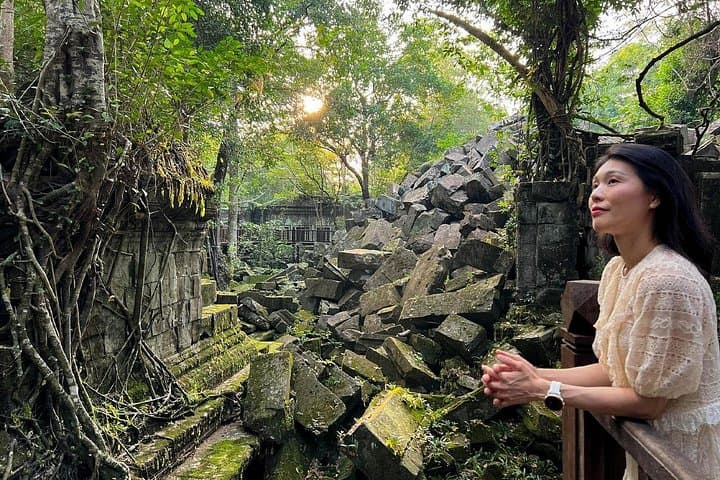
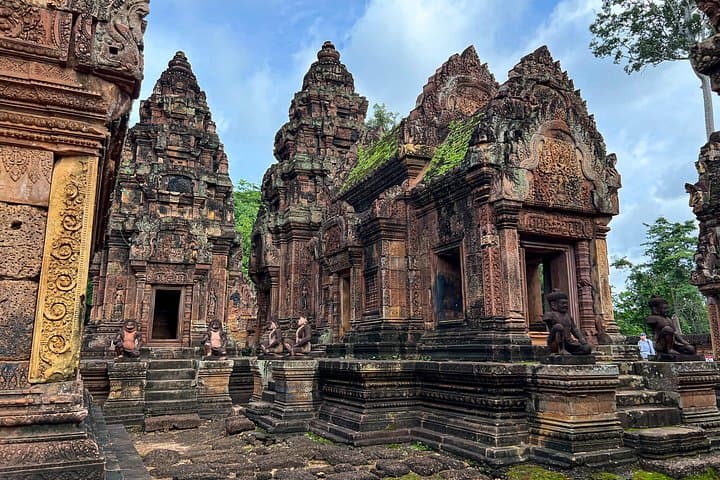
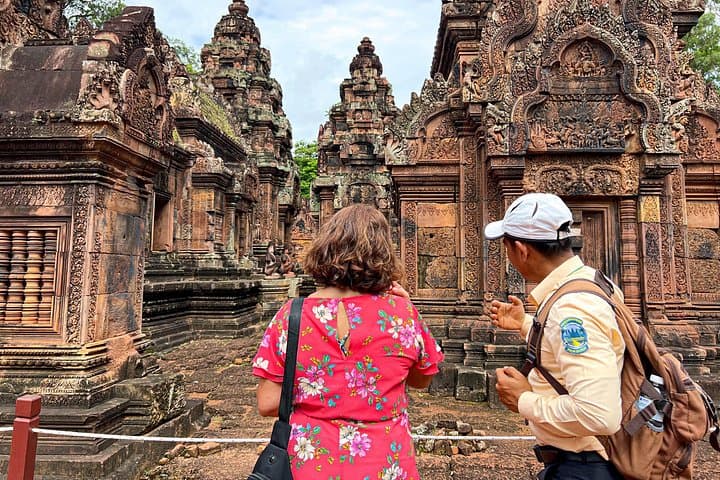
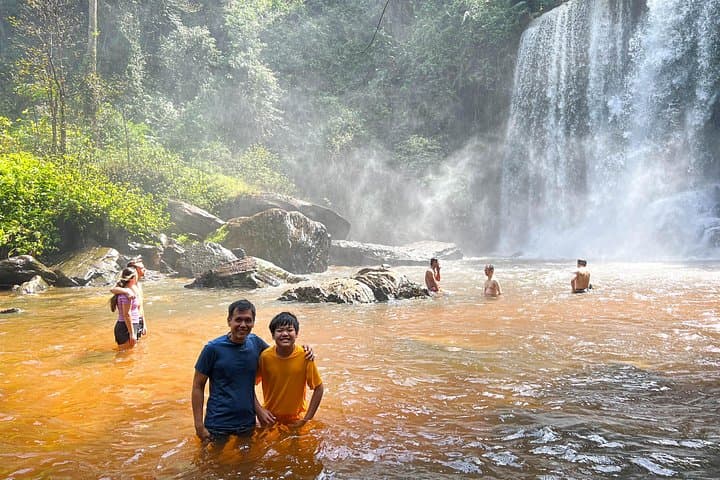
Banteay Srei was carved in the 10th century from unusually hard pink sandstone; the details feel almost alive, the deities’ faces watching you with crafted intent. Phnom Kulen is more than a viewpoint—it's where Jayavarman II declared the Angkorian state, and the plateau’s streams have cut bas-reliefs into the rock for centuries, including the famed River of a Thousand Lingas. Beng Mealea sits farther east, its collapsed galleries and tree-rooted towers offering a raw, exploratory counterpoint to the restored temples around Angkor.
Expect varied terrain: paved paths and temple steps, muddy trails around waterfalls, and broken sandstone in Beng Mealea that rewards careful footing. The full-day schedule runs about six hours with multiple short walks and one moderate ascent onto the Kulen plateau; bring sturdy shoes, sun protection, and cash for park tickets or incidental purchases. Hydrate early and often—the guides typically provide bottled water and cool towels, and the included picnic at the waterfall is a good mid-day reset.
Culturally, dress respectfully at temple sites (shoulders and knees covered). Photographers will want a wide lens for the carvings and a mid-range zoom for details obscured by roots. Pace yourself: the day moves from intimate craftsmanship to wild overgrowth, and by dusk you return to Siem Reap with the smell of wet stone still clinging to your clothes.
moderate.
6 hours.
Moderate fitness; able to do multiple short walks, climb uneven stone steps and handle short uphill stretches.
This is a full-day tour of roughly six hours; exact pick-up times vary by operator but typically begin in the morning with hotel pick-up in Siem Reap.
Policies vary—bring local cash for any national park or temple entrance fees, though some tours include admissions; check your booking details.
Children can usually join if supervised; pregnant travelers are not recommended to participate due to uneven terrain and moderate walking requirements.
Swimming is often possible in designated areas, but conditions change with the season—follow guide advice and avoid strong currents after heavy rain.
Phnom Kulen is considered the birthplace of the Angkor Empire where Jayavarman II declared independence in the early 9th century; Banteay Srei dates to the 10th century and is celebrated for its detailed pink sandstone carvings.
Visitors should stick to marked paths and avoid touching fragile carvings; local guides and park staff work to balance tourism with protection of river bas-reliefs and forested habitats.
BREKSA TRAVEL operates guided outdoor trips and adventures with an emphasis on safety, stewardship, and memorable experiences.
You step off the air-conditioned minivan into humidity that seems to breathe with the jungle. The road smells of dust and spice; palms sway like sentries as your guide leads you toward a small village where palm cakes are made by hand. From there the day unfolds—pink sandstone carvings, a river carved with thousands of lingas, a plateau that opens into a waterfall picnic.
You step off the air-conditioned minivan into humidity that seems to breathe with the jungle. The road smells of dust and spice; palms sway like sentries as your guide leads you toward a small village where palm cakes are made by hand. From there the day unfolds—pink sandstone carvings, a river carved with thousands of lingas, a plateau that opens into a waterfall picnic.
Banteay Srei was carved in the 10th century from unusually hard pink sandstone; the details feel almost alive, the deities’ faces watching you with crafted intent. Phnom Kulen is more than a viewpoint—it's where Jayavarman II declared the Angkorian state, and the plateau’s streams have cut bas-reliefs into the rock for centuries, including the famed River of a Thousand Lingas. Beng Mealea sits farther east, its collapsed galleries and tree-rooted towers offering a raw, exploratory counterpoint to the restored temples around Angkor.
Expect varied terrain: paved paths and temple steps, muddy trails around waterfalls, and broken sandstone in Beng Mealea that rewards careful footing. The full-day schedule runs about six hours with multiple short walks and one moderate ascent onto the Kulen plateau; bring sturdy shoes, sun protection, and cash for park tickets or incidental purchases. Hydrate early and often—the guides typically provide bottled water and cool towels, and the included picnic at the waterfall is a good mid-day reset.
Culturally, dress respectfully at temple sites (shoulders and knees covered). Photographers will want a wide lens for the carvings and a mid-range zoom for details obscured by roots. Pace yourself: the day moves from intimate craftsmanship to wild overgrowth, and by dusk you return to Siem Reap with the smell of wet stone still clinging to your clothes.