THE ADVENTURE COLLECTIVE® · Independent discovery and booking for outdoor travel

A full-day small-group tour from Siem Reap that visits Beng Mealea’s jungle-claimed ruins, the remote pyramid of Koh Ker, and the finely carved Banteay Srei. Expect a long but rewarding day of uneven walking, close-up carvings, and local food.
A full-day small-group tour from Siem Reap that visits Beng Mealea’s jungle-claimed ruins, the remote pyramid of Koh Ker, and the finely carved Banteay Srei. Expect a long but rewarding day of uneven walking, close-up carvings, and local food.
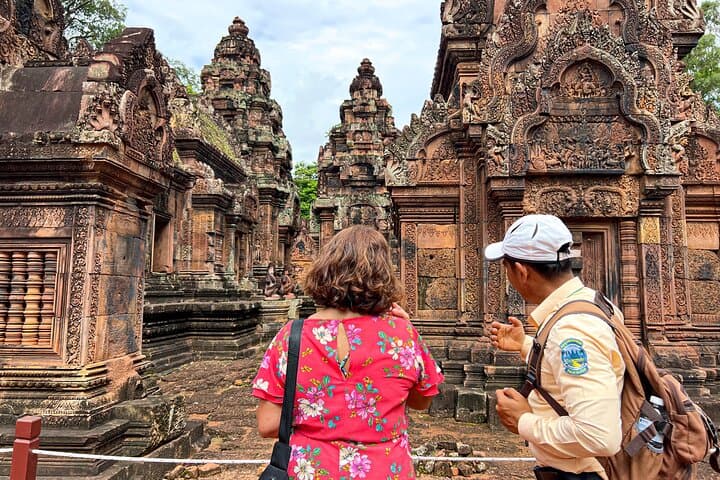
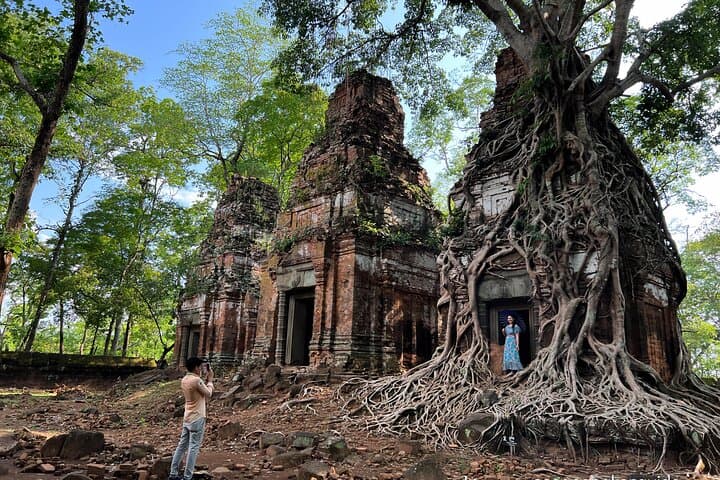
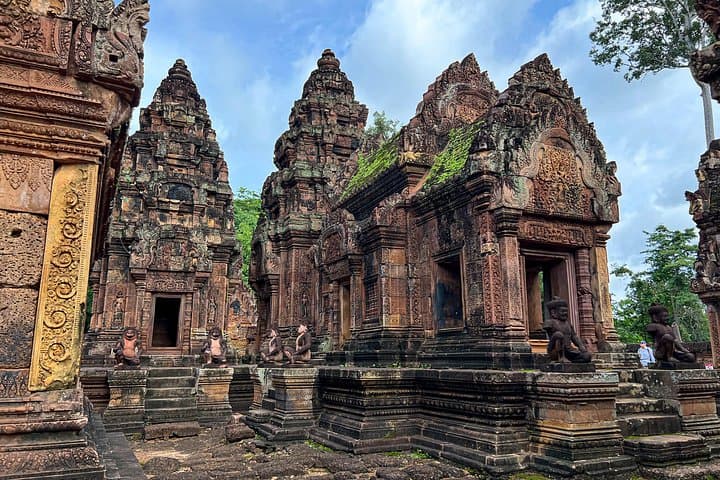
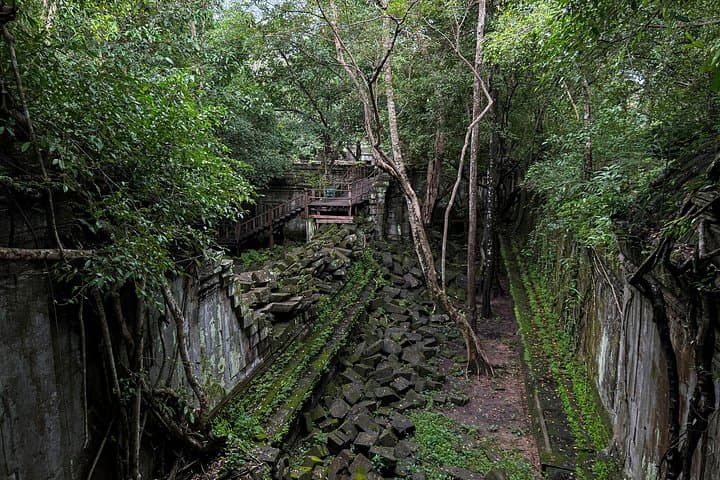
You leave Siem Reap before the heat, the van sliding past flooded rice paddies as temple towers rise from trees like weathered teeth. By midmorning you’re under a canopy of fig roots and lianas at Beng Mealea, where stone blocks lean and moss claims doorways; later, the seven-tiered silhouette of Prasat Thom at Koh Ker crowns a scrubby plateau, offering a stark contrast to the delicate pink sandstone reliefs of Banteay Srei.
Verified experiences and guided adventures in the surrounding area.
Operated by Asean Angkor Guide · Siem Reap, Siem Reap
You leave Siem Reap before the heat, the van sliding past flooded rice paddies as temple towers rise from trees like weathered teeth. By midmorning you’re under a canopy of fig roots and lianas at Beng Mealea, where stone blocks lean and moss claims doorways; later, the seven-tiered silhouette of Prasat Thom at Koh Ker crowns a scrubby plateau, offering a stark contrast to the delicate pink sandstone reliefs of Banteay Srei.
These sites trace the arc of the Khmer world: Banteay Srei (10th century) is famed for its finely carved sandstone panels, a workshop of mythic artisans; Beng Mealea (12th century) shows how jungle and monument negotiate space, its collapse revealing construction methods and later reclamation by nature; Koh Ker was briefly a capital under Jayavarman IV and stands out for pyramid forms not typical of Angkor’s plains.
Culturally, the route threads villages where palm cakes are still pressed by hand and lunch is a home-cooked affair—touring here supports those local economies. Geologically, the sandstone is soft and vulnerable; visitors should avoid touching delicate carvings.
Practical guidance: this is a long, 10-hour day with significant walking on uneven ground, roots, and loose stone—sturdy shoes, sun protection, and a refillable water bottle are essential. Bring your valid Angkor pass (1-day pass commonly used, approx. US$37) or be prepared to buy one. Expect intermittent shade, warm temperatures, and friendly crowds at Banteay Srei; pace yourself, hydrate, and let your guide handle logistics so you can focus on the stones and the stories etched into them.
moderate.
10 hours.
Suitable for travelers in reasonable shape who can walk on uneven ground for several hours and handle heat and humidity.
Yes — most sites visited accept the standard Angkor pass; a 1-day pass (around US$37) is commonly used, so bring a valid pass or be prepared to purchase one before entry.
Expect several hours of walking across uneven ground—steps, roots, and loose stone—spread across the day with vehicle transfers between sites.
Lunch is included and vegetarian options are typically available; the tour uses local restaurants to support nearby communities.
Sites have uneven terrain and limited accessibility; children who can handle rough paths are fine, but travelers with significant mobility limitations may find access difficult.
The route reflects different phases of the Khmer state — Banteay Srei’s 10th-century carvings, Beng Mealea’s 12th-century collapse, and Koh Ker’s brief 10th-century capital under Jayavarman IV.
Sandstone reliefs are fragile and prone to erosion; visitors should avoid touching carvings and support local guides and conservation fees that fund preservation efforts.
Asean Angkor Guide operates guided outdoor trips and adventures with an emphasis on safety, stewardship, and memorable experiences.
You leave Siem Reap before the heat, the van sliding past flooded rice paddies as temple towers rise from trees like weathered teeth. By midmorning you’re under a canopy of fig roots and lianas at Beng Mealea, where stone blocks lean and moss claims doorways; later, the seven-tiered silhouette of Prasat Thom at Koh Ker crowns a scrubby plateau, offering a stark contrast to the delicate pink sandstone reliefs of Banteay Srei.
You leave Siem Reap before the heat, the van sliding past flooded rice paddies as temple towers rise from trees like weathered teeth. By midmorning you’re under a canopy of fig roots and lianas at Beng Mealea, where stone blocks lean and moss claims doorways; later, the seven-tiered silhouette of Prasat Thom at Koh Ker crowns a scrubby plateau, offering a stark contrast to the delicate pink sandstone reliefs of Banteay Srei.
These sites trace the arc of the Khmer world: Banteay Srei (10th century) is famed for its finely carved sandstone panels, a workshop of mythic artisans; Beng Mealea (12th century) shows how jungle and monument negotiate space, its collapse revealing construction methods and later reclamation by nature; Koh Ker was briefly a capital under Jayavarman IV and stands out for pyramid forms not typical of Angkor’s plains.
Culturally, the route threads villages where palm cakes are still pressed by hand and lunch is a home-cooked affair—touring here supports those local economies. Geologically, the sandstone is soft and vulnerable; visitors should avoid touching delicate carvings.
Practical guidance: this is a long, 10-hour day with significant walking on uneven ground, roots, and loose stone—sturdy shoes, sun protection, and a refillable water bottle are essential. Bring your valid Angkor pass (1-day pass commonly used, approx. US$37) or be prepared to buy one. Expect intermittent shade, warm temperatures, and friendly crowds at Banteay Srei; pace yourself, hydrate, and let your guide handle logistics so you can focus on the stones and the stories etched into them.