THE ADVENTURE COLLECTIVE® · Independent discovery and booking for outdoor travel

A full-day private tour from Jakarta to Bandung that pairs Kawah Putih’s surreal crater with lakeside views at Rancabali and working tea and strawberry farms. Expect cool air, short walks, and a long scenic drive through Sundanese highlands.
A full-day private tour from Jakarta to Bandung that pairs Kawah Putih’s surreal crater with lakeside views at Rancabali and working tea and strawberry farms. Expect cool air, short walks, and a long scenic drive through Sundanese highlands.
You step out of the air-conditioned car into a wind that smells of wet earth and steamed tea leaves — the road has climbed from Java’s lowlands into cool, volcanic highlands.
Verified experiences and guided adventures in the surrounding area.
Operated by Indo Trip · Bandung, West Java
You step out of the air-conditioned car into a wind that smells of wet earth and steamed tea leaves — the road has climbed from Java’s lowlands into cool, volcanic highlands.
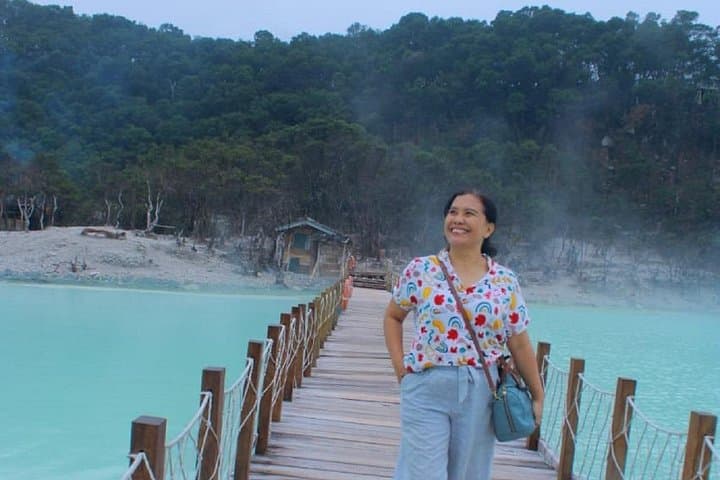
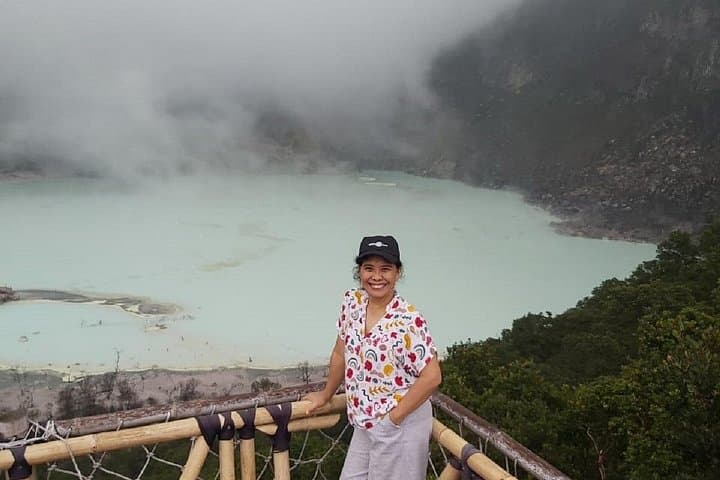
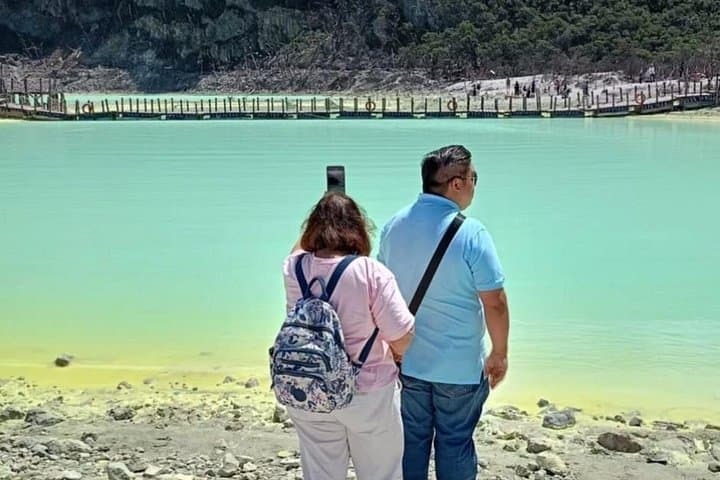
Kawah Putih (White Crater) appears through a thin haze: a shallow turquoise lake rimmed by chalky cliffs and stripped trees, steam rising like a living thing. The landscape here is geological history on display — a crater formed by the eruption of Mount Patuha, sitting around 2,430 meters above sea level. Down the road, terraces of emerald tea slope toward Rancabali’s glassy lake while strawberry plots hug small family farms.
This tour threads natural science and Sundanese rural life. Tea cultivation dates back to the colonial era and shaped much of the region’s land use; local villages still sell hand-picked leaves and fresh strawberry juice from roadside stalls. The glamping site at Rancabali reworks lakeside timber and a phinisi-style restaurant into photogenic viewpoints without masking the area's quieter corners.
Practically: expect a long day (roughly 10–13 hours door-to-door from Jakarta), gentle walks on uneven soil, and altitude that can make mornings brisk. Bring layers, sturdy shoes, and cash for small purchases at farms and viewpoints. The itinerary is vehicle-led with short walks at each stop; pace is relaxed but the route covers significant driving time.
Respect fenced tea fields, follow guide directions near fumaroles, and plan for early starts to catch soft light at the crater — when the lake’s color is most striking and the crowds are thinnest.
easy.
10–13 hours.
Suitable for most fitness levels; requires short, easy walks on uneven ground and tolerance for prolonged car travel.
From Jakarta expect about 3–4 hours each way depending on traffic; from Bandung city the drive is typically 1–1.5 hours to the Ciwidey area.
No — walking is limited to short, mostly flat trails around Kawah Putih, viewpoint platforms at the glamping site, and the strawberry farm.
Kawah Putih sits around 2,400 m; most visitors experience only mild effects such as shortness of breath — rest, hydrate, and take it slow if you feel lightheaded.
The tour’s inclusions list private transport and entrance fees, plus an English-speaking guide; confirm specifics at booking for any optional activities or purchases.
The tea estates in Bandung’s highlands were expanded during the Dutch colonial period; Kawah Putih itself is a volcanic crater formed on the flank of Mount Patuha.
Stay on marked paths, avoid littering, and support local vendors to help keep fragile crater soils and tea plantations protected from erosion and overdevelopment.
Indo Trip operates guided outdoor trips and adventures with an emphasis on safety, stewardship, and memorable experiences.
You step out of the air-conditioned car into a wind that smells of wet earth and steamed tea leaves — the road has climbed from Java’s lowlands into cool, volcanic highlands.
You step out of the air-conditioned car into a wind that smells of wet earth and steamed tea leaves — the road has climbed from Java’s lowlands into cool, volcanic highlands.
Kawah Putih (White Crater) appears through a thin haze: a shallow turquoise lake rimmed by chalky cliffs and stripped trees, steam rising like a living thing. The landscape here is geological history on display — a crater formed by the eruption of Mount Patuha, sitting around 2,430 meters above sea level. Down the road, terraces of emerald tea slope toward Rancabali’s glassy lake while strawberry plots hug small family farms.
This tour threads natural science and Sundanese rural life. Tea cultivation dates back to the colonial era and shaped much of the region’s land use; local villages still sell hand-picked leaves and fresh strawberry juice from roadside stalls. The glamping site at Rancabali reworks lakeside timber and a phinisi-style restaurant into photogenic viewpoints without masking the area's quieter corners.
Practically: expect a long day (roughly 10–13 hours door-to-door from Jakarta), gentle walks on uneven soil, and altitude that can make mornings brisk. Bring layers, sturdy shoes, and cash for small purchases at farms and viewpoints. The itinerary is vehicle-led with short walks at each stop; pace is relaxed but the route covers significant driving time.
Respect fenced tea fields, follow guide directions near fumaroles, and plan for early starts to catch soft light at the crater — when the lake’s color is most striking and the crowds are thinnest.