THE ADVENTURE COLLECTIVE® · Independent discovery and booking for outdoor travel

Witness volcanic panoramas at Mt. Batur, stroll sacred groves with playful macaques, and visit rice terraces and craft villages in one efficient day. This full-day Ubud tour pairs geology with living culture—ideal for travelers wanting a compact, outdoor-focused Bali primer.
Witness volcanic panoramas at Mt. Batur, stroll sacred groves with playful macaques, and visit rice terraces and craft villages in one efficient day. This full-day Ubud tour pairs geology with living culture—ideal for travelers wanting a compact, outdoor-focused Bali primer.
You arrive before the sun finds the ridge: steam rises from volcanic bowls, and distant terraces fold into mist while long-tailed macaques move through dense fig trees in the sanctuary.
Verified experiences and guided adventures in the surrounding area.
Operated by Master Bali Tour · Ubud, Bali
You arrive before the sun finds the ridge: steam rises from volcanic bowls, and distant terraces fold into mist while long-tailed macaques move through dense fig trees in the sanctuary.
This full-day loop links Bali’s living geology and living culture. Mount Batur occupies a caldera formed by repeated eruptions; its black slopes and crater lake contrast with the terraced paddies fed by the Subak irrigation system, a community-managed water network dating back a millennium. In Ubud you pass villages where silverwork in Celuk and batik workshops still follow hands-on traditions, and Tirta Empul’s spring temple offers a glimpse of Balinese Hindu ritual and purification.
The itinerary balances short walks, viewpoint stops and cultural visits—expect paved and rural roads, stepped rice-terrace viewpoints and shaded, sometimes muddy sanctuary paths. The Monkey Forest is conservation-focused: 11 hectares of protected trees and temples where guides stress no-feeding rules to keep macaques healthy and interactions calm.
Practical edge: plan for early starts to avoid midday heat, bring cash for small donations and market purchases, and wear closed-toe shoes for uneven temple stones and terrace paths. Carry a light rain layer during the wet months and a hat and sunscreen for the dry season. Respect temple dress codes—sarongs are often provided or available. Keep electronics secure around curious monkeys and follow guides’ instructions around wildlife.
This tour is approachable for most travelers, pairing dramatic volcanic scenery with Ubud’s crafts and ritual sites—an efficient, ground-level primer on central Bali’s natural and cultural highlights.
easy.
7 hours.
Suitable for most fitness levels; involves short walks, some steps and uneven surfaces—basic mobility required.
No — this tour visits Mt. Batur viewpoints and the caldera area rather than a full sunrise summit trek; it’s suitable for most fitness levels.
Yes—admissions for the specified itinerary stops, including the Monkey Forest, are included in the tour price.
Children under 12 must be accompanied by a parent; the tour limits small-car bookings to a maximum of five adults and requires at least two adults per booking.
Bring small cash for market purchases, tips and temple donations; some rural vendors and offerings may not accept cards.
The Subak irrigation system around Ubud dates back centuries and reflects communal water management integral to Balinese agrarian religion; Tirta Empul temple remains an active purification site for locals.
The Monkey Forest functions as both a conservation area and community economic resource—follow no-feeding rules and stay on marked paths to reduce stress on wildlife and preserve sacred groves.
Master Bali Tour operates guided outdoor trips and adventures with an emphasis on safety, stewardship, and memorable experiences.
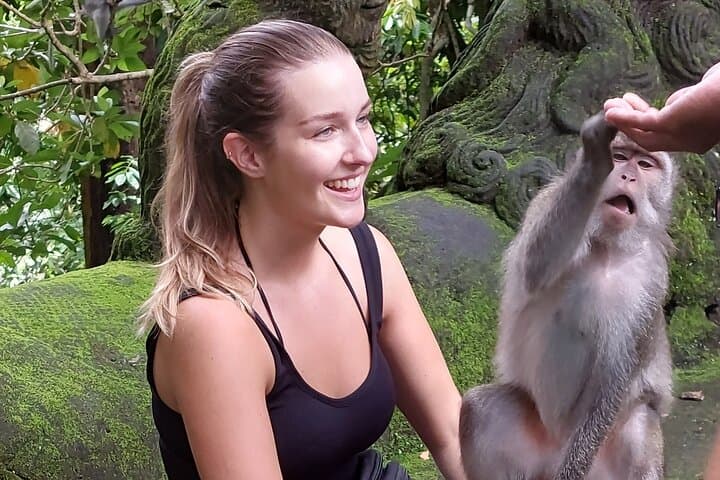


You arrive before the sun finds the ridge: steam rises from volcanic bowls, and distant terraces fold into mist while long-tailed macaques move through dense fig trees in the sanctuary.
You arrive before the sun finds the ridge: steam rises from volcanic bowls, and distant terraces fold into mist while long-tailed macaques move through dense fig trees in the sanctuary.
This full-day loop links Bali’s living geology and living culture. Mount Batur occupies a caldera formed by repeated eruptions; its black slopes and crater lake contrast with the terraced paddies fed by the Subak irrigation system, a community-managed water network dating back a millennium. In Ubud you pass villages where silverwork in Celuk and batik workshops still follow hands-on traditions, and Tirta Empul’s spring temple offers a glimpse of Balinese Hindu ritual and purification.
The itinerary balances short walks, viewpoint stops and cultural visits—expect paved and rural roads, stepped rice-terrace viewpoints and shaded, sometimes muddy sanctuary paths. The Monkey Forest is conservation-focused: 11 hectares of protected trees and temples where guides stress no-feeding rules to keep macaques healthy and interactions calm.
Practical edge: plan for early starts to avoid midday heat, bring cash for small donations and market purchases, and wear closed-toe shoes for uneven temple stones and terrace paths. Carry a light rain layer during the wet months and a hat and sunscreen for the dry season. Respect temple dress codes—sarongs are often provided or available. Keep electronics secure around curious monkeys and follow guides’ instructions around wildlife.
This tour is approachable for most travelers, pairing dramatic volcanic scenery with Ubud’s crafts and ritual sites—an efficient, ground-level primer on central Bali’s natural and cultural highlights.