THE ADVENTURE COLLECTIVE® · Independent discovery and booking for outdoor travel

See six signature sites around Baku in one day: petroglyphs at Gobustan, ancient fire temples at Ateshgah, smoking mud volcanoes and the eternal flame of Yanardag. This practical full-day tour pairs geology, history and local insight with hotel pickup and lunch included.
See six signature sites around Baku in one day: petroglyphs at Gobustan, ancient fire temples at Ateshgah, smoking mud volcanoes and the eternal flame of Yanardag. This practical full-day tour pairs geology, history and local insight with hotel pickup and lunch included.
You step out of an air-conditioned minibus and the wind off the Caspian tugs at your scarf — the city behind you with its glass towers, the ancient steppe ahead with a smell of mineral-rich earth. Over the next nine hours this guided loop around Baku will pull you through layers of Azerbaijan’s story: oil-soaked modernity, fire-worshipping faiths, and rock art older than cities. The route stitches together Bibi-Heybat’s early oil history, the bubbling theatrics of mud volcanoes, the wind-carved petroglyphs of Gobustan, the honey-colored stones of Ateshgah, and the persistent blaze of Yanardag.
Verified experiences and guided adventures in the surrounding area.
Operated by Enjoy Azerbaijan Travel · Baku, Baku
You step out of an air-conditioned minibus and the wind off the Caspian tugs at your scarf — the city behind you with its glass towers, the ancient steppe ahead with a smell of mineral-rich earth. Over the next nine hours this guided loop around Baku will pull you through layers of Azerbaijan’s story: oil-soaked modernity, fire-worshipping faiths, and rock art older than cities. The route stitches together Bibi-Heybat’s early oil history, the bubbling theatrics of mud volcanoes, the wind-carved petroglyphs of Gobustan, the honey-colored stones of Ateshgah, and the persistent blaze of Yanardag.
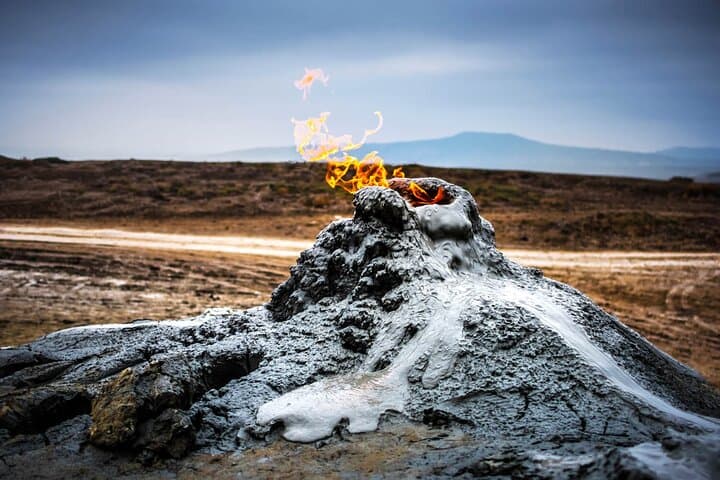
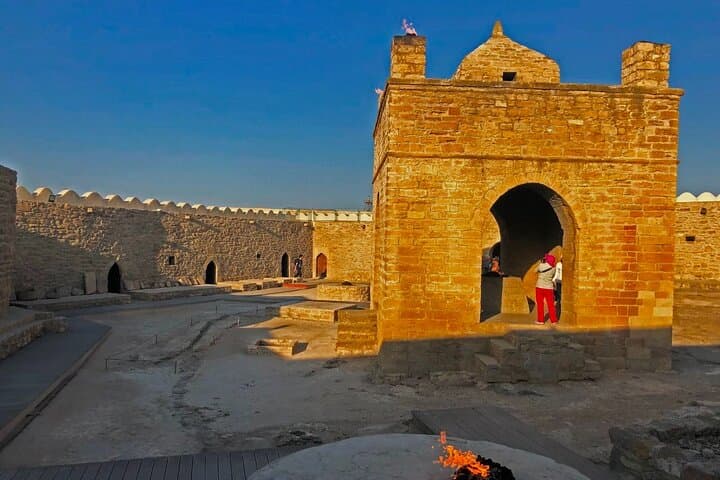
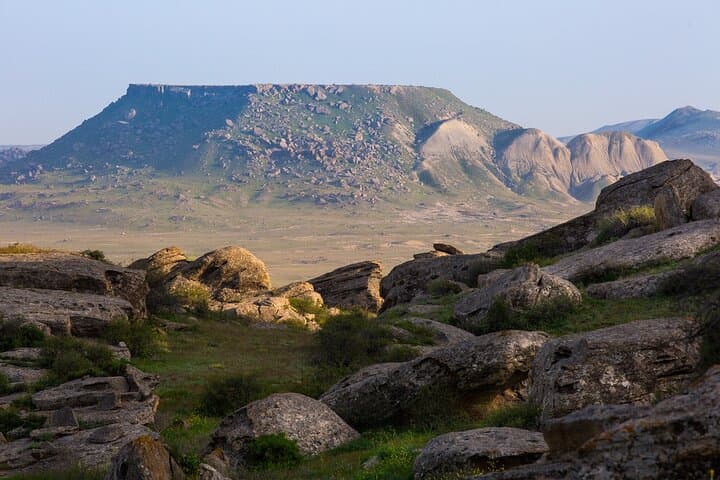
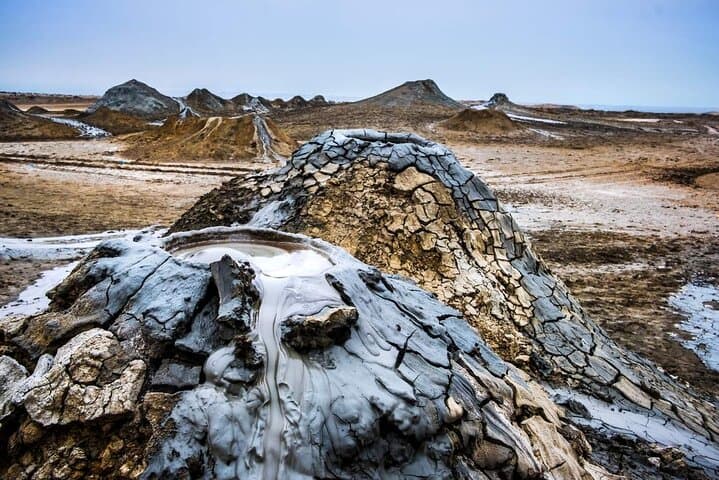
Gobustan’s rock panels feel like a slow-motion archive; locomotives, boats and hunts are pecked into stone by people who lived here as far back as 5,000–40,000 years ago. Geologically, the Absheron Peninsula is a faulted canvas: shallow gas reservoirs and sedimentary beds push gas and mud through the surface, giving rise to the mud volcanoes you’ll watch hiss and burp — nature refusing to be tidy. Ateshgah, with its central altar and Persian inscriptions, tells of a region where Zoroastrian and later Islamic traditions met and coexisted around the sanctity of flame.
Yanardag is the climatic stop: a slope that has burned for millennia as natural gas finds oxygen and bursts into flame, a bright, steady edge cutting the skyline. Interspersed with these sites are human stories: the Bibi-Heybat field’s 1846 well, recorded in Russian archives, is cited among the earliest industrial oil exploits before the U.S. boom.
Practically speaking this is a full-day, moderately paced tour. It departs at 09:00 (hotel pickup available from selected hotels, often an hour earlier depending on traffic), runs to groups of up to 18, and returns in the evening. Entry fees and lunch are included for the listed stops; wear sturdy shoes — mud volcano viewing includes short, uneven walks — and bring sun protection and water. Your guide handles logistics and context, but local etiquette matters: modest dress at religious sites and asking before photographing people are appreciated.
For travelers who want a compact primer on Azerbaijan’s natural and cultural landmarks, this loop gives a concentrated, accessible experience. You’ll return to Baku with soot on your shoes from the mud fields, a pocketful of notes about ancient symbols, and the image of an unquenchable flame clinging to a hillside — an elemental, useful snapshot of a country where energy, faith, and landscape still push one another forward.
easy.
9 hours.
Suitable for most fitness levels; expect several short walks on uneven terrain and brief climbs to viewpoints.
The tour lasts approximately nine hours and begins at 09:00; hotel pickup from selected properties is offered and pickup times vary with traffic.
Yes—entry tickets for included stops and lunch are provided as part of the tour price.
Yes—it's suitable for all fitness levels, though expect short walks on uneven ground and some steps at historical sites.
Mud volcanoes are dynamic; you’ll often see bubbling mud and gas vents, but the intensity varies day to day and with weather.
Pickup is available from selected hotels—confirm your pickup point during booking; otherwise meet at the designated departure point.
Modest clothing is recommended—cover shoulders and knees; women may be asked to wear a headscarf when entering certain shrines.
The Absheron Peninsula has been a crossroads of trade and energy for millennia—Bibi-Heybat’s documented oil drilling in 1846 predates many early commercial wells elsewhere.
Gobustan is an archaeological reserve with active conservation efforts—stay on marked paths, and avoid touching rock art to preserve it for future study.
Enjoy Azerbaijan Travel operates guided outdoor trips and adventures with an emphasis on safety, stewardship, and memorable experiences.
You step out of an air-conditioned minibus and the wind off the Caspian tugs at your scarf — the city behind you with its glass towers, the ancient steppe ahead with a smell of mineral-rich earth. Over the next nine hours this guided loop around Baku will pull you through layers of Azerbaijan’s story: oil-soaked modernity, fire-worshipping faiths, and rock art older than cities. The route stitches together Bibi-Heybat’s early oil history, the bubbling theatrics of mud volcanoes, the wind-carved petroglyphs of Gobustan, the honey-colored stones of Ateshgah, and the persistent blaze of Yanardag.
You step out of an air-conditioned minibus and the wind off the Caspian tugs at your scarf — the city behind you with its glass towers, the ancient steppe ahead with a smell of mineral-rich earth. Over the next nine hours this guided loop around Baku will pull you through layers of Azerbaijan’s story: oil-soaked modernity, fire-worshipping faiths, and rock art older than cities. The route stitches together Bibi-Heybat’s early oil history, the bubbling theatrics of mud volcanoes, the wind-carved petroglyphs of Gobustan, the honey-colored stones of Ateshgah, and the persistent blaze of Yanardag.
Gobustan’s rock panels feel like a slow-motion archive; locomotives, boats and hunts are pecked into stone by people who lived here as far back as 5,000–40,000 years ago. Geologically, the Absheron Peninsula is a faulted canvas: shallow gas reservoirs and sedimentary beds push gas and mud through the surface, giving rise to the mud volcanoes you’ll watch hiss and burp — nature refusing to be tidy. Ateshgah, with its central altar and Persian inscriptions, tells of a region where Zoroastrian and later Islamic traditions met and coexisted around the sanctity of flame.
Yanardag is the climatic stop: a slope that has burned for millennia as natural gas finds oxygen and bursts into flame, a bright, steady edge cutting the skyline. Interspersed with these sites are human stories: the Bibi-Heybat field’s 1846 well, recorded in Russian archives, is cited among the earliest industrial oil exploits before the U.S. boom.
Practically speaking this is a full-day, moderately paced tour. It departs at 09:00 (hotel pickup available from selected hotels, often an hour earlier depending on traffic), runs to groups of up to 18, and returns in the evening. Entry fees and lunch are included for the listed stops; wear sturdy shoes — mud volcano viewing includes short, uneven walks — and bring sun protection and water. Your guide handles logistics and context, but local etiquette matters: modest dress at religious sites and asking before photographing people are appreciated.
For travelers who want a compact primer on Azerbaijan’s natural and cultural landmarks, this loop gives a concentrated, accessible experience. You’ll return to Baku with soot on your shoes from the mud fields, a pocketful of notes about ancient symbols, and the image of an unquenchable flame clinging to a hillside — an elemental, useful snapshot of a country where energy, faith, and landscape still push one another forward.