THE ADVENTURE COLLECTIVE® · Independent discovery and booking for outdoor travel

Leave Cairo at dawn for a full-day 4x4 journey through Bahariya Oasis to the Black Desert’s iron-streaked mountains and the White Desert’s crystalline chalk formations. Expect dune driving, short climbs, a Bedouin lunch, and dramatic photo opportunities at sunrise and sunset.
Leave Cairo at dawn for a full-day 4x4 journey through Bahariya Oasis to the Black Desert’s iron-streaked mountains and the White Desert’s crystalline chalk formations. Expect dune driving, short climbs, a Bedouin lunch, and dramatic photo opportunities at sunrise and sunset.
The engine hums before dawn as the highway unspools toward the western desert; by midmorning the city noise thins and the sand takes the wheel, daring you into a landscape that rearranges expectations. In a day you move from the palm-shaded settlement of Bahariya Oasis to the iron-streaked ridges of the Black Desert and the ghostly chalk formations of the White Desert.
Verified experiences and guided adventures in the surrounding area.
Operated by Emo Tours Sweden · Bahariya Oasis, Giza Governorate
The engine hums before dawn as the highway unspools toward the western desert; by midmorning the city noise thins and the sand takes the wheel, daring you into a landscape that rearranges expectations. In a day you move from the palm-shaded settlement of Bahariya Oasis to the iron-streaked ridges of the Black Desert and the ghostly chalk formations of the White Desert.
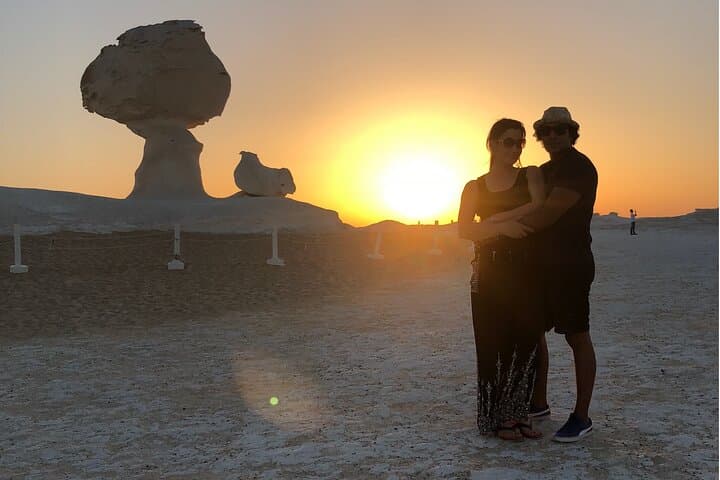
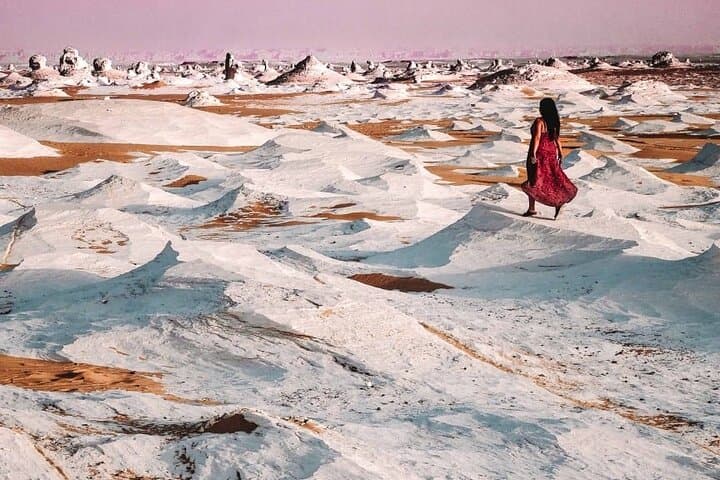
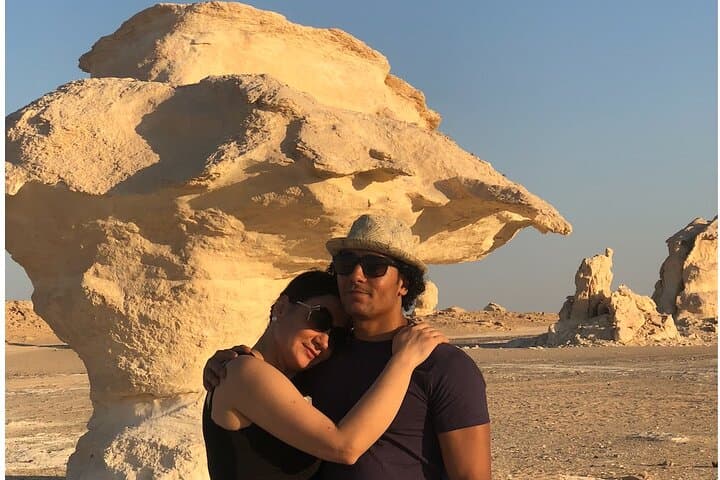
This route crosses geology and history: Bahariya has been a desert crossroads since pharaonic times, its valley yielding ancient tombs and caravan relics. The Black Desert’s dark rocks owe their color to iron-rich volcanic deposits and wind-polished basalt; English Mountain gives a compact summit view that frames the moonscape. In the White Desert, quartz and chalk have been sculpted into mushroom-like forms and crystalline outcrops—Crystal Mountain preserves quartz seams that predate the Sahara’s arid phase. Bedouin culture threads the day, from simple valley lunches to oral histories about the desert’s shifting dunes.
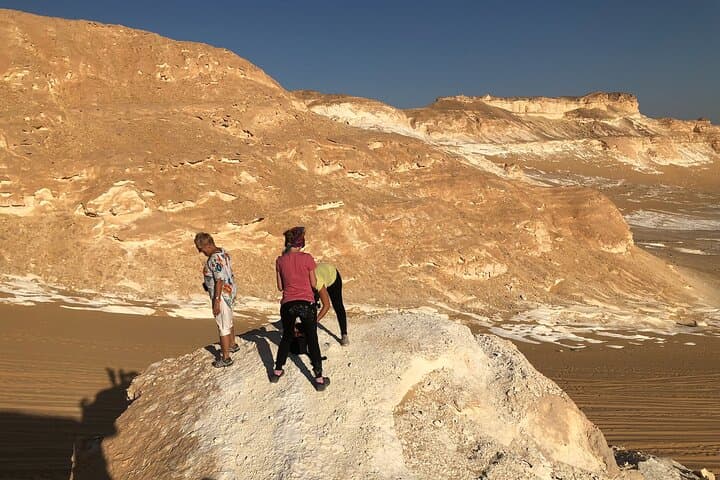
Practical side: expect long vehicle stretches broken by short, uneven hikes and climbs over rocky outcrops. Temperatures swing strongly—hot sun on the sand, cool wind on exposed ridgelines—so layered clothing matters. Carry at least 2–3 liters of water, sun protection, and sturdy closed-toe shoes for scrambling. Photography windows are best in the low light of morning and late afternoon when shapes gain depth and shadows reveal texture.
The experience is equal parts visual theater and tactile fieldwork: stones that look carved by giants, dunes that push and settle around your boots, and a living culture that invites respectful curiosity.
moderate.
12–15 hours.
Suitable for people who can sit in a vehicle for long stretches and perform short, uneven scrambles over rock outcrops.
The tour runs about 12–15 hours and typically starts around 6:00 AM with hotel pickup in Cairo to make the most of daylight and cooler temperatures.
Yes; most of the day is in a private 4x4 and walking is short and optional—however, long hours and desert conditions can be tiring for very young children or those with limited mobility.
Breakfast, snacks, bottled water, and a Bedouin-style lunch are included, but bring extra water if you consume liquids quickly in hot weather.
Cell coverage is intermittent in remote desert sections; restroom access is basic—plan accordingly and use facilities before departing towns.
Bahariya Oasis has long been a caravan stop with archaeological finds dating to pharaonic times; the area’s oases supported trade routes and settlement patterns for millennia.
The desert’s fragile rock formations and crust are easily damaged—stay on established tracks when driving, pack out all waste, and support operators who follow local conservation practices.
Emo Tours Sweden operates guided outdoor trips and adventures with an emphasis on safety, stewardship, and memorable experiences.
The engine hums before dawn as the highway unspools toward the western desert; by midmorning the city noise thins and the sand takes the wheel, daring you into a landscape that rearranges expectations. In a day you move from the palm-shaded settlement of Bahariya Oasis to the iron-streaked ridges of the Black Desert and the ghostly chalk formations of the White Desert.
The engine hums before dawn as the highway unspools toward the western desert; by midmorning the city noise thins and the sand takes the wheel, daring you into a landscape that rearranges expectations. In a day you move from the palm-shaded settlement of Bahariya Oasis to the iron-streaked ridges of the Black Desert and the ghostly chalk formations of the White Desert.
This route crosses geology and history: Bahariya has been a desert crossroads since pharaonic times, its valley yielding ancient tombs and caravan relics. The Black Desert’s dark rocks owe their color to iron-rich volcanic deposits and wind-polished basalt; English Mountain gives a compact summit view that frames the moonscape. In the White Desert, quartz and chalk have been sculpted into mushroom-like forms and crystalline outcrops—Crystal Mountain preserves quartz seams that predate the Sahara’s arid phase. Bedouin culture threads the day, from simple valley lunches to oral histories about the desert’s shifting dunes.
Practical side: expect long vehicle stretches broken by short, uneven hikes and climbs over rocky outcrops. Temperatures swing strongly—hot sun on the sand, cool wind on exposed ridgelines—so layered clothing matters. Carry at least 2–3 liters of water, sun protection, and sturdy closed-toe shoes for scrambling. Photography windows are best in the low light of morning and late afternoon when shapes gain depth and shadows reveal texture.
The experience is equal parts visual theater and tactile fieldwork: stones that look carved by giants, dunes that push and settle around your boots, and a living culture that invites respectful curiosity.