THE ADVENTURE COLLECTIVE® · Independent discovery and booking for outdoor travel

Spend a full day discovering two UNESCO-listed Castilian cities on a guided coach tour from Madrid. Walk Ávila’s complete medieval walls, see Segovia’s Roman aqueduct and Alcázar, and enjoy a traditional gastronomic lunch.
Spend a full day discovering two UNESCO-listed Castilian cities on a guided coach tour from Madrid. Walk Ávila’s complete medieval walls, see Segovia’s Roman aqueduct and Alcázar, and enjoy a traditional gastronomic lunch.
Morning light slices across Madrid as a coach pulls away from Calle de San Bernardo, and the city gives way to the low, stony shoulders of central Spain. By midmorning you’re walking beneath Ávila’s medieval walls — a compact ring of stone that still patrols the skyline — then moving through Romanesque vaults and plazas where the air tastes faintly of roast meat and coffee.
Verified experiences and guided adventures in the surrounding area.
Operated by Fun and Tickets · Madrid, Community of Madrid
Morning light slices across Madrid as a coach pulls away from Calle de San Bernardo, and the city gives way to the low, stony shoulders of central Spain. By midmorning you’re walking beneath Ávila’s medieval walls — a compact ring of stone that still patrols the skyline — then moving through Romanesque vaults and plazas where the air tastes faintly of roast meat and coffee.
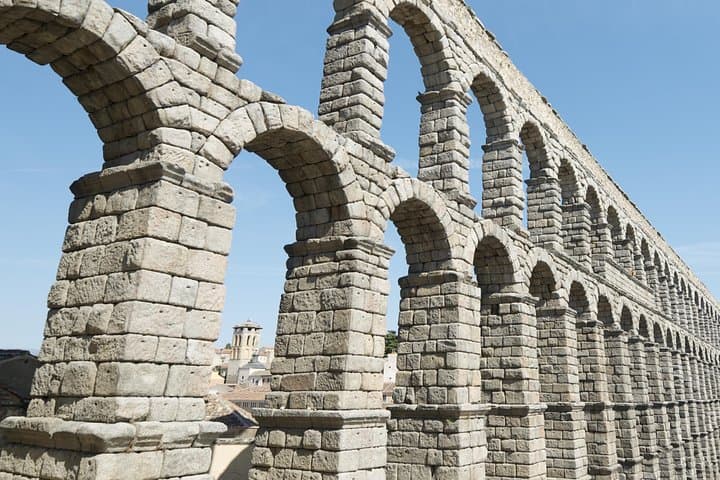
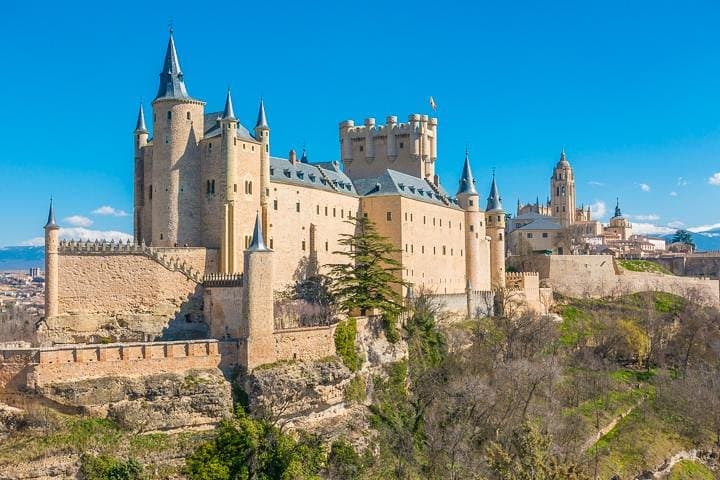
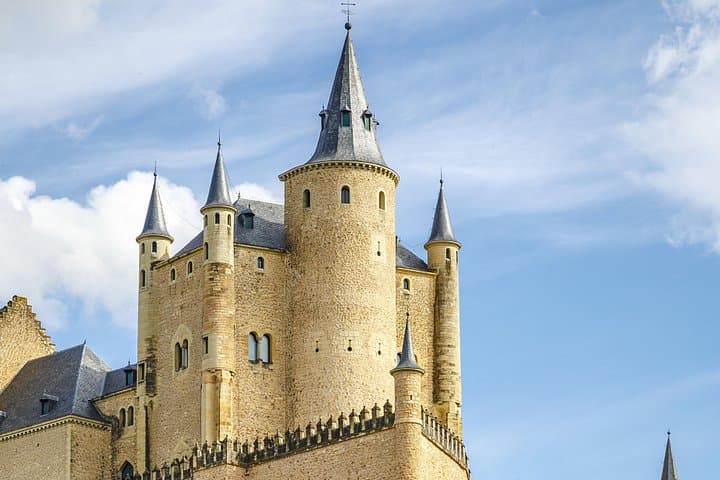
Ávila and Segovia are neighboring chapters in Castile‑León’s long story. Ávila’s defensive walls (11th–14th centuries) and its cathedral-fortress reflect medieval concerns with fortification and faith; Segovia’s Roman aqueduct, built without mortar, speaks to ancient engineering and the city’s role as a crossroads of empire. The Alcázar of Segovia, perched on a rocky crag, reads like a book of military architecture and later royal remodeling.
Geologically you cross the southern foothills of the Sierra de Guadarrama; granite outcrops and river valleys shaped settlement patterns and defensive sites for centuries. Culture here is kitchen-forward: a midday gastronomic lunch features local stews, roasted suckling pig or steak, and robust Castilian wine — a practical, flavorful pause between guided walks.
Practical guidance: this is a full 9‑hour day with two 1.5‑hour guided city walks and several paid entrances included (Segovia Cathedral, Alcázar, San Vicente, Santa Teresa). Expect cobblestones, staircases, and short uphill stretches — comfortable walking shoes and a light daypack are essential. Check the meeting point at Calle de San Bernardo, arrive by 08:30 for a 09:00 departure, and carry a printed or mobile ticket. Bring layers, cash for small purchases, and a charged phone for photos and maps.
easy.
9 hours.
Suitable for most people who can walk for 1–2 hours at a time on uneven urban terrain; not strenuous but involves stair climbs and cobbles.
Meet at Calle de San Bernardo, 7 in central Madrid and check in by 08:30 for a 09:00 departure; the operator may offer a short walk to the terminal from a nearby office.
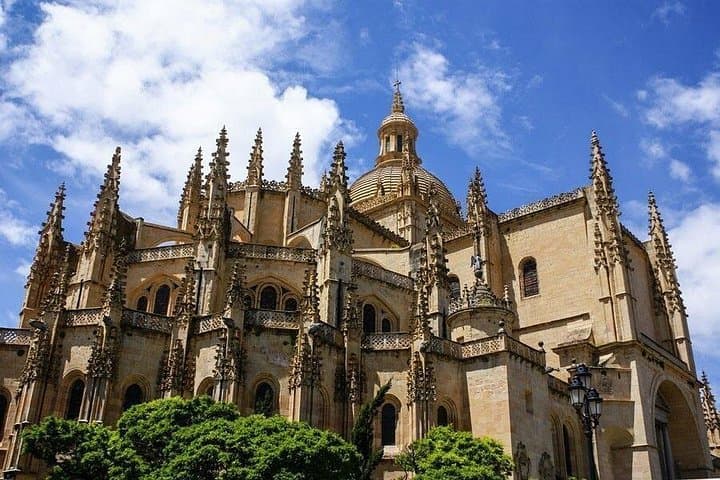
Yes — the tour includes entrance to the Alcázar of Segovia, Segovia Cathedral, Basilica of San Vicente and the Convent of Santa Teresa in Ávila as listed in the inclusions.
The tour involves walking on uneven cobbles and staircases; it is not recommended for people with reduced mobility and the operator has final discretion on admission.
A traditional Castilian lunch is provided with options like Avila steak, roast suckling pig or cod loin, local beans or soup, plus wine, water and coffee.
Ávila and Segovia have layers of history from Roman engineering (Segovia’s aqueduct) through medieval fortifications and later royal residences like the Alcázar that shaped Castile’s political landscape.
These urban heritage sites are protected as part of a UNESCO World Heritage listing; visitors are asked to respect interiors and avoid touching frescoes, railings and fragile masonry.
Fun and Tickets operates guided outdoor trips and adventures with an emphasis on safety, stewardship, and memorable experiences.
Morning light slices across Madrid as a coach pulls away from Calle de San Bernardo, and the city gives way to the low, stony shoulders of central Spain. By midmorning you’re walking beneath Ávila’s medieval walls — a compact ring of stone that still patrols the skyline — then moving through Romanesque vaults and plazas where the air tastes faintly of roast meat and coffee.
Morning light slices across Madrid as a coach pulls away from Calle de San Bernardo, and the city gives way to the low, stony shoulders of central Spain. By midmorning you’re walking beneath Ávila’s medieval walls — a compact ring of stone that still patrols the skyline — then moving through Romanesque vaults and plazas where the air tastes faintly of roast meat and coffee.
Ávila and Segovia are neighboring chapters in Castile‑León’s long story. Ávila’s defensive walls (11th–14th centuries) and its cathedral-fortress reflect medieval concerns with fortification and faith; Segovia’s Roman aqueduct, built without mortar, speaks to ancient engineering and the city’s role as a crossroads of empire. The Alcázar of Segovia, perched on a rocky crag, reads like a book of military architecture and later royal remodeling.
Geologically you cross the southern foothills of the Sierra de Guadarrama; granite outcrops and river valleys shaped settlement patterns and defensive sites for centuries. Culture here is kitchen-forward: a midday gastronomic lunch features local stews, roasted suckling pig or steak, and robust Castilian wine — a practical, flavorful pause between guided walks.
Practical guidance: this is a full 9‑hour day with two 1.5‑hour guided city walks and several paid entrances included (Segovia Cathedral, Alcázar, San Vicente, Santa Teresa). Expect cobblestones, staircases, and short uphill stretches — comfortable walking shoes and a light daypack are essential. Check the meeting point at Calle de San Bernardo, arrive by 08:30 for a 09:00 departure, and carry a printed or mobile ticket. Bring layers, cash for small purchases, and a charged phone for photos and maps.