THE ADVENTURE COLLECTIVE® · Independent discovery and booking for outdoor travel

A full-day mountain bike trip from Marrakech takes you into the High Atlas where red slopes, cedar forests and Berber villages shape the ride. Expect a mix of climbs and technical descents, local culture, and big mountain views—plan for varied terrain and changing weather.
A full-day mountain bike trip from Marrakech takes you into the High Atlas where red slopes, cedar forests and Berber villages shape the ride. Expect a mix of climbs and technical descents, local culture, and big mountain views—plan for varied terrain and changing weather.
The trail opens with a long, dusty inhale: you roll out of a small village an hour from Marrakech and the High Atlas rises like a challenge ahead. Red-ochre slopes flank narrow tracks; nut and cedar trees lean over lanes where shepherds and mules are constant company. The forest feels alive—wind threads through branches and the trail seems to push you forward.
Verified experiences and guided adventures in the surrounding area.
Operated by Marrakech Green Wheels · Imlil, Marrakech-Safi
The trail opens with a long, dusty inhale: you roll out of a small village an hour from Marrakech and the High Atlas rises like a challenge ahead. Red-ochre slopes flank narrow tracks; nut and cedar trees lean over lanes where shepherds and mules are constant company. The forest feels alive—wind threads through branches and the trail seems to push you forward.
This region is shaped by Berber culture and centuries of mountain trade; villages still follow seasonal rhythms and terraced agriculture. Geologically the High Atlas shows folded sedimentary beds and iron-rich soils that give the ridges their rust color, while higher peaks wear gray metamorphics and scree. Local guides draw on oral history and trail knowledge—routes follow old mule tracks and seasonal watercourses more than formal switchbacks.
On a full-day ride expect a balanced mix of climbs and descents across singletrack, rocky trail, and gravel farm roads. Distances commonly fall in the 30–45 km range with several hundred to a thousand meters of cumulative climbing depending on the route; the pace is dictated by terrain and heat. Watch for loose rock, occasional livestock, and village traffic.
Practical edge: start early to avoid the midday sun, carry a hydration pack and layers for rapid temperature swings, and use a bike with reliable brakes and at least front suspension. Respect private fields and ask before photographing people; tipping guides and drivers is customary. With moderate fitness and basic off-road skills, the High Atlas offers a day of rugged terrain and sweeping views that reward attention and preparation.
moderate.
8 hours.
Moderate aerobic fitness; comfortable with sustained climbs and technical descents for several hours.
Most operators supply mountain bikes tuned for local trails—confirm bike type and size when booking and request a suspension setup that matches your riding style.
Rides are typically moderate: regular cyclists with some off-road experience will be comfortable; non-cyclists should be prepared for sustained climbs and 5–8 hours on the trail.
Yes—tours generally include pickup and drop-off in Marrakech; expect about a one-hour transfer to the trailhead depending on traffic and route.
Most full-day rides sit in foothills below 2,000 m where altitude effects are minimal, but rides with higher climbs can cause mild breathlessness—pace your effort and hydrate.
The High Atlas has long been inhabited by Berber communities; many trails began as mule routes connecting seasonal pastures and market towns.
Stick to established tracks to protect fragile soils and native cedar groves; support local guides and village businesses to sustain stewardship of these landscapes.
Marrakech Green Wheels operates guided outdoor trips and adventures with an emphasis on safety, stewardship, and memorable experiences.


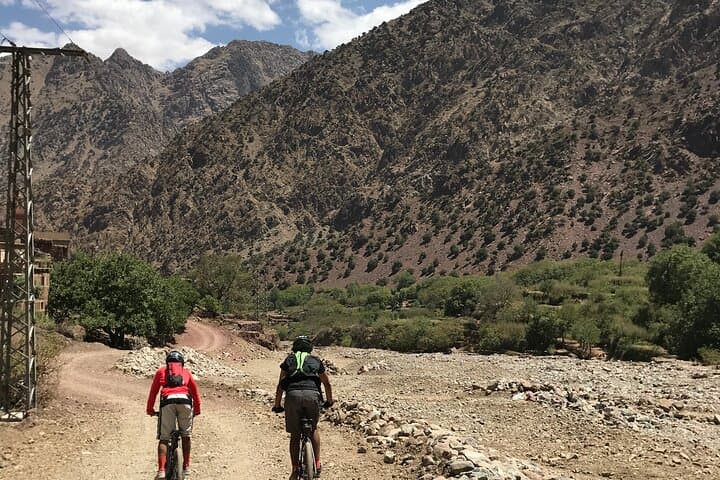

The trail opens with a long, dusty inhale: you roll out of a small village an hour from Marrakech and the High Atlas rises like a challenge ahead. Red-ochre slopes flank narrow tracks; nut and cedar trees lean over lanes where shepherds and mules are constant company. The forest feels alive—wind threads through branches and the trail seems to push you forward.
The trail opens with a long, dusty inhale: you roll out of a small village an hour from Marrakech and the High Atlas rises like a challenge ahead. Red-ochre slopes flank narrow tracks; nut and cedar trees lean over lanes where shepherds and mules are constant company. The forest feels alive—wind threads through branches and the trail seems to push you forward.
This region is shaped by Berber culture and centuries of mountain trade; villages still follow seasonal rhythms and terraced agriculture. Geologically the High Atlas shows folded sedimentary beds and iron-rich soils that give the ridges their rust color, while higher peaks wear gray metamorphics and scree. Local guides draw on oral history and trail knowledge—routes follow old mule tracks and seasonal watercourses more than formal switchbacks.
On a full-day ride expect a balanced mix of climbs and descents across singletrack, rocky trail, and gravel farm roads. Distances commonly fall in the 30–45 km range with several hundred to a thousand meters of cumulative climbing depending on the route; the pace is dictated by terrain and heat. Watch for loose rock, occasional livestock, and village traffic.
Practical edge: start early to avoid the midday sun, carry a hydration pack and layers for rapid temperature swings, and use a bike with reliable brakes and at least front suspension. Respect private fields and ask before photographing people; tipping guides and drivers is customary. With moderate fitness and basic off-road skills, the High Atlas offers a day of rugged terrain and sweeping views that reward attention and preparation.