THE ADVENTURE COLLECTIVE® · Independent discovery and booking for outdoor travel

Escape Marrakech for a 5–7 hour road and riverside trek through the High Atlas. Visit Moulay Brahim and Sidi Faresse pass, share mint tea with a Berber family, then walk the Ourika River to lunch by the waterfalls.
Escape Marrakech for a 5–7 hour road and riverside trek through the High Atlas. Visit Moulay Brahim and Sidi Faresse pass, share mint tea with a Berber family, then walk the Ourika River to lunch by the waterfalls.
You leave Marrakech in the cool morning, the city’s heat folding behind you as the road climbs toward Tahanaout and the lower flanks of the High Atlas. Olive terraces slide past the window; by 1,800 m you step out in Moulay Brahim and feel the air thin and clean. The peaks watch in stone-gray silence, and a narrow road threads villages where donkeys and radios mark the day.
Verified experiences and guided adventures in the surrounding area.
Operated by Easy take travel · Ourika, Marrakech-Safi
You leave Marrakech in the cool morning, the city’s heat folding behind you as the road climbs toward Tahanaout and the lower flanks of the High Atlas. Olive terraces slide past the window; by 1,800 m you step out in Moulay Brahim and feel the air thin and clean. The peaks watch in stone-gray silence, and a narrow road threads villages where donkeys and radios mark the day.
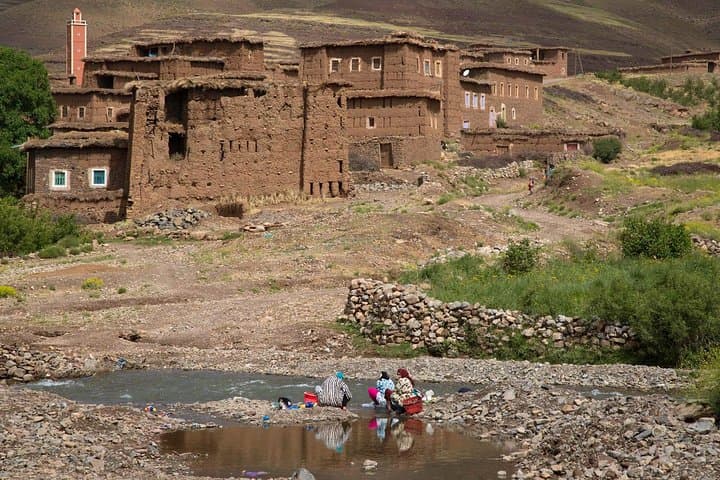
This route threads geological history: folded volcanic and sedimentary rock lifted by the African and Eurasian plates into the high ridges you’ll peer across. The valleys are populated by Amazigh (Berber) villages that have farmed these slopes for generations—houses in local stone, terraces irrigated by narrow channels, and tea breaks that are a social ritual.
You’ll pause for mint tea with a family, cross the grassy Sidi Faresse pass at about 2,000 m, and descend toward Asni before following the Ourika River. The river dares you to slow down—its riffles and farmed banks are an easy riverside walk to a cluster of small waterfalls where local restaurants serve tagine with a river view.
Practical guidance: plan for a 5–7 hour day with moderate driving and short hikes on uneven paths. Bring layered clothing (mountain mornings are cool), sturdy shoes for riverbank rocks, and sun protection. Hydrate before and during the trip; bottled water is usually provided. Allow time for photography and a relaxed lunch—return to Marrakech mid to late afternoon. This is a culturally rich, low-technical day in the High Atlas suitable for most travelers who want a compact, scenic mountain experience.
easy.
5–7 hours.
Suitable for most travelers who can manage short uphill sections and uneven riverside paths; minimal sustained exertion.
Expect a 5–7 hour excursion, typically leaving early and returning mid to late afternoon (around 17:00).
Walks are short and generally easy—riverside paths and waterfall approaches can be uneven but require no technical skills.
Lunch at a local Ourika restaurant is usually included or available; inform the operator of dietary restrictions in advance so they can adapt meals when possible.
You reach around 1,800–2,000 m; most visitors experience no problems, but anyone sensitive to altitude should take it easy and stay hydrated.
The valleys are traditionally inhabited by Amazigh (Berber) communities; shrines like Moulay Brahim are local religious landmarks and historically tied to transhumant routes.
Tourism supports local families but also adds pressure on water and trails—stay on paths, minimize single-use plastics, and hire local guides to ensure revenue stays in the community.
Easy take travel operates guided outdoor trips and adventures with an emphasis on safety, stewardship, and memorable experiences.



You leave Marrakech in the cool morning, the city’s heat folding behind you as the road climbs toward Tahanaout and the lower flanks of the High Atlas. Olive terraces slide past the window; by 1,800 m you step out in Moulay Brahim and feel the air thin and clean. The peaks watch in stone-gray silence, and a narrow road threads villages where donkeys and radios mark the day.
You leave Marrakech in the cool morning, the city’s heat folding behind you as the road climbs toward Tahanaout and the lower flanks of the High Atlas. Olive terraces slide past the window; by 1,800 m you step out in Moulay Brahim and feel the air thin and clean. The peaks watch in stone-gray silence, and a narrow road threads villages where donkeys and radios mark the day.
This route threads geological history: folded volcanic and sedimentary rock lifted by the African and Eurasian plates into the high ridges you’ll peer across. The valleys are populated by Amazigh (Berber) villages that have farmed these slopes for generations—houses in local stone, terraces irrigated by narrow channels, and tea breaks that are a social ritual.
You’ll pause for mint tea with a family, cross the grassy Sidi Faresse pass at about 2,000 m, and descend toward Asni before following the Ourika River. The river dares you to slow down—its riffles and farmed banks are an easy riverside walk to a cluster of small waterfalls where local restaurants serve tagine with a river view.
Practical guidance: plan for a 5–7 hour day with moderate driving and short hikes on uneven paths. Bring layered clothing (mountain mornings are cool), sturdy shoes for riverbank rocks, and sun protection. Hydrate before and during the trip; bottled water is usually provided. Allow time for photography and a relaxed lunch—return to Marrakech mid to late afternoon. This is a culturally rich, low-technical day in the High Atlas suitable for most travelers who want a compact, scenic mountain experience.