THE ADVENTURE COLLECTIVE® · Independent discovery and booking for outdoor travel

Escape Marrakech for a private day into the High Atlas: meet Berber families, watch argan oil production, and hike to Ourika Valley waterfalls. Expect a 7-hour loop with scenic stops and an optional camel ride.
Escape Marrakech for a private day into the High Atlas: meet Berber families, watch argan oil production, and hike to Ourika Valley waterfalls. Expect a 7-hour loop with scenic stops and an optional camel ride.
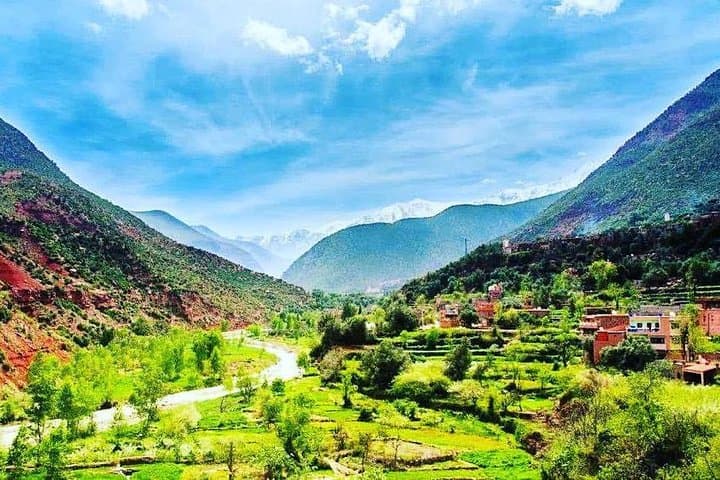
The road lifts out of Marrakech and the palms thin into scrub as the High Atlas fills the windshield: stony ridgelines, a patchwork of olive terraces and the distant serrated silhouette of Jebel Toubkal (4,167 m) daring you to look higher.
Verified experiences and guided adventures in the surrounding area.
Operated by Marrakech daily tours · Setti Fadma, Marrakech-Safi
The road lifts out of Marrakech and the palms thin into scrub as the High Atlas fills the windshield: stony ridgelines, a patchwork of olive terraces and the distant serrated silhouette of Jebel Toubkal (4,167 m) daring you to look higher.
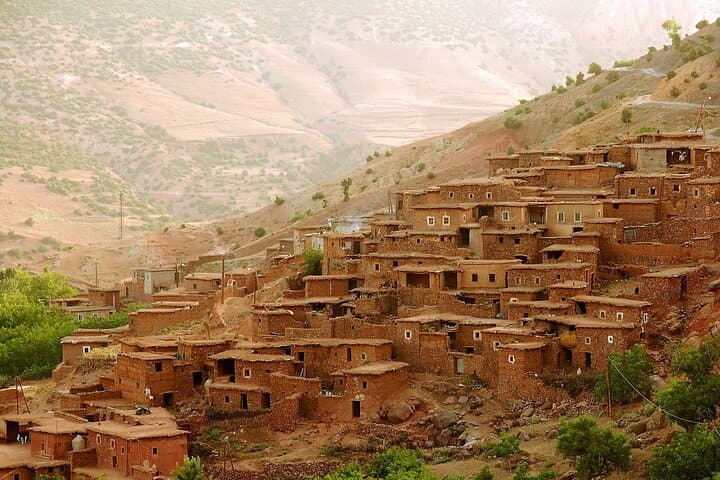
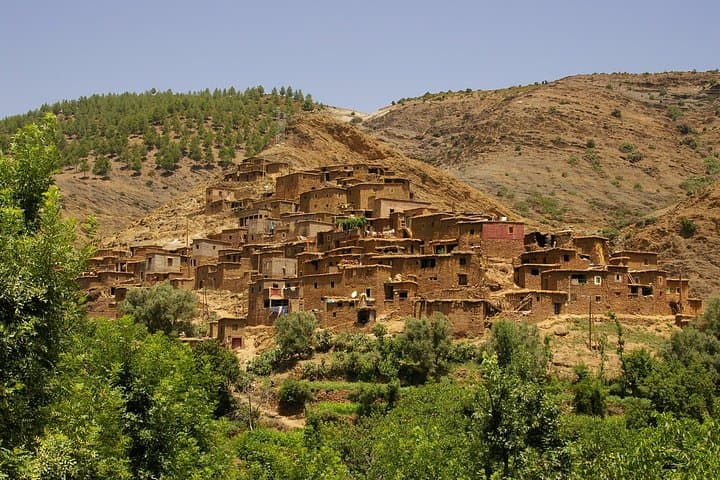
This private full-day route threads traditional Berber villages, a women's argan cooperative and the Ourika Valley. The Berber (Amazigh) communities here have farmed these slopes for centuries; stone houses, terraced plots and time-kept irrigation speak to a highland life shaped by steep geology and seasonal rivers. The High Atlas is young, tectonically uplifted rock — metamorphic and volcanic outcrops give way to scree and weathered limestone where waterfalls puncture valley floors.
You’ll sit in a family room for mint tea, learn how women press argan kernels into oil, and stop at a panoramic pullout for a clear view of the mountain chain. Near Setti Fadma the Ourika River cuts a green corridor; optional guided walks to the falls follow narrow, rocky tracks with short steep sections.
Practical edge: the drive from Marrakech takes roughly 45–60 minutes each way; the tour runs about seven hours total. Expect 2–3 km of hiking on uneven trail if you visit the main waterfalls with ~200–300 m of climbing in short bursts. Bring a reusable water bottle, sturdy shoes, sun protection and some cash for small cooperative purchases. The trip is culturally rich, accessible to most walkers, and best scheduled in the morning to avoid midday heat and crowds.
moderate.
7 hours.
Light-to-moderate fitness; able to handle 2–3 km of uneven walking with short steep sections.
Expect roughly 45–60 minutes each way depending on traffic and exact pickup point inside the Medina.
The guided hike to Setti Fadma waterfalls is short (2–3 km roundtrip) but uneven with some steep sections—suitable for most walkers comfortable on rocky ground.
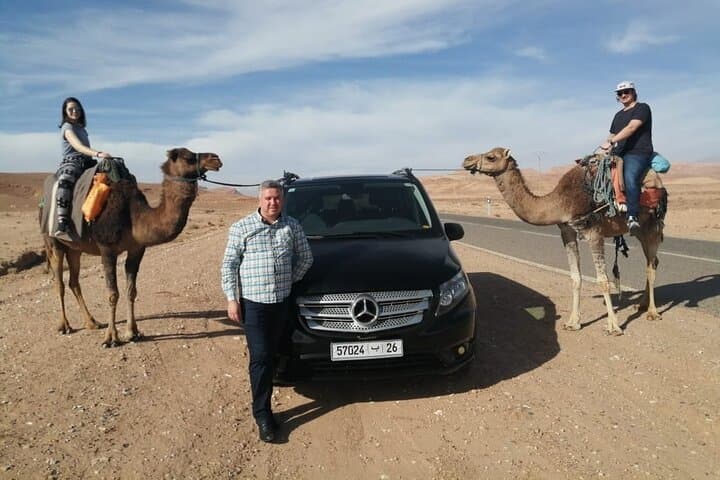
Camel rides and some cooperative purchases are optional extras; the tour typically includes the cooperative visit but camel rides are usually paid locally as an add-on.
Transport is listed as wheelchair accessible, but the waterfall trails are not suitable for wheelchairs or strollers—the village and cooperative stops are easier to access.
The High Atlas has been home to Amazigh (Berber) communities for millennia; argan oil cooperatives around Marrakech have long been run by women and are an important local income source.
Visitor pressure and seasonal water scarcity strain valley ecosystems—supporting local cooperatives and avoiding single-use plastics helps reduce impact.
Marrakech daily tours operates guided outdoor trips and adventures with an emphasis on safety, stewardship, and memorable experiences.
The road lifts out of Marrakech and the palms thin into scrub as the High Atlas fills the windshield: stony ridgelines, a patchwork of olive terraces and the distant serrated silhouette of Jebel Toubkal (4,167 m) daring you to look higher.
The road lifts out of Marrakech and the palms thin into scrub as the High Atlas fills the windshield: stony ridgelines, a patchwork of olive terraces and the distant serrated silhouette of Jebel Toubkal (4,167 m) daring you to look higher.
This private full-day route threads traditional Berber villages, a women's argan cooperative and the Ourika Valley. The Berber (Amazigh) communities here have farmed these slopes for centuries; stone houses, terraced plots and time-kept irrigation speak to a highland life shaped by steep geology and seasonal rivers. The High Atlas is young, tectonically uplifted rock — metamorphic and volcanic outcrops give way to scree and weathered limestone where waterfalls puncture valley floors.
You’ll sit in a family room for mint tea, learn how women press argan kernels into oil, and stop at a panoramic pullout for a clear view of the mountain chain. Near Setti Fadma the Ourika River cuts a green corridor; optional guided walks to the falls follow narrow, rocky tracks with short steep sections.
Practical edge: the drive from Marrakech takes roughly 45–60 minutes each way; the tour runs about seven hours total. Expect 2–3 km of hiking on uneven trail if you visit the main waterfalls with ~200–300 m of climbing in short bursts. Bring a reusable water bottle, sturdy shoes, sun protection and some cash for small cooperative purchases. The trip is culturally rich, accessible to most walkers, and best scheduled in the morning to avoid midday heat and crowds.