THE ADVENTURE COLLECTIVE® · Independent discovery and booking for outdoor travel

Spend a full day exploring Arusha National Park by foot and open jeep: walk to Tululusia Waterfalls with an armed ranger, peer into Ngurdoto Crater and scan the Momella Lakes for flamingos. This one-day circuit combines up-close wildlife viewing with lakeshore birding and a picnic lunch.
Spend a full day exploring Arusha National Park by foot and open jeep: walk to Tululusia Waterfalls with an armed ranger, peer into Ngurdoto Crater and scan the Momella Lakes for flamingos. This one-day circuit combines up-close wildlife viewing with lakeshore birding and a picnic lunch.
You step out of your vehicle where the road gives way to grassland and the first breath of Mt. Meru's cool air cuts across your face. A ranger checks names, secures the line of walkers, and the group moves under a canopy of montane forest toward Tululusia Waterfalls—today’s walking safari is intimate, close enough to hear leaves shift and distant antelope alarm-calls.
Verified experiences and guided adventures in the surrounding area.
Operated by Karibu Heritage House Limited · Arusha, Arusha Region
You step out of your vehicle where the road gives way to grassland and the first breath of Mt. Meru's cool air cuts across your face. A ranger checks names, secures the line of walkers, and the group moves under a canopy of montane forest toward Tululusia Waterfalls—today’s walking safari is intimate, close enough to hear leaves shift and distant antelope alarm-calls.
Arusha National Park sits on the flanks of volcanic Mount Meru and includes the bowl of Ngurdoto Crater—often called "little Ngorongoro"—and the alkaline Momella Lakes, where pink bands of flamingos rim the shoreline. The park’s geology is recent volcanic work: crater rims, ash soils and low ridgelines; its cultural edge is visible in the Maasai grazing lands beyond the boundary and the legacy of the 1962 film Hatari!, which filmed here.
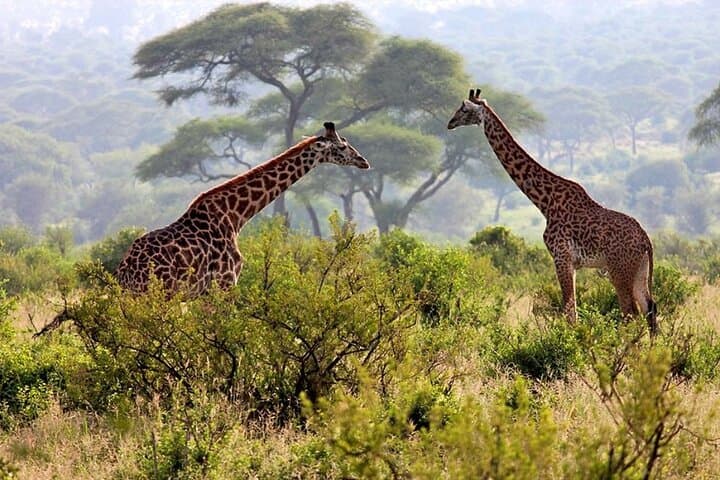
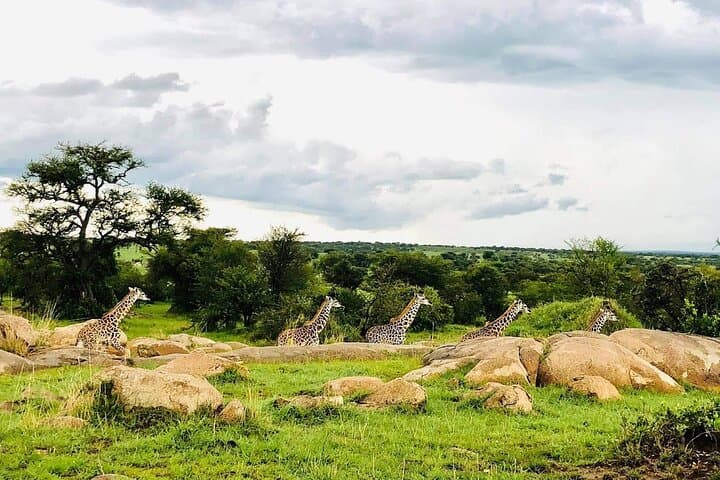
Practicalities shape the day: a typical itinerary runs about nine hours (hotel pickup in Arusha, morning walk 2–4 km with an armed ranger, jeep loops around Ngurdoto and along Momella Lakes, picnic lunch). Elevation on the day is generally 1,400–1,800 m with easy to moderate terrain—forest trails, short rocky sections, and flat lakeshore drives. Expect abundant birds, scattered buffalo and giraffe; binoculars and layered clothing are useful.
Hydrate often, carry sun protection, and move quietly on the walking sections to increase wildlife sightings. Park regulations require rangers on foot; respect sighting distances and avoid feeding animals. The combination of on-foot observation and open-jeep viewing makes this a compact but varied safari—good for travelers who want close encounters without a multi-day commitment.
moderate.
9 hours.
Able to walk 2–4 km on uneven ground and tolerate several hours in a vehicle; basic fitness recommended
This tour lists fees included in the itinerary; confirm at booking whether park entry and ranger fees are covered for your specific departure.
Yes—walking sections are accompanied by an armed ranger who manages safety and wildlife encounters; follow their guidance at all times.
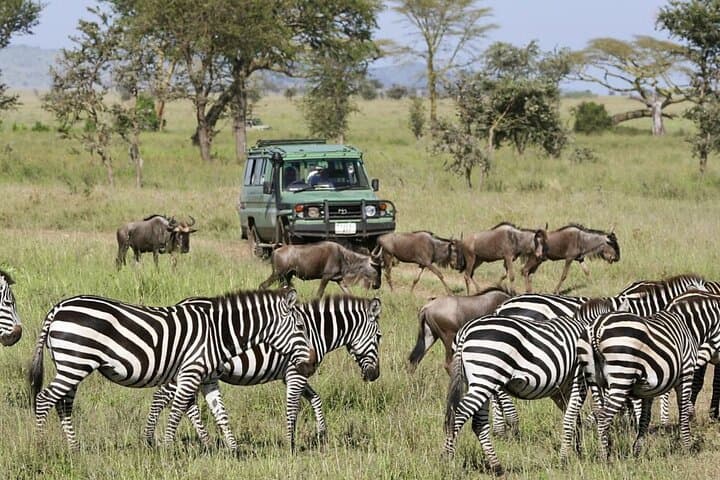
Common sightings include giraffe, buffalo, zebra, colobus and blue monkeys, plus abundant waterbirds at Momella Lakes and occasional hippo in marshy areas.
The jeep sections are accessible to most ages, but the walking safari requires basic mobility; contact the operator for private arrangements if mobility is limited.
Arusha National Park occupies volcanic slopes of Mount Meru; parts of the park were used in the 1960s film Hatari!, highlighting its long appeal to filmmakers and explorers.
The park is compact and sensitive—stick to trails, avoid single-use plastics and follow ranger instructions to reduce disturbance to birds and mammals.
Karibu Heritage House Limited operates guided outdoor trips and adventures with an emphasis on safety, stewardship, and memorable experiences.
You step out of your vehicle where the road gives way to grassland and the first breath of Mt. Meru's cool air cuts across your face. A ranger checks names, secures the line of walkers, and the group moves under a canopy of montane forest toward Tululusia Waterfalls—today’s walking safari is intimate, close enough to hear leaves shift and distant antelope alarm-calls.
You step out of your vehicle where the road gives way to grassland and the first breath of Mt. Meru's cool air cuts across your face. A ranger checks names, secures the line of walkers, and the group moves under a canopy of montane forest toward Tululusia Waterfalls—today’s walking safari is intimate, close enough to hear leaves shift and distant antelope alarm-calls.
Arusha National Park sits on the flanks of volcanic Mount Meru and includes the bowl of Ngurdoto Crater—often called "little Ngorongoro"—and the alkaline Momella Lakes, where pink bands of flamingos rim the shoreline. The park’s geology is recent volcanic work: crater rims, ash soils and low ridgelines; its cultural edge is visible in the Maasai grazing lands beyond the boundary and the legacy of the 1962 film Hatari!, which filmed here.
Practicalities shape the day: a typical itinerary runs about nine hours (hotel pickup in Arusha, morning walk 2–4 km with an armed ranger, jeep loops around Ngurdoto and along Momella Lakes, picnic lunch). Elevation on the day is generally 1,400–1,800 m with easy to moderate terrain—forest trails, short rocky sections, and flat lakeshore drives. Expect abundant birds, scattered buffalo and giraffe; binoculars and layered clothing are useful.
Hydrate often, carry sun protection, and move quietly on the walking sections to increase wildlife sightings. Park regulations require rangers on foot; respect sighting distances and avoid feeding animals. The combination of on-foot observation and open-jeep viewing makes this a compact but varied safari—good for travelers who want close encounters without a multi-day commitment.